




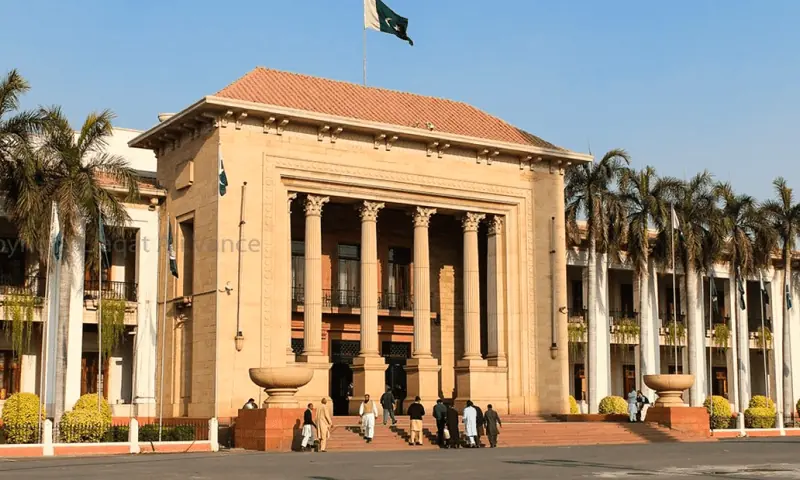
The Punjab Assembly on Tuesday unanimously adopted a resolution urging the federal government to introduce legislation increasing the punishment for offences under Section 298-A of the Pakistan Penal Code (PPC), which deals with derogatory remarks concerning revered Islamic personalities.
The resolution, presented by opposition lawmaker Rana Aurangzaib, called for amendments to the existing law, arguing that the current punishment was inadequate given the religious sensitivities associated with such offences.
Under Section 298-A, individuals convicted of making derogatory remarks against the wives and family members of the Holy Prophet Muhammad (peace be upon him), the four righteous caliphs or his companions can face imprisonment of up to three years, a fine, or both.
The provision covers offensive expressions made verbally, in writing, through visual representations or by means of direct or indirect insinuations concerning the personalities protected under the law.
Moving the resolution, Aurangzaib maintained that the existing penalty was “insufficient” for an offence that “hurts religious sentiments”.
The House called upon the federal government to address the matter on a priority basis and introduce the necessary legislative amendments to strengthen the punishment prescribed under Section 298-A.
The resolution also urged the authorities to ensure effective legislation and enforcement aimed at protecting religious sanctities while preserving social peace and harmony.
The demand follows an earlier attempt by Parliament to substantially increase the penalties associated with the same provision.
In August 2023, Parliament passed the Criminal Laws (Amendment) Bill 2023, proposing to increase the punishment from a maximum of three years’ imprisonment to a minimum of 10 years, with the possibility of life imprisonment.
However, the legislation did not become law after then-president Arif Alvi returned it to Parliament without granting assent.
The proposed amendments had also drawn criticism from human rights organisations, which warned that increasing the penalties and changing bail provisions could undermine legal protections for accused individuals.
The Human Rights Commission of Pakistan (HRCP), in particular, raised concerns that the proposed legislation would make it more difficult for people accused under Section 298-A to obtain bail as a statutory right.
Under the proposed changes, the granting of bail would become a matter of judicial discretion rather than an automatic legal entitlement.
The commission also highlighted broader concerns surrounding the application of blasphemy laws in Pakistan, observing that complaints are sometimes registered under pressure from religious groups, because of personal disputes or in response to fears of mob violence following allegations of blasphemy.
Human rights advocates have consequently emphasised the importance of safeguards against misuse of such provisions, particularly given the serious legal and social consequences faced by accused individuals.
The Punjab Assembly’s latest resolution has renewed the debate over strengthening legal protections for religious sanctities while ensuring due process and preventing the misuse of criminal law.
Although the resolution received unanimous support in the provincial legislature, any amendment to Section 298-A of the Pakistan Penal Code would require legislative action at the federal level.