





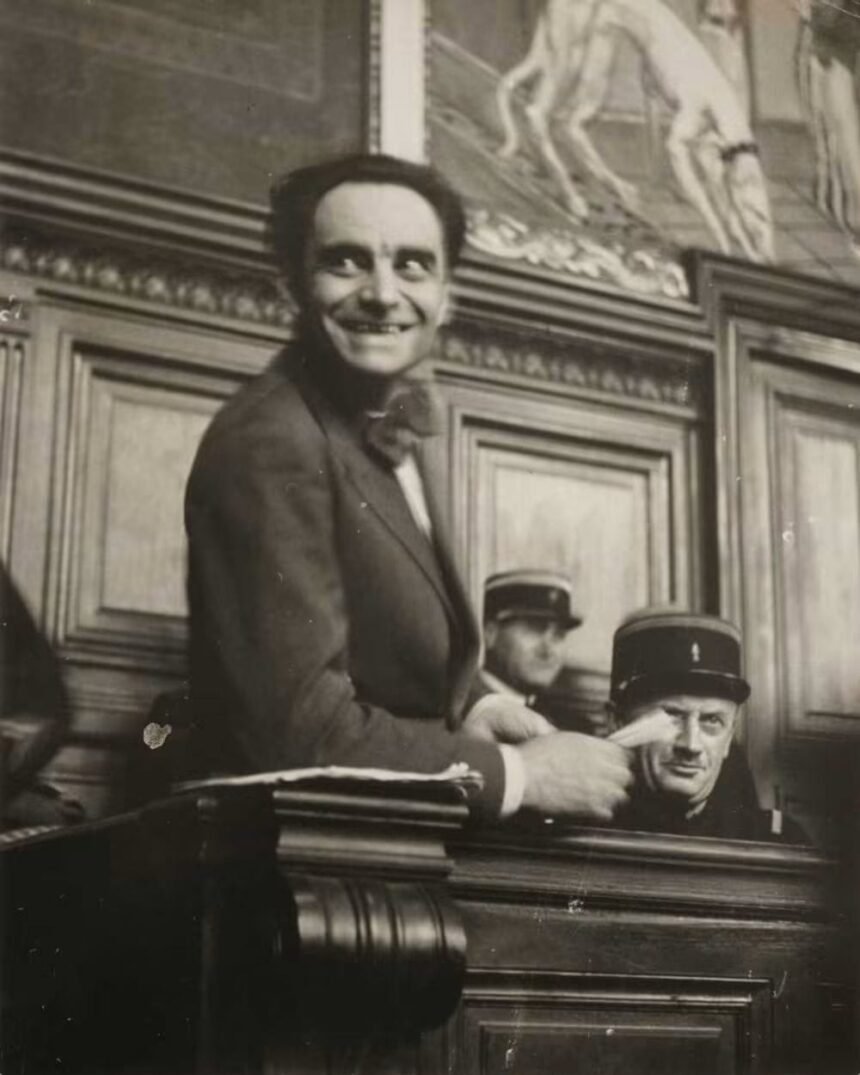
French serial killer Dr. Marcel Petiot stood trial in Paris in March 1946.
Petiot ensnared his victims by working under the alias Dr. Eugene and offering to smuggle wealthy Jewish citizens out of German-occupied France to Argentina. After charging them as much as possible beforehand, they would arrive for their trip carrying all their valuables, knowing they might never return home. Petiot would then tell them that Argentina required certain inoculations beforehand, but would instead inject them with cyanide, killing them. He dumped the bodies in the Seine, or burned them, or interred them in quicklime pits.
When the Gestapo learned of a supposed human smuggling operation, they sent a recruited asset named Yvan Dreyfus to pose as a potential evacuee. Dreyfus was never seen alive again.
When Petiot was finally arrested by French authorities, body parts were found in nearly every part of his home. He was eventually convicted of 26 murders but suspected to have killed 60 or more people throughout his life. He was executed via guillotine in 1946, after the war ended.
But Petiot wasn’t just a serial killer. He may also have been an asset of a little-known private US intelligence organisation known as the Pond. Founded by an Army officer named John Grombach, the Pond was part of the War Department during World War II, then transitioned into a private organisation during the post-war period. They offered their services via contract to the CIA and FBI and continued operating into the mid-1950s. Grombach wrote in his memoirs published in 1980 that Petiot was known to his organisation.
Virtually nothing was known of the Pond’s activities until historian Mark Stout published an article he’d researched in 2004. Since then, more information has gradually come to light about the Pond’s global reach, their operational successes and failures, and their ultimate downfall.