





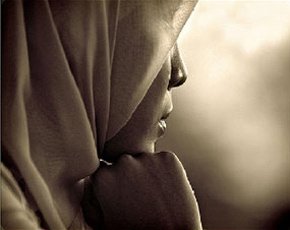
Widowhood Beyond Loss
The funeral ends, but for many women, the real struggle begins only after the last mourner leaves.
The house is full for a few days. Relatives offer prayers, neighbours bring food, and friends keep assuring her, “If you need anything, we are here.” Grief is shared openly, tears are witnessed, condolences are exchanged, and everyone speaks of patience, faith, and healing. The widow is surrounded by people who seem determined not to let her suffer alone.
After that, life goes on quietly.
The phone rings less frequently. The visitors stop coming. Sympathy slowly fades. Family gatherings continue without her. Questions shift from how she is faring to who will inherit the home, who will manage the land, and who will make decisions for the family. Everyone talks about the man who has passed away; very few ask about the woman who is still alive.
Yet the widow remains. She still wakes before dawn to prepare breakfast for her children. She manages the household, pays bills, comforts grieving family members, and struggles through nights made painfully silent by the absence of the person she shared her life with. Somewhere between the funeral and the future, she begins to disappear.
This is the paradox of widowhood. A husband dies once, but his wife can be erased repeatedly. She loses not only the man she loves, but also, in many cases, her financial stability, social identity, decision-making authority, and sense of belonging. The trauma of widowhood is not limited to grief; it resides in the subtle messages a living woman receives from a society telling her she no longer fits in.
Widowhood is generally regarded as a private, personal loss. In reality, it is a legal, social, and economic transition that exposes society’s deepest inequalities. It poses an uncomfortable question: does a woman’s dignity belong to her as an individual, or does it depend upon the man standing beside her?
Across the world, this experience is far more common than many realise. UN Women estimates that there are over 258 million widows globally, with nearly one in ten living in extreme poverty. Today, millions still suffer discrimination through denied inheritances, lack of land ownership, and exclusion from pensions, employment, and social protection. The United Nations designated 23 June as International Widows’ Day to urge governments to address the plight of widows as a human rights issue rather than a private family affair.
Yet despite affecting hundreds of millions of women, widowhood remains one of the least discussed dimensions of gender inequality. While we debate women’s education, workplace discrimination, political representation, and gender-based violence, we rarely address what happens after the loss of a spouse. That silence has allowed profound injustices to persist behind closed doors.
Death is not the core problem — death is inevitable. The issue is how society responds afterward.
The Loss of Identity and Social Exclusion
The primary loss a widow experiences is deeply personal: she loses her companion, her partner in daily life, and the person who shared her dreams. For many women, however, this is followed by a secondary, far less visible loss — the loss of identity.
Prior to becoming a widow, she may have been a lawyer, a teacher, a doctor, an entrepreneur, or the person everyone turned to for counsel. After widowhood, these rich identities are frequently subsumed by a single label: widow. It becomes the primary lens through which others view her.
No one announces this shift; it happens quietly and gradually. Friends stop calling because they assume she needs space. Invitations dwindle because hosts worry celebrations might trigger her grief. Family members make crucial decisions without consulting her, assuming she is too fragile to participate. None of these actions may be intended to cause harm, yet together they deliver a devastating message: your voice no longer matters.
Inheritance Rights and Legal Realities
If social exclusion is widowhood’s emotional toll, inheritance disputes are its legal expression. Imagine being pressured to divide property before you have even begun to process grief. Imagine being made to feel that claiming what is rightfully yours is an act of greed rather than justice. For countless widows, this is not a hypothetical scenario — it is a daily reality.
In Pakistan, a widow’s right to inherit is neither a favour nor an act of generosity; it is a right guaranteed under Islamic law. Surah An-Nisa (4:12) stipulates the widow’s share as one-fourth of the estate if the husband leaves no children, and one-eighth if he leaves children. These legal principles were established over fourteen centuries ago, at a time when many global societies denied women property and inheritance rights altogether. Islam granted widows financial independence, guaranteed their inheritance, safeguarded their property, and affirmed their right to remarry. The Prophet Muhammad (peace be upon him) repeatedly stressed compassion, justice, and dignity toward widows.
Yet for millions of women, these rights exist only on paper. Many feel compelled to “gift” their share to male relatives to preserve family peace. Others are told that claiming inheritance will destroy relationships or dishonour the memory of the deceased. Some are excluded from succession discussions entirely while property is quietly transferred without their consent. Still others endure years of emotionally and financially draining court battles to secure what should never have been withheld in the first place.
The profound irony is that these injustices are frequently defended in the name of religion, even though religious teachings were revealed to prevent them. The conflict is not between Islam and women’s rights; it is between religious principles and the cultural practices that have distorted them.
The Hidden Costs and Multi-Generational Impact
The consequences extend far beyond property disputes. Financial insecurity forces widows into impossible compromises: savings evaporate, medical treatments are deferred, and school fees become unaffordable. Some are forced to withdraw their children from school, liquidate personal belongings, or become dependent on relatives whose support comes with conditions. What begins as an inheritance dispute frequently turns into long-term economic vulnerability.
This suffering rarely ends with the widow herself. Children become silent victims of financial instability and prolonged legal battles. A daughter may be removed from school, or a son may drop out to work. Opportunities that once seemed assured vanish, demonstrating that the denial of justice to a widow cascades down to the next generation.
While widowhood is a universal human experience, its social reality varies across cultures. Property grabbing, harmful mourning rites, and social exclusion remain widespread in parts of South Asia and Sub-Saharan Africa. Traditionally, in certain communities, widows have been expected to wear muted colours, forgo jewellery, and avoid celebratory gatherings. In many Western societies, stronger legal frameworks exist, yet loneliness, social isolation, and economic vulnerability remain prevalent. While the specific manifestations differ, the underlying pattern remains constant: after a husband’s death, society sees less of the woman left behind.
This is why widowhood is not merely a private tragedy, but a matter of equality, justice, and human dignity. As United Nations Secretary-General António Guterres stated: “Widows must be able to enjoy their full human rights without discrimination.”
Yet perhaps the most profound impact cannot be captured in court dockets or financial ledgers: it is loneliness. It is not merely the absence of company, but the ache of no longer being seen. Clinical research consistently links widowhood to elevated rates of depression, anxiety, prolonged grief, and declining physical health — struggles that are intensified when social support vanishes too quickly.
Widows are frequently praised for their resilience, and many display extraordinary strength. They raise children alone, rebuild careers, manage households, navigate complex legal systems, and move forward while carrying profound grief. Their fortitude is admirable, but it raises a troubling question: why must they be forced to be so resilient in the first place? Celebrating resilience must never become a substitute for dismantling the systemic barriers that demand it.
From Sympathy to Structural Justice
Transforming this reality requires moving beyond sympathy. Sympathy offers temporary comfort; justice provides lifelong protection.
That responsibility begins within the family. A widow should never be pressured to relinquish her inheritance to preserve domestic harmony. Families must normalize discussions around succession, wills, and asset distribution long before a crisis occurs.
Communities must also step forward. Support must not cease when the initial mourning period ends. A thoughtful phone call, an invitation to a family gathering, or a simple request for a widow’s guidance lets her know she remains valued and visible.
Governments and legal institutions must ensure that statutory rights are enforced in practice. Streamlined inheritance procedures, accessible legal aid, and rigorous enforcement of property laws are essential — because justice delayed is justice denied.
Religious leaders carry a vital responsibility to challenge harmful cultural customs falsely passed off as religious duties. At a time when few societies recognized female autonomy, the Qur’an affirmed women’s rights to inheritance, property, and dignity. Faith should empower widows, never be weaponised to justify their marginalization.
The media also shapes public perception. Widows are too often depicted as helpless victims whose narratives end with bereavement. Highlighting their achievements, leadership, and societal contributions can dismantle stereotypes, reminding the public that widowhood is a chapter in a woman’s life, not her entire identity.
Seeing the Woman Beyond Widowhood
Ultimately, widowhood forces us to confront a fundamental question: Do we value women for who they are, or only for their roles within a family? If a woman’s security, respect, and agency evaporate upon her husband’s death, then those rights were never truly recognized as hers.
The true measure of a society lies not in its rhetoric about justice, but in its daily practice — in inheritance documents bearing a widow’s rightful name, in courts that safeguard her assets, in workplaces that offer equal opportunity, and in communities that honor her dignity long after the condolences have ceased.
The central question has never been why widows become invisible. They do not disappear; what vanishes is society’s willingness to see them.
Until every widow can inherit without fear, grieve without isolation, rebuild without judgment, and participate fully in public life, our commitment to equality remains unfinished. The greatest tragedy of widowhood is not that a woman loses the person she loves — it is that society so easily forgets the woman who is still here.