





“Victory is temporary, defeat is survivable.” — Winston Churchill
For more than a decade, the West mistook a unipolar pause for the permanence of peace. The end of the Cold War was followed by an optimism that liberal democracy and economic integration represented the ultimate destination of humanity’s long struggle to achieve stability. The fall of the USSR and the rise of the United States as the sole superpower gave the West hope for a peacefully integrated future.
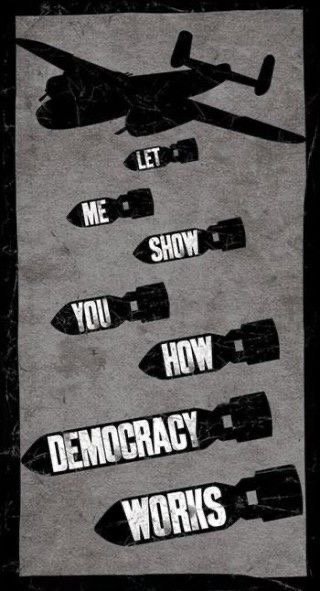
This belief was further strengthened by Francis Fukuyama’s The End of History and the Last Man (1992). The assumption that liberal democracy was the only viable future for mankind — and that human ideological evolution had reached its final stage — caused the West to ignore the rising capabilities of rivals and dismiss great-power competition as obsolete. The outcome of the Cold War provided an illusion, particularly to the West, that led to hubristic foreign policy decisions, which in turn fuelled tensions among major global actors. NATO’s eastward expansion and American strategic overreach in Iraq and Afghanistan were direct results of this misjudgement.
By the early 2000s, this Western optimism began to fracture, and the US-led unipolar order steadily eroded, giving rise to a new strategic landscape defined by multipolarity.
The Dynamics of a Multipolar Order
In this new era, deterrence is no longer exclusively a US-Russia affair; it encompasses China and a host of emerging middle powers. The structural transformation into “NATO 3.0” reflects a return to classic hard-power politics, exposing the European Union’s reliance on trade, soft power, and legal norms as naive geopolitical instruments. Furthermore, the credibility of Western soft power is deteriorating due to inconsistent foreign policy application.
Simultaneously, new actors have asserted themselves on the global stage. While Russia and China act as major global powers, states such as Türkiye, India, Brazil, and Indonesia are operating as influential middle powers. Crucially, these middle actors are refusing to align strictly with traditional blocs. By acting autonomously, they demonstrate that the emerging global architecture is not merely bipolar, but complexly multipolar — characterized by transactional, interest-based coalitions rather than fixed alliances.
Catalysts of Strategic Realignment
The past decade has been marked by pivotal geopolitical events that accelerated the return of great-power competition:
- The Annexation of Crimea (2014): Russia’s annexation of Crimea shattered the post-Cold War European security order, demonstrating that conventional military force could still redraw international borders.
- Brexit (2016): The United Kingdom’s departure from the European Union exposed internal fractures within Western alliances and removed a primary military power from the EU framework.
- The Withdrawal from Afghanistan (2021): The chaotic US withdrawal from Kabul after two decades of war raised fundamental questions regarding American reliability among its allies and signaled a major shift in global power projection.
- The Invasion of Ukraine (2022): Russia’s full-scale invasion triggered direct East-West confrontation, effectively ending post-Cold War security assumptions in Europe.
- US-China Economic and Technological Competition: The ongoing trade and technology friction marks a shift toward open rivalry. China’s global reach through the Belt and Road Initiative (BRI) has disproved the Western assumption that economic integration automatically reduces geopolitical friction. Instead, it has redefined competition as a struggle over global infrastructure, supply chains, and AI supremacy alongside conventional military power.
The Fragmented Future
The post-Cold War order is definitively over. It has been replaced by a fragmented and highly competitive system where ideology matters far less than strategic interests and transactional deals.
The unipolar pause was never a permanent settlement, and the post-Cold War era got one fundamental reality wrong: the belief that rivalry was dead. Great-power competition has returned — with more actors, shifting coalitions, and no agreed-upon rules. The multipolar scramble has officially begun.