





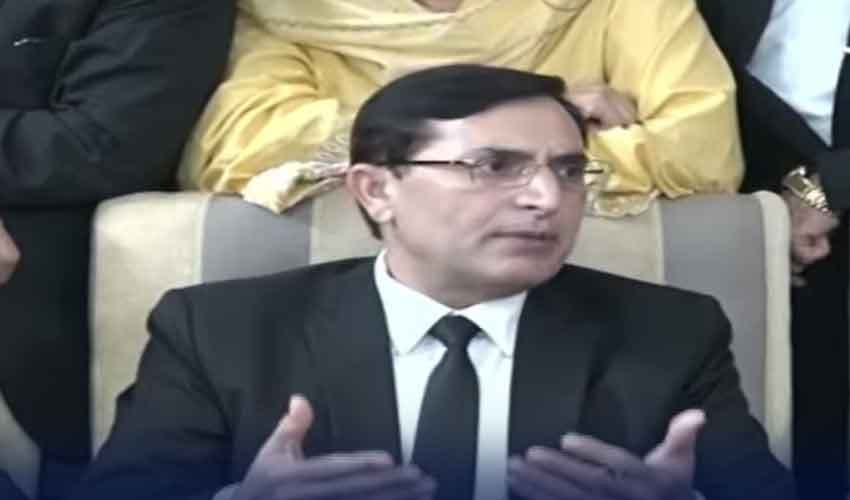
Pakistan Tehreek-e-Insaf (PTI) Chairman Barrister Gohar Ali Khan has urged the government to implement decisions made at the apex committee meeting, maintaining that there are no differences within his party regarding the military leadership.
Speaking to reporters outside Parliament House, Gohar said PTI had consistently emphasised national unity and recognised the armed forces as an institution belonging to all Pakistanis.
“We have always said that Pakistan comes first,” he remarked.
He rejected attempts to associate PTI with unrest, arguing that such descriptions were unjustified. He also called on the government to take action against individuals who had used the term to describe his party.
Discussing PTI’s previous engagement with the government, Gohar said the party had pursued dialogue but failed to achieve its desired results.
He added that none of the proposals put forward by PTI had been accepted and referred to the eventual fall of the party’s government.
The PTI chairman also reiterated his demand that meetings with party founder and former prime minister Imran Khan be restored.
He expressed concern over the detention of Khan’s wife and members of his non-political family, calling attention to their continued imprisonment.
Raja Nasir Abbas Raises Concerns Over Poverty and Governance
Separately, Senate Opposition Leader Allama Raja Nasir Abbas criticised the country’s economic and political situation, saying worsening poverty and declining public confidence had exposed serious weaknesses in governance.
He pointed to the growing financial difficulties faced by citizens and highlighted the fact that approximately 25 million children were out of school.
Abbas questioned what the public could expect from the country’s rulers under the prevailing circumstances, arguing that trust in the government had significantly weakened.
He further maintained that the political deadlock could not be overcome without establishing the rule of law.
According to the opposition leader, lasting improvements in governance and public welfare would remain difficult unless justice and fairness were upheld.
He stressed that restoring confidence in state institutions required a political environment grounded in accountability and equal treatment under the law.