




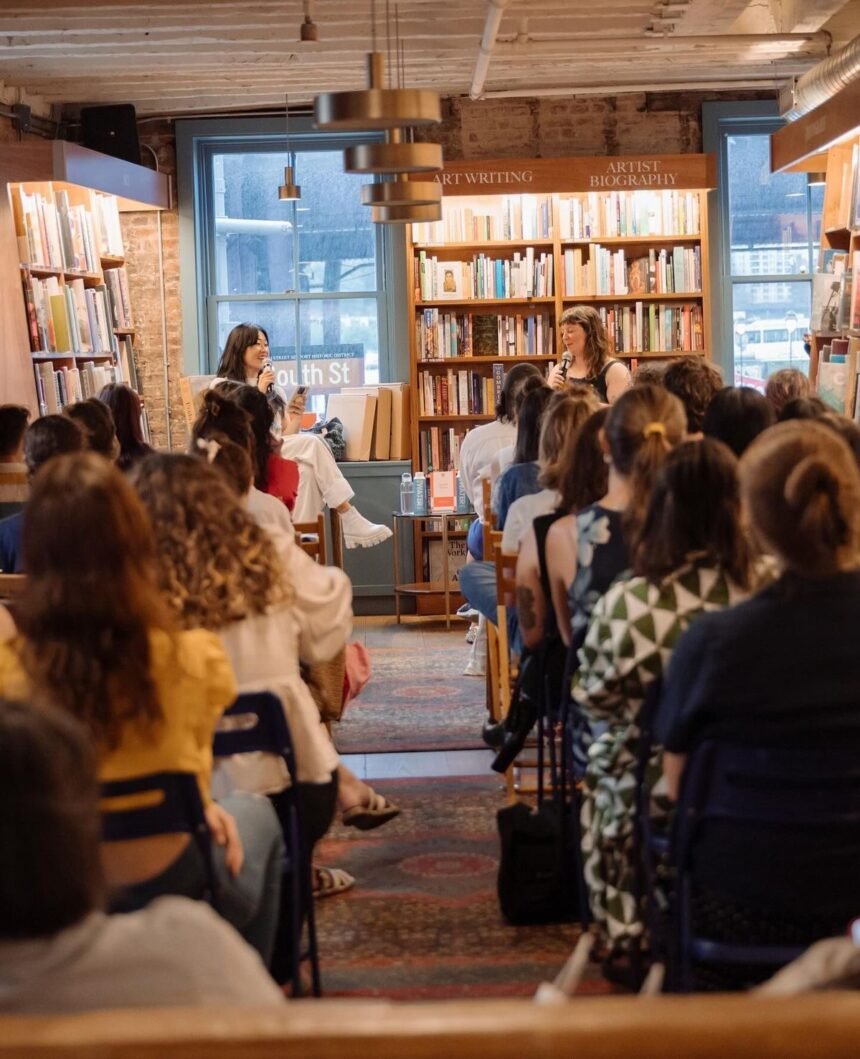
In 1868, female journalists were barred from entering a political and intellectual discussion hosted by the infamous author Charles Dickens, reflecting the sociopolitical landscape of those times, which treated women largely as less intellectual and subordinate to the men of their houses — credit due to the prevailing cult of domesticity. The same century was also observing the women’s rights movement of the 19th century. In such a politically fraught atmosphere, a few journalists decided to create a separate reading and discussion space exclusively for women, known as the Sorosis. The name came from a fleshy fruit made together by the infusion of many fruits, which symbolised women’s harmony and womanhood. Sorosis is known as the first formal reading space in the world specifically for women. Many literary historians viewed Sorosis as the primitive and nomadic form of modern-day book clubs. Thus, book clubs aimed to be a space for readers, thinkers, and intellectuals to sit aside from the whirlwind routine and discuss their particular interests and literary and creative inclinations.
When situated in the 21st century and framed within Pakistan, it becomes quintessentially important to observe how the trend has emerged, how it is taking place, and who the major stakeholders are. For the longest time in Pakistan, book clubs were present only as ceremonial spaces in schools — and only in schools which could afford it. But in the past decade, with the emerging trends of globalisation, media polarisation, café culture, and small community building, the trend of book clubs has risen fundamentally. Many privately owned publications and small communities are organising collective reading sessions, quote-unquote, book clubs. The genres read in such clubs span from national and regional to global works, encompassing themes of politics, critical literature, fiction, and non-fiction.
Reading Choices and Societal Reflection
It is a well-known fact that books read by the young minds of any nation directly present an image of what their perspectives and mindsets have been driven towards. A book club in Lahore is set to read the historical work of Sylvia Plath, and another to buddy-read the work of Emily Henry. A book club in Karachi organises a sitting to discuss The Society Girl, an infamous book written by Tooba Masood Khan and Saba Imtiaz, while another society in Gujranwala aims to read the words of Manto and their impact on the subcontinent. These contrasts project generically onto where our society is heading. As Pakistan still tends to struggle with institutional and political stability, works by Muhammad Hanif and George Orwell are discussed and conclusions are drawn from them. Book clubs have been mostly intended to discuss political archives and social landscapes.
For a country like Pakistan, what’s interesting to see in these book clubs is the retrospective emergence of reading trends, the subtle availability of literature, and the crossroads of money and intellect. Such book clubs often have a registration fee, which makes it difficult, if not entirely impossible, for certain readers to connect. This yet again creates a condition of economic orientation, having a visible contradiction with what book clubs were meant to be: accessible. Such communities often deepen the already abysmal class differentiations present in Pakistan.
Conclusion
By and large, the advent and onset of book clubs are carving out informal civic spaces for readers, students, and thinkers to thrive, share ideas, and connect, providing a platform to discuss power, identity, and the state in general. Book clubs foster the creation of social circles and meeting opportunities for people without any general discrimination. Although the momentum continues to exist only in certain cities of Pakistan, the inception of such spaces has national implications. In Pakistan, reading should be treated as a public good rather than a private luxury or only a pastime of the privileged class. This could be brought into action by funding libraries and printing affordable books in regional and national languages so that the difference between who can and who cannot read is eliminated.