





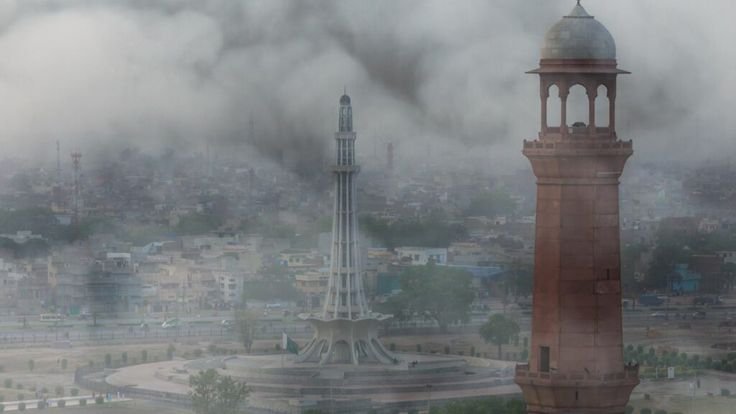
The windows close. Outdoor practice disappears from the timetable. A teacher tells everyone to put their masks on. Somewhere, an AQI number on a phone screen climbs higher. For Lahori students, this is becoming a familiar part of winter.
Punjab has already begun preparing for the 2026 smog season. Its Pre-Smog Action Plan includes measures aimed at reducing pollution before the worst of the season arrives. Schools have also been instructed to check air quality before outdoor activities and take precautions when pollution reaches unhealthy levels.
But there is a bigger question hiding behind all those instructions. What actually happens inside a school when the air outside becomes unsafe?
When pollution levels rise, schools can restrict outdoor activities and keep students indoors. During severe episodes, authorities have previously ordered schools to close altogether, as we have seen in previous years.
Punjab’s official AQI system provides air-quality readings and health guidance for Lahore. As pollution moves into unhealthy categories, children and other vulnerable groups face greater risks from exposure. Keeping a classroom closed to the outside air might sound like an obvious solution, but a closed window does not automatically mean clean air. Schools with access to air purifiers, filtration systems, or indoor air-quality monitors have more tools available to them. Other schools may have little choice beyond shutting their windows and waiting for the air outside to improve.
A student sitting in an air-conditioned, filtered classroom and a student sitting in a crowded classroom with the windows shut may technically be following the same smog precaution. Their experiences, however, can be very different.
The Morning Commute
Before the first lesson even begins, students have already been outside. Every morning, Lahore’s school gates become temporary traffic hubs. Cars wait. Motorcycles squeeze through gaps. Rickshaws pull up. Vans drop off students and leave again. Research and reporting on Lahore’s transport patterns have repeatedly highlighted the contribution of vehicle emissions to the city’s air-pollution problem. We tell children to avoid polluted air and then send thousands of them through some of the most congested parts of the city every morning.
The Punjab government has also been tightening action against smoke-emitting vehicles as part of its wider anti-smog measures, but enforcement can only address part of the problem.
There is another option: moving the classroom online. Punjab has used school closures during periods of particularly severe smog before. During the major 2024 pollution episode, authorities closed schools in affected areas and introduced measures including delayed opening times, mask requirements, and restrictions on outdoor activities. For some students, an online lesson means opening a laptop at home. For others, it can mean sharing a phone with siblings, dealing with unreliable electricity, or having no stable internet connection at all. The same environmental emergency can therefore create very different educational consequences.
Looking Beyond the School Gates
A school can cancel sports. It can close its windows. It can tell students to wear masks. It can even close for a few days. But none of those things removes the pollution.
Lahore’s smog comes from a combination of sources, including transport, industry, agricultural burning, and other emissions. Tackling those sources requires action far beyond the school gates. UNICEF has warned of the serious impact of air pollution on children in Punjab, highlighting the scale of children’s exposure during severe pollution episodes.
So when that AQI number starts climbing again this winter, perhaps the question shouldn’t only be: “Should schools close?”
Perhaps we should be asking something harder:
“What does a safe school actually look like when the air outside isn’t safe to breathe?” Because every student deserves the same answer, not just the students whose schools can afford it.