





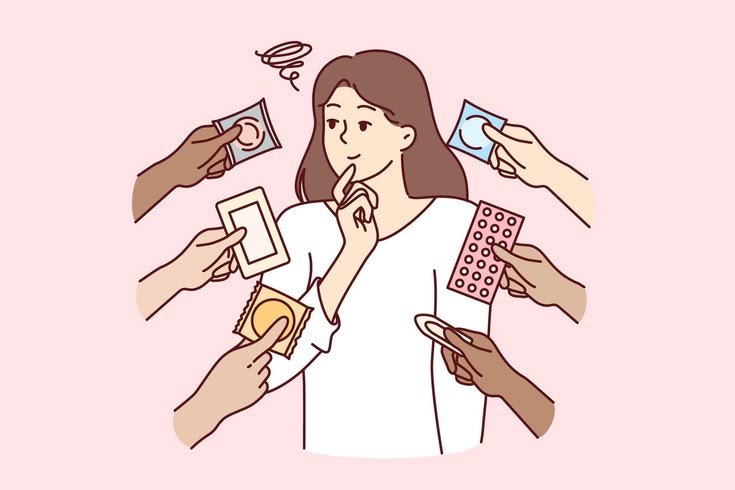
One thing is remarkably consistent across cultures that have little in common: when a heterosexual couple decides to avoid pregnancy, it falls almost exclusively on the woman to physically, medically, and mentally bear the burden of that choice.
She takes the pill, suffers from the side effects of the IUD, keeps track of her cycle, manages appointments, and absorbs the health hazards of hormonal intervention. In almost all instances, the man does little more than occasionally use a condom or, more typically, simply go along with whatever she has agreed upon.
This division of labour is so commonplace that it is hardly noticed as a division. It has become the standard mode of heterosexual relationships — regarded not as a problem of balance, but as something natural that happens behind the scenes.
The most apparent explanation offered is anatomical: women get pregnant; men do not. Thus, in this reasoning, a woman’s role is to control the circumstances of pregnancy.
However, this explanation is very fragile. Men are equally responsible for conception, and there are several effective methods of contraception available for them. Correctly used, condoms continue to be very reliable. In many instances, vasectomies are easier to perform, more affordable, and safer than the surgical options provided to women.
Yet worldwide patterns of contraceptive use have remained steadfast: women exercise primary control over contraceptive use, while men’s involvement in family planning is far more likely to stop at consenting than to extend to shared responsibility.
Biology offers a reason for women to bear children; it does not provide any rationale for why women should be the only ones expected to prevent them.
The problem is that men are not as absent as they seem. Many actively participate in reproductive decisions without exposure to the physical risks associated with them.
A husband can choose not to have a vasectomy and instead ask his wife to get an IUD. He might urge her to discontinue contraception if he wants more children, or if he dislikes a particular method.
In these situations, the man is not passive, but controlling — and he loses nothing physically or medically. The burden remains on the woman, even if the decision was not hers alone.
Access to healthcare presents a separate hurdle, often entangled with the issue of side effects. For a woman seeking contraceptives in many countries, gatekeepers must first be navigated: a doctor who requires her husband’s consent, a pharmacist who scrutinises her request, or a clinic located far from her home.
Cost is another barrier; contraception is not free, and the expense is frequently paid by the person managing the household’s daily purchases — typically the woman.
These obstacles fall on her regardless of whether her partner is cooperative.
All of this is reinforced in South Asian settings through cultural architecture. When family planning is discussed, it is spoken softly between women — mothers to daughters, or sisters-in-law chatting casually — but is rarely expected to involve men.
This pattern continues in religious discourse. The theological aspects of contraception in Islamic jurisprudence are largely permissive, yet this knowledge is rarely shared equally.
The religious subtleties a woman learns on her husband’s behalf are often not taught to him, as the responsibility was never deemed his to take up. Consequently, misinformation flourishes, and body-related decisions are made based on rumour rather than open dialogue.
This dynamic is not confined to South Asian or religious contexts. The exact same trend is observed in Western societies despite decades of feminist advocacy and liberal attitudes toward sex.
Studies across North America and Europe repeatedly show that women are far more likely to use long-term contraceptives, schedule appointments, pick up prescriptions, and report that contraception remains their personal responsibility.
Furthermore, institutional priorities have stalled the development of male contraceptives. Clinical trials for male hormonal options have repeatedly failed or been halted due to side effects — such as mood swings, altered libido, and weight fluctuations — that are routinely deemed acceptable for women.
The expectation for women to absorb these costs is embedded in research priorities and subtle societal assumptions.
Much of this dynamic can be addressed through open communication within marriage. Couples rarely discuss contraception as a truly shared choice; instead, they default to whichever path causes the least friction for the husband.
When conversations do occur, they are usually initiated by the woman, centered on her body, and concluded once she makes a decision.
A man who does not ask about the impact of a contraceptive method on his wife is not necessarily unfeeling; he has simply never been taught that the question is his to ask.
For men to take full responsibility, contraception must be viewed as a shared effort rather than a partner’s solitary task.
It requires discussing methods, costs, and physical impacts together before reaching a decision — not merely offering passive approval. It means treating vasectomies or regular condom use as standard practices rather than special favours.
It also requires medical, religious, and cultural institutions to stop treating family planning as a woman’s concern and start treating it as a couple’s responsibility.
Ultimately, male absence remains ordinary. A man who has never assumed responsibility for family planning is rarely questioned, whereas a woman who declines to do so is viewed with suspicion.
This is not due to an inability on the part of men to participate; it is because they have never been required to do so.
Transforming this reality takes more than new methods or permissions — it demands a fundamental shift in what is considered normal for men.