





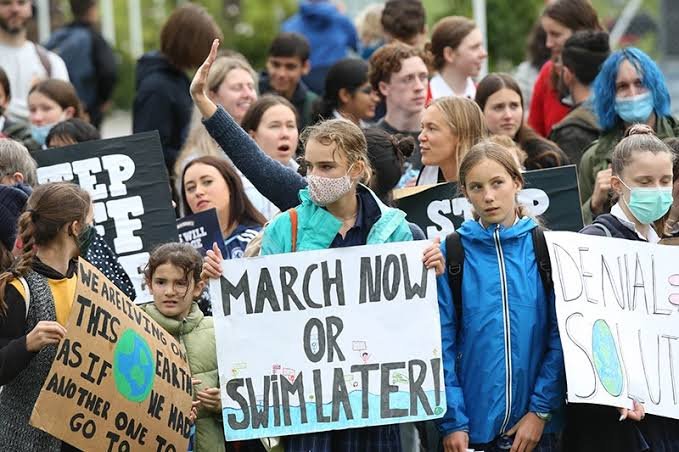
Climate change is not just a weather phenomenon. So far, it has begun to affect the economic, social, and mental health of many communities around the globe. A whole generation is actively reshaping their dreams across Pakistan. They are doing so due to increased floods, heatwaves and melting glaciers. Researchers state that these will become more frequent. Says that the future is uncertain. Not only with respect to the weather. With regard to life.
And this matter needs to be addressed. It has been named by experts – climate anxiety or eco-anxiety. It’s a fear about environmental disaster. Accompanied by grief, helplessness and dread. Pakistan, despite contributing less than 1% of global greenhouse gas (GHG) emissions, is among the countries most affected by climate change. In recent reports on cities in Southeast Asia, which are less resilient to climate change, 5 Pakistani cities are placed in the top six, including Karachi, Multan and Hyderabad.
The figures clearly highlight the problem. Floods were severe in Pakistan in 2022. 33 million people were impacted. Fifteen per cent of the entire population. Over 1700 were killed. Almost eight million had to evacuate from their residences. At the peak, a third of the country was underwater. Schools. Spaces for children to find hope and guidance. Were destroyed. More than 30,000 buildings were ruined.
In 2022, Germany Watch ranked Pakistan as the most climate-hit country in the world in the Climate Risk Index. It wasn’t a coincidence. It was truly a loss. A study conducted in 2024-25 examined the university students of Islamabad and Rawalpindi. It found that a high level of psychological distress was highly correlated with climate anxiety. Some students reported feeling helpless because they were unable to map out their futures. Their concentration on studies was lost. They wanted to do something about it. Their fear caused them to feel trapped.
Other studies were conducted with children. It demonstrated that anxiety related to Climate change was associated with general anxiety and depression. All these effects only compounded the number of young people in Pakistan who require mental health support. This is not just the case of Pakistan. It mirrors a trend. Lancet Planetary Health conducted a large survey of 10,000 participants aged 16 to 25 across 10 countries. 75% were frightened of the future. 59% reported that they were very or extremely concerned with climate change. Concern was more prevalent in the Global South countries. Their extreme weather is not a forecast. It’s a reality. Over half of all respondents reported feeling sad, anxious, powerless or guilty when thinking about climate change. And these feelings stay with them.
The World Economic Forum talked to Pakistanis, and they expressed greater fear. There were concerns about employment in a climate change-affected economy. Schools have been closed multiple times, which caused them to fear falling. They had a growing feeling that the ground beneath them was literally giving way. Could no longer be relied upon. Young women described how disasters destroy community networks on which they rely. Flood families can fray after a flood. Support systems fail. Loneliness increases. Researchers have also observed that during times of climate emergency, rates of marriage and gender-based violence go up.
It is the point where climate anxiety is not just an emotion, but it turns into an issue for life choices. Where to study? If you were to pursue a business venture, would you do it? At what time is the right time to get married? Would you like to have children? All these options now have a shadow. An awareness that the future is unsteady in a way that they, perhaps, did not have to deal with.
However, Pakistan’s mental health system is not geared towards such events. The ratio of psychiatrists to the population is 1 to ½ million. Much lower than the World Health Organization’s recommended amount. Less than 1% of the national health budget is allocated to mental health. An estimated 24 million people require care. The vast majority do not have access to it. Stigma about psychological health still prevails as the major issue. Many still consider distress a sign of weakness. Others think it’s a failure. Something that must be suffered in silence. Treatment is often seen as unnecessary.
The one thing Pakistani youth have found to help is mindfulness-based coping. It was associated with psychological distress. Just as well, it didn’t deter people from doing something. Rather, it enabled them to remain involved in sustaining the environment. It’s important to remember that when you help someone, you do not diminish their desire. It means supporting them to take action without getting overwhelmed.
Experts studying this issue agree on key steps. First, support for mental health needs to be integrated into care and schools. It is impossible to work on it without the help of experts. Second, counsellors must be trained in stress associated with climate. It’s different from anxiety. This threat is imminent, present and individual. Third, climate anxiety has to be considered a public health problem, not just an emotion that will come and go. A change of thinking – the first step towards real healing – might well be the right answer for a country whose young people didn’t cause this crisis and whose youth are now on the front lines.