





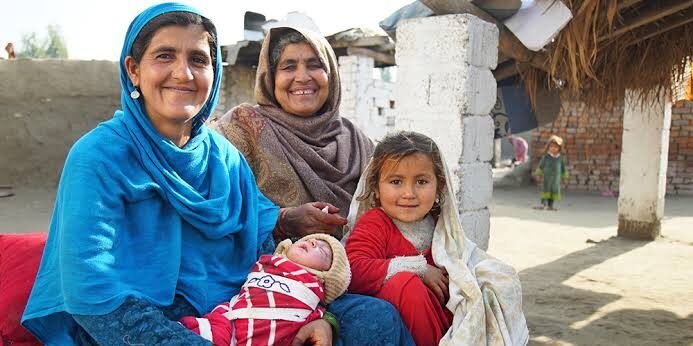
Pakistan’s maternal health system revolves around one event “delivery”. At that time, it’s quite a shift that attention shifts almost completely to the newborn. It’s similar to a spotlight sweeping across one figure as he moves off the stage, while the other figure remains in the dark, even though both figures left the same room. The very existence of postnatal care is to catch complications of childbirth early, but as more women give birth in hospitals, postnatal care remains weak. One study stated that only 30 percent of women received any checkup at all, and most of that in the first few hours after delivery; after the second day, follow-up was slashed and many women felt it was not essential. This isn’t a gap in awareness. It’s a structure-based choice as to whose health becomes urgent once a baby is born.
The figures of maternal births are not small ones. In Pakistan, the maternal mortality rate is 186 deaths per 100,000 live births and postpartum sepsis is the third leading cause of maternal deaths, after hemorrhage and hypertensive disorders. These aren’t uncommon problems just in the delivery room. They emerge the following days and weeks, the time when medical care finally wanes. A woman can give birth and remain alive, and still suffer from the consequences of the birth: infection, blood loss, pain left unexamined and unquestioned, and unhealed tissue.
Physical recovery is seen as a natural process, a private process, and natural recovery without supervision is assumed to happen. The majority of patients experience damage to the pelvic floor, tearing and prolonged bleeding, which is seldom screened for beyond one postpartum visit, if at all. The pain is accepted as normal and as such, it doesn’t seek to be investigated. This is the type of pain that a new mother is told to ignore, three weeks after giving birth, because it’s part of the process. The same goes for the likelihood of infection. In nearly every other situation, a doctor would sound the alarm if it was a fever, a wound that did not heal properly, or if it was bleeding. Once they give birth, they are more likely to be swallowed by the norm: that a new mother should be feeling unwell for a little while.
The same goes for mental health, except that there are less protections. The study, conducted in the main hospitals of Pakistan’s province of Sindh, revealed that almost one in five women screened positive for postpartum depression, and a small but significant number had suicidal ideation. However, given its prevalence, postpartum depression in Pakistan is often overlooked and untreated, and the attitude towards it is generally negative, even among the supposed supporters of new mothers, the family members. A lot of this is due to stigma. In part, it’s because no one’s being formally monitored. There’s a cuff to measure blood pressure and a line on a chart for the number, so blood pressure gets measured. There is no equivalent tool to measure or track mood in most clinics, and it is assumed the tool is unnecessary and is simply not recorded when the mood is very bad.
Some of this void is filled by cultural practice, albeit unevenly. The post-partum ritual is the kind of chilla observed by a large majority of women after the first birth, which entails rest, reduced activity, and support from female relatives. The studies indicate that women who participate in chilla experience fewer depressive symptoms. It is a serious consideration; however, it identifies the issue without providing a solution. In areas with inadequate formal postnatal care, an informal, domestic system has emerged as the primary tool for maternal recovery. Its advantages depend on the family, class, and the amount of rest a family will allow a new mother. It’s not a medical follow-up, and it was never designed as such.
In such cases, although chilla is being practised, the attitude is that it is only for a short period and that household responsibilities will be resumed soon after. Breastfeeding is no longer viewed as a health outcome for the mother; it’s a duty to the baby whether it hurts, whether she is tired, or if she has some medical problems. Sleep deprivation is considered an inevitable consequence of becoming a mother, not a risk factor for the depression that is known to be common. All this, the mother’s body and mind are assessed in terms of what she can still give, rather than what she needs.
All of this isn’t an invitation to increase awareness campaigns. But the study reveals that women do not necessarily believe something is wrong, as the system provides them with little reason to suspect otherwise. Where it is lacking is structural: follow-up that goes beyond the first week, depression screening of mothers as part of follow-up, not an add-on, and a cultural understanding of a mother’s recovery process being different from the infant’s.
One person came into the world, as recorded in a birth certificate. It doesn’t say anything about the state of the individual transporting them. Rather than assessing maternal recovery, maternal health post birth is now assessed based on rate of return to previous responsibilities. Until postnatal care considers her healing as the aim rather than the means, the record will tell a half truth that will long remain the mother’s story, before it becomes the child’s story.