





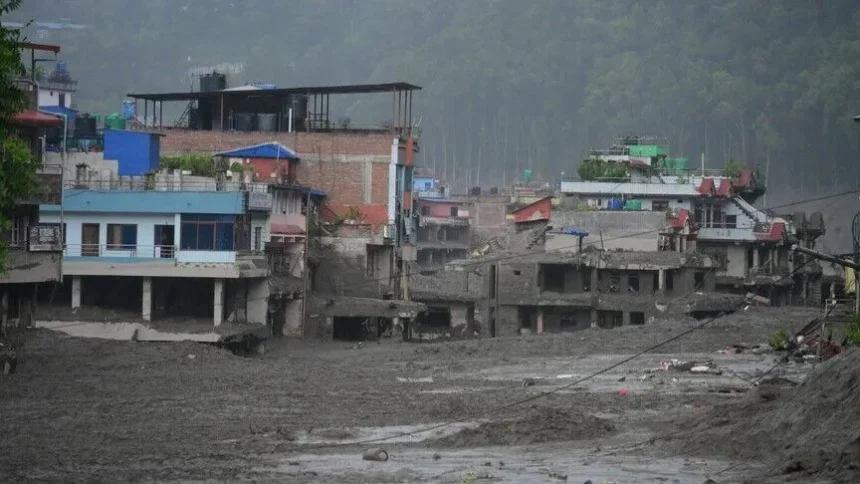
The death toll from devastating floods and landslides across Nepal and China’s Tibet region has risen to at least 480, as Chinese authorities said a high-altitude glacier collapse in Nepal may have triggered the disaster.
Nepalese police said 475 people had been confirmed dead following Wednesday’s floods, while China has reported five deaths. More than 1,200 people remain missing, with foreign nationals accounting for a large proportion of those unaccounted for.
Chinese Foreign Ministry spokesperson Lin Jian said on Friday that experts and authorities in both countries had carried out preliminary assessments of the disaster.
“The disaster may have been triggered by a collapse of a high-altitude glacier in Nepal,” Lin said, although investigations into the precise cause remain underway.
Chinese President Xi Jinping has instructed officials to make every effort to locate Chinese citizens and other foreign nationals who remain missing.
The disaster struck early Wednesday, sending floodwaters and debris through communities along Nepal’s Bhotekoshi and Trishuli rivers. Across the border, mudslides also hit Gyirong County in Tibet, officially known in China as the Xizang Autonomous Region.
Meanwhile, authorities were confronting a fresh threat on Friday after reports that a barrier lake on the Chinese side of the border had breached, potentially sending another surge of water towards Nepal.
The lake had formed near the confluence of the Chhochen Khola and Purepu Tsangpo rivers. Chinese authorities had warned a day earlier that it was already overflowing and faced a high risk of breaching. The rivers eventually flow into Nepal as the Bhotekoshi, a major tributary of the Trishuli.
A Nepalese rescue official said helicopters stationed in Dhunche and Rasuwa were being prepared for reconnaissance following reports of the breach.
Nepal’s National Disaster Risk Reduction and Management Authority subsequently reported a rise in the Bhotekoshi’s water level and warned of the possibility of further flooding.
However, Education Minister Sasmita Pokharel said available information indicated there was no immediate major threat, as authorities continued to monitor river levels and assess the potential for another flood surge.