





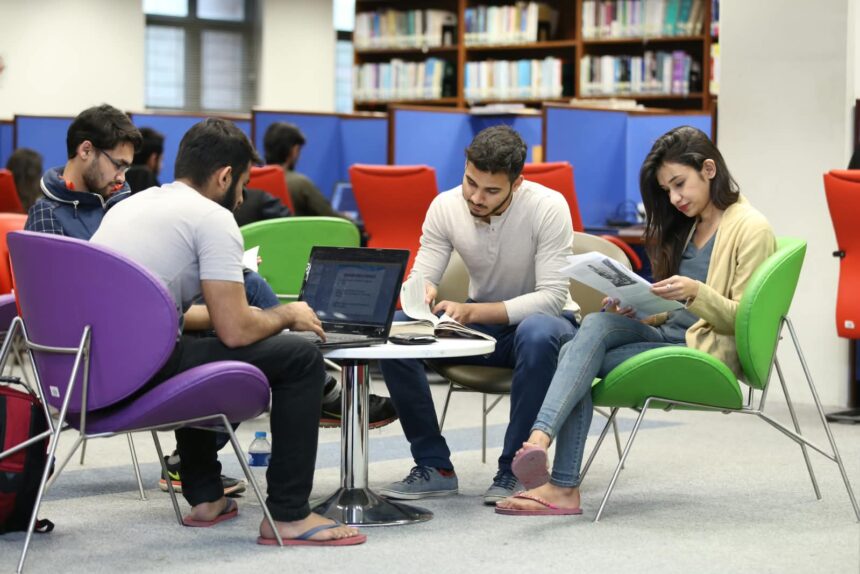
I have interviewed a few students from various renowned elite universities in Pakistan who, without bias or prejudice, shared their experiences at those universities to support or oppose the topic, The Unspoken Hierarchy Among University Students. The universities include
- GIKI (Palvashe/Zermeene)
- LUMS (Malaike/Shaheryar)
- UOL (Shumail/Samia)
- And for contrast, I took UET (Ali)
To start with, I would like to quote
“The most important school you attend is the university of life.”
And this university of life begins with the transformative period of university life, where there is a blend of academic rigour and personal growth.
“Education is not preparation for life; education is life itself.” (John Dewey)
So let’s move forward and understand that in a university, you not only acquire knowledge, but it also actively shapes your present and, eventually, grooms you from a teen into an adult human being.
To evaluate the views of students from various universities, I interviewed them about the unspoken hierarchy among University students.
Interviews:
I interviewed many students from various universities, asking them whether they agreed or disagreed with the statement that students from government schools or lower-income backgrounds face academic isolation, switching pressure, and subtle discrimination. A wide range of answers came in, but strangely enough, the answers from students at the same university matched.
GIKI:
Different GIKI students had the same reply. A student said
“At my university, I’ve personally never experienced or witnessed that kind of discrimination—at least not within my friend group. This is actually the first time I’m learning that such discrimination can occur, as I haven’t seen it in our environment.
She said, “we are aware that some students face financial difficulties, especially when it comes to affording monthly meals. In response, the student committee has taken thoughtful steps, such as opting for more affordable food options and organising a monthly initiative called “Mess Bill Aid” to support those in need, which we take very seriously.
There’s an unspoken understanding among us—a sense of mutual consideration. Despite our differences, we remain united. After all, everyone on campus is a hostelite, and with no fancy restaurants nearby, we all share a similar lifestyle. In a way, that’s a blessing—it keeps things simple and inclusive. But of course, there is always the other side of the coin. There might be people who feel differently, or who have experienced things we haven’t personally seen. Just because we don’t notice it doesn’t mean it doesn’t exist.”
Another student said, “At GIKI, the student body was a diverse mix of individuals from various socio-economic backgrounds. Among us were students from affluent families as well as those from more modest financial backgrounds who had earned their place through merit-based scholarships. What stood out, however, was the sense of equality and unity that prevailed on campus. Students were never treated differently based on their financial background. Everyone had access to the same opportunities, resources, and support, and mutual respect formed the foundation of our interactions. This inclusive environment not only fostered academic growth but also helped us build lifelong friendships across different walks of life.”.
So the result being that GIKI promotes an environment of empathy, helpfulness and mutual respect.
UOL:
Now we come to UOL. The students here shared the same opinion. Students come here from far-away places, less-developed areas, and a variety of backgrounds. Both extremities respect each other without judging anybody. There is an environment of helpfulness and a common belief in good manners and no grudges. Students here even liked the idea of pinpointing this question and were enthusiastic about answering.
LUMS:
When asked the same question, students from LUMS reacted this way. One student said
“Getting into LUMS is a huge achievement, especially for students from government schools or lower-income backgrounds. But once you’re here, it quickly becomes clear that the real challenge isn’t just academics — it’s fitting in. From the way people speak to the things they talk about — vacations, gadgets, expensive schooling — you start to feel like an outsider. Speaking up in class can feel intimidating, and you often find yourself code-switching or staying quiet just to avoid standing out.
It’s not always intentional, but there’s a clear divide. Social circles form fast, and if you don’t look, talk, or act a certain way, it’s hard to feel included. Societies, group projects, and even casual hangouts can feel like spaces where you have to prove you belong. Over time, many students find comfort in connecting with others from similar backgrounds, creating safe spaces of their own. LUMS gives opportunity — but for some, it also comes with the pressure of constantly having to fit in while holding on to who they are.”
Another student responded:
“Academic isolation:
From what I have observed, students from govt schools have usually completed their matriculation, and their academic style differs from that of those who’ve done their O/A levels. The pattern of studying and learning from each other is very individualistic, which leads to hindrance and competition with fellow peers. Similarly, students from lower-income backgrounds, due to a lack of funds, struggle to meet their basic needs, such as arranging course projects (kids with elite backgrounds come with many connections and are usually preferred for group projects). Plus, as students with these insecurities face larger crowds, it clearly shows their struggle to perform well, fit in, and understand others, while they also struggle with financial and personal/domestic issues.
Their energy is usually spent covering expenses, working other jobs to support their home, and worrying about real-life issues, which, in the earlier years, keeps them from engaging in the fun activities that students use to network and make friends. Moreover, for elite students, nothing is more intimidating at times than seeing someone from a lower-income background excel at interpersonal or academic skills. Status is also a big reason why they’re unable to adjust in groups where status-conscious students maintain their position at the top of the hierarchy.
Code-Switching Pressure:
The initial pressure to change themselves, along with isolation, I’ve seen, affects their entire personalities, from their sense of style to their language to their understanding of themselves. One of the biggest examples could be drawn from the eateries available on campus and the diversity observed at each. At the more expensive places like Baradari (Monal), where prices are higher, you would see the upper class sitting, chatting over coffee or drinks to ward off the heat, with their MacBooks and iPhones, etc. Whereas you’d find the lower-class struggling to get to PDC during specific hours and standing in long lines to get their meals; and, on a personal level, I’ve witnessed my friends on merit-based financial aid struggling to manage their expenses even then.
The guilt of associating with people from other backgrounds would not let them experience the basic joys, such as joining fun societies which would help them explore their personalities (like music/sports /societies)
Subtle discrimination: Students from government schools are usually street smart and are regarded and perceived as sharp, and hence labelled in many absurd ways, given the conveniences and doubts of students who don’t match their backgrounds. Due to not being on trend because of their backgrounds, the two sets of students mentioned in the question usually face heavy, subtle discrimination due to not having the right accent, the right trendy clothes/gadgets/ideas/opinions/Gestures on topics that are of fun/concern to the elite.
Lastly, due to the differing life experiences and lifestyles of the two sets of groups stated in the question, there is always a lag and gap between the thinking patterns/behaviour/preferences/needs between the two and hence a lot of work has to be done to overcome them through patience, understanding and unlearning/relearning old habits and corrupt societal structures. However, LUMS provides a strong foundation and a wide range of experiences for collaboration and mutual learning. Which, if utilised correctly, leads to a good balance in life, personal understanding and relationships.
UET:
For contrast, I interviewed a student from a renowned government university. The UET graduate explained that it’s the other way around. The elite students feel like outsiders because most of the students there come from the lower-middle class. For elite students, developing a sense of belonging, maintaining relationships and creating safe spaces is too difficult. They feel like a misfit in their environment, and there is clear discrimination.
Global Studies:
Globally, studies indicate that individuals from economically disadvantaged backgrounds often introduce innovative ideas but face substantial barriers in gaining recognition.
Conclusion:
All these students interviewed clearly indicated that in certain universities, students face subtle discrimination, and due to this, they even develop code-switching pressure, which means they even adapt to changes in speech patterns, alter accents, appearance, dressing, mannerisms, in fact, their complete behaviour and bring a change in their communication style to fit in the social context. This is their conscious choice to fit in, but in some universities, the bond is so strong that class differences don’t matter. There is no difference between students from private or public schools, or between students from lower-income and elite backgrounds. The bonding is so strong between all classes that it does not matter which class they belong to.