





You read a quote once, you repeat it, you rephrase it, until you are asked what it means, and boom! Here is where the magic begins.
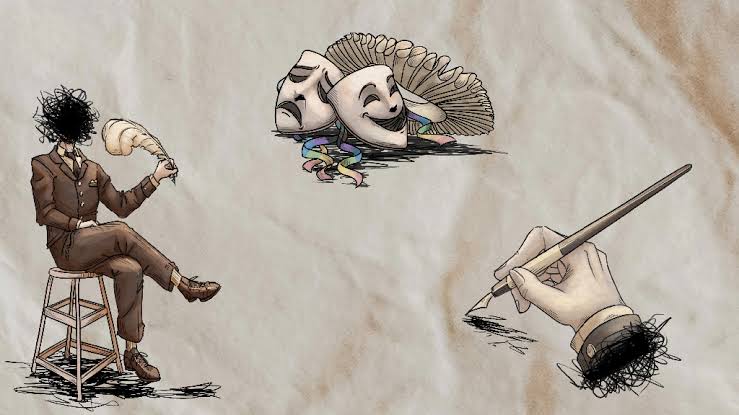
In the centre of his room, the writer sits, amazed and amused by the limitless realms of his words. He smiles and remains quiet, somewhat unrecognisable in the crowd. He opens his notebook and replaces the full stop with a semicolon. This small ordinary scene is where the quiet profundity happens. The people have changed. The words haven’t.
As Paul Ricoeur said, “The text’s career escapes the finite horizon of its author.” The writer’s words are his own interpretation until they are read, or heard by someone else. Then it is not what the writer intended to say, but what the reader understands. They can make a romantic thing feel horrific or a horrific thing feel sacred. Think about a love letter being read by someone who just got betrayed; every tender word turns into mockery. Or a war poem, written in grief, recited by a soldier who finds in it something like pride. The text did not change. The person reading it did.
The writer can control when their pen stops but not their reader’s perspective. People’s emotions, biases, and experiences make them different from each other, which leads to varied assumptions about the writing, whether it’s a poem, a story, or a novel. This is what makes an author loved by their readers: not the exact meaning of the writing, but how related it feels to the reader; the more related it feels, the more they can emotionally connect with the author’s work. This is exactly where readers part ways with Barthes; he declares the author dead; however, readers keep resurrecting the author through emotional identification. So yeah, maybe the interpretation of the text changes, but the meaning stays intact: to reach readers in a way that makes them feel understood.
This is the same as giving different people the task of rendering a parrot; the parrot stays the same, but the renderings will differ. Those varied techniques and colour combinations will simply beautify the concept of a parrot, not defy anything about the parrot. The same is with the writing of an author. These varied interpretations neither defy the author’s idea nor are they wrong justifications; they are simply the exact words repeated by many people, and they carry different emotions. All of these emotions are valid; all of these interpretations are justified. Not even the author can question the reader’s interpretation.
As the title suggests, the death of the author occurs the very moment the writings are published or made public. Alongside this, the fate of the text just jigsaws between all the minds that approach it. The meaning of the writing gets affirmed, sympathised, reinterpreted, denied, critiqued, and condemned. This further leads to the creation of theories, debates, and frameworks that often generate new genres of thinking or modify the existing ones. And there he is, the writer, still camouflaged in the crowd of debate. He closes his diary, fixes his beret and quietly leaves the room, murmuring, “Now the room belongs to the readers more than to me”.