





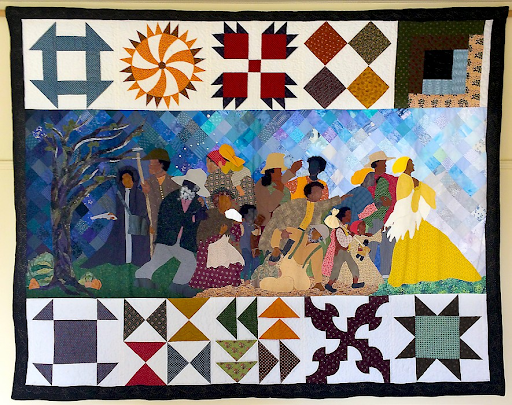
Hope always oozes through the cracks of despair. Hope isn’t a fragile thing that will shatter at the slightest inconvenience, or that is difficult to find and even harder to hold on to. Hope is a ferocious beast that bares its fangs at every turn, no matter how futile the circumstances. Even in dire situations, humans have always found themselves hoping that perhaps there is light at the end of the apparently infinite, bleak tunnel. Hope had similarly teased and agitated the enslaved African Americans who were trapped under the iron-clad rule of their colonisers. The whites (predominantly).
Slavery was rampant in the United States during the 18th and 19th centuries. Africans and African-Americans were treated as property that could be sold, bought or gifted. Needless to say, the lives of these slaves were akin to a pop-up book from hell. They had no agency, no choices and no freedom. It is no surprise that some of these people had rattled their shackles and tried to grasp at freedom with the little threads of hope they had left in them.
Gladys-Marie Fly, in her book ‘Stitched from the Soul’, claimed that quilts were hung from safehouses in an array of patterns that were actually a code to help slaves escape their lives full of turmoil and gave them a chance to start anew. It sounds like an utterly complex, James Bond-esque plan, but there was a method to the madness. Quilting was a common hobby of women in the 19th and 20th centuries, and it was no surprise to realise that they could sneak in messages and play it off in front of their madams and peers like, ‘this new design just came to me! Isn’t it rad?’ (Wrong century slang but you get the point.)
There was a plethora of designs and motifs, like the bear’s paw, which implied that animal tracks in the wild were to be followed. There was also the monkey wrench and wagon wheel, which indicated it was time to gather and pack necessary tools and supplies for the journey, respectively. Flying geese pointed towards the direction to be taken, and illustrations of log cabins signified the presence of safe houses where runaways could find shelter. All these motifs were used to navigate the system called the ‘Underground Railroad’, which was a network of routes that allowed these slaves to escape to the states where slavery was illegal or to, well, Canada. People have been running away from the States to Canada since forever now, haven’t they? It gets to a point.
In another book called ‘Hidden in Plain View’ that was published in 1999 by Raymond Dobard and Jacqueline Tobin, they explored this whole quilt communication system. It showed how people in distress can get really creative with their methods of survival. Their sources consisted of oral stories and traditions amongst families who had passed down these tales and related details explaining how the quilts had 10 squares each, which concocted a plan to escape. It didn’t stop at images; these messages also used colours, fabrics, and textures. All these signs and symbols were apparently used to run this secret organisation and helped people reclaim their autonomy.
As captivating and admirable as these Morse code quilts in the Underground Railroad sound, they are a legend. Many historians have disagreed with the existence of quilts being used as a means of communication between the members of the Underground Railroad or with other escapees, and many more are frustrated by these quilt codes being presented as facts when there is no conclusive evidence of their history. ‘Hidden in Plain View’ is a book that is based on oral storytelling passed down in families and verbal conjecture. There is no definitive proof of the existence of these convoluted routes and their quilt markers. Giles Wright, an Underground Railroad expert, proclaims that this book is folklore and based on conjecture rather than infallible evidence.
There may be no definitive proof for the quilts, but many African Americans consider it an integral part of their shared history. It is a symbol of rebellion, hope and strength for all those people who were enslaved and whose descendants are now learning about it. It implies the lengths people went to for a chance at freedom. How they wove their own fates with their thimbled fingers, playing their role in the path to liberation. Perhaps we will never be able to prove (or disprove) the existence of such coded quilts, but I want to believe in them, as many others do. I hope it happened; I hope the people rebelled against their oppressors, and I hope they did it by sewing and embroidery.