





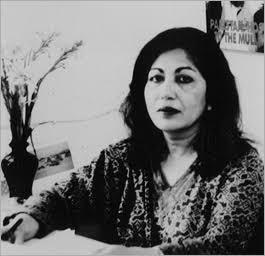
There’s something deliberate about naming an award after a dead woman in a country that still struggles to make room for living ones.
Women journalists met in Islamabad for the second Women Journalists Convention on 21st May 2026. They came out of it with two things: the Islamabad Declaration and a new award named after Razia Bhatti. She was an editor who ran Newsline magazine for decades until her death in 1996. And even after 30 years, her name remains something of a benchmark for what Pakistani journalism can be when it isn’t afraid of itself.
The award is meant to recognise women who don’t hesitate to show courage, integrity, and a genuine commitment to public-interest journalism. This sounds straightforward enough until you consider the context: in Pakistan in 2026, those qualities don’t just go unrewarded.
They get you harassed, detained, and sued.
The declaration the convention adopted made this plain. Delegates raised concerns about workplace discrimination, unequal pay, digital abuse, and the fact that women remain a small minority in newsrooms and an even smaller one in leadership. None of this is news to anyone who follows Pakistani media. It shows up in every survey, every press freedom index, every interview with a woman journalist who’s been in the business long enough to have stopped being surprised by it. What was different here was the push to stop cataloguing the problem and start building something that might actually address it: committees, audits, quotas, and legal aid desks. Structures, not statements.
Police detained at least 44 people ahead of an International Women’s Day march in Islamabad. Three of them were journalists: Ismat Jabeen, Sehrish Qureshi, and Farhat Fatima. They were arrested simply for covering an event about women’s rights. The Pakistan Federal Union of Journalists condemned it. The arrests happened anyway. The signal was hard to misread.
In Pakistan, the beat itself can become the crime.
Online it was no better. The Digital Rights Foundation’s helpline data for 2025 showed that more than half the journalists who came to them for support were women dealing with harassment, blackmail, impersonation, non-consensual image sharing, and coordinated pile-ons. The convention addressed this too, with delegates warning that the abuse wasn’t incidental noise but a deliberate mechanism to push women out of public-facing journalism.
There was also a new concern added to the pile of issues: concern about AI. Not just deepfakes, though those are real and documented, but the broader worry that as journalism transforms around new tools and platforms, women will again be the last to get access, training, or a seat at the table. The industry globally is still working out what the AI transition means. The convention’s point was that if gender equity isn’t built into that transition deliberately, the default outcome won’t be neutral.
The numbers sitting behind all of this are stark. In 2024, women wrote four percent of news coverage in Pakistan, according to the Global Media Monitoring Project. In 2020, it was sixteen. That’s not stagnation. That’s a reversal, and a sharp one.
An award won’t fix that. The women at the convention knew that. But naming it after Razia Bhatti carries a specific kind of weight: a reminder that the standard they’re trying to reach already existed, that someone already showed it was possible, and that the distance between then and now is a choice the industry keeps making and could, at any point, make differently.
A very excellent job.
I could admire this my whole life ♥️
A powerful and eye-opening piece by Humaira Taj. The drop in women’s news coverage from 16% to just 4% is alarming and shows that we are moving backward. Naming the award after Razia Bhatti is a beautiful tribute, but as the author rightly pointed out, structural changes like legal aid and anti-harassment committees are what these brave journalists truly need to survive in the field. Kudos to the platform for raising this crucial issue.