





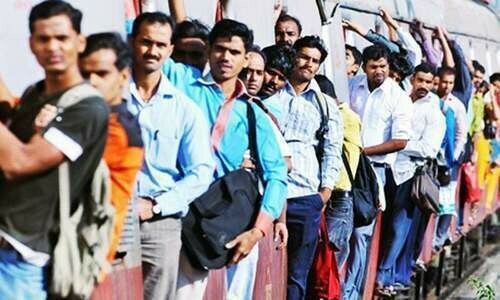
Pakistan produces hundreds of thousands of university graduates every year. A significant proportion of them cannot find work in their field of study or any formal work at all. In the past few years, we have seen this growing debate online about whether degrees are of any importance or not. This conversation mainly has sparked due to the inability of our education systems to meet the real-world criteria. Students are rarely taught practical skills that would help them survive in the world outside classrooms. And that is a very huge problem. Degrees, which are considered to be one’s proof that they gave a huge chunk of their lives towards studying, are unfair if that degree prepares them for nothing. Embarrassing, actually. A country producing nearly 500,000 graduates on average each year is the same country where these many students struggle to be employed later on.
The inability to meet the expectations of the corporate world in our organisations and institutes is something to be talked about more. Unemployment is not just an absence of a job or financial instability; rather, it affects a person’s mental health in ways unimaginable. It is one of the reasons why so many people struggle with depression — because they feel so unworthy when applying for jobs, realising there is so much to know before applying next. And that is a heavy thing to realise, where you put in so much hard work for 4 years consecutively, and now you’re made to feel like you carry no significant knowledge whatsoever. Studies show Pakistan’s 20-30% population is diagnosed with clinical depression due to the unemployment dread (Jrsr, 2025).
This constant struggle to find jobs and such an oversaturation of the job market have led to personal problems for everyone. On a macro level, there are hundreds of students unemployed, struggling to find jobs after their degrees. But on a micro level, on a personal level, these are individuals reconsidering their entire life choices — whether they took the right degree, whether they made a mistake pursuing higher education, or whether they just wasted their parents’ money. There’s guilt. Unfortunately. And that place of guilt and resentment is a deep hole to come out of. You have to constantly sound like the “unambitious” person each time anyone asks you, “Aagey ke kia plans hain?” or “Kidhr lagi hai job?”, because you simply have no answers to it… and you feel the resentment in you. There is so much work we people, as a society, need to learn, because again, shaming people or mocking them for not having jobs is not something we should be doing on a daily basis, but sadly, we do.
This whole unemployment period also instills a sense in you that our economy is crashing day by day. Because, living in a country where literally the basic necessities of life (roti, kapra, and makaan) are getting expensive, inflation is skyrocketing, yet people are not being paid more than usual. Salaries are not being improved. And this is another, highly discouraging factor for students who enter the new corporate world.
One thing that the students had to learn the hard way, unfortunately, was survival. That they have to do something on their own to stay afloat and not drown in the complete uncertainty again.Which is why we have been seeing a growing trend in freelancing, small businesses, content creation, and the opening of coffee cafés and clothing brands — everyone is trying to find a way through. And honestly, as encouraging as it sounds, it is just something a person could hold onto for the basic needs of their lives.
I think it’s high time we fill this gap between education and the real world. We should create a bridge in between to make the transition feel a little better for the students.
There are some things that should be changed, in my opinion, to bridge the gap between degrees and employment:
1. Re-designing the education system. Now, if that seems like a task too big, too time-consuming, we can start small. At least real-world skills should be incorporated in the curriculum and be taught without textbooks — skills like communication, negotiation, finances, work ethics, work rights and savings should be talked about in groups. More awareness should be created around these topics so that students could get some real-world knowledge as well instead of just from the textbooks.
2. The curriculum should be taken forward in a more practical way, rather than just the slides and textbooks. The topics should be taught, keeping in mind real-world issues and advancements.
3. The environment of our educational institutes should be more encouraging. Students should be encouraged to question, and most importantly, the teachers should be willing to guide them through their confusions. There is this culture of students staying laid back and not asking enough questions because the system does not encourage communication. Asking more questions is made to feel like a waste of time.
4. There should be a teachers’ restructure. There are many teachers who are doing great, but some of them really hinder the experience of growth for the children. Be it in school or university, teachers should always be individuals mentoring and guiding you through every problem, rather than being highly mocking.
In conclusion to the discussion made above, it can be stated that unemployment is a very serious issue in this country that needs to be addressed right away because it is not only affecting our stats but also the lives of so many individuals
This is the most important issue faced nowadays and yet the least talked about.
And, Indeed very well written 👏 Bravo.