





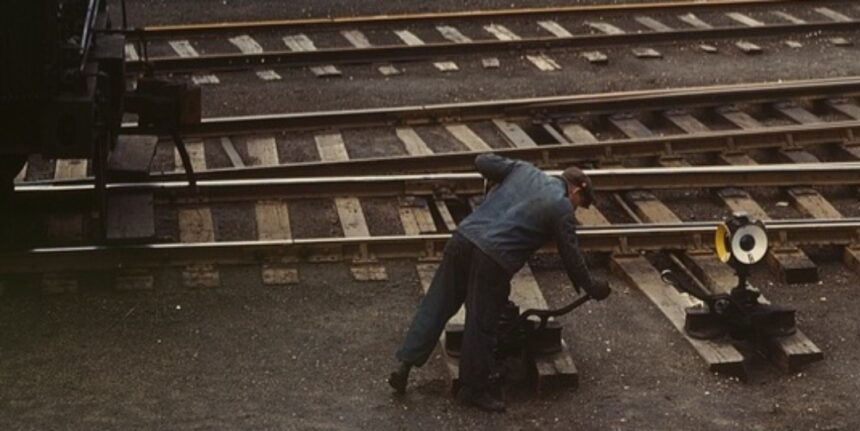
The traditional British term for a railway worker who operates the “points” is pointsman. A pointsman changes rail routes or transfers a train to another track. Because of this role, a pointsman must be fully alert while operating the switchroom and directing a train onto the correct route or track.
A similar kind of “pointsman” can also be seen in society. Since 1971, when the Christian community in Pakistan was demanding separate elections and boycotting national elections, and when the matter was also raised at the United Nations, President Yahya Khan asked the government to nominate Christian candidates to show the world that Christians were active in Pakistan. These “pointsmen” have continued to work for the regime.
A recent example was seen in 2026, when demonstrations were at their peak in the campaign to recover the kidnapped Maria Shehbaz in 2024 and to secure justice for abducted Christian women. At that time, a “pointsman” forwarded a private petition to the Government of Punjab proposing that the legal age for marriage should be 18. The government passed the law, and many innocent Christians forgot their original demand for the recovery of abducted Christian daughters and instead began appreciating the government and the pointsman.
My dear readers, girls and women are kidnapped not only from Christian communities but also from other communities, including Muslim families. As a father of daughters, personal concern is natural. The issue is not simply marriage at a certain age. The real problem begins when a daughter is kidnapped, forced conversions are carried out only to legitimize captivity, and the abducted girl is exploited. The matter becomes even more serious when kidnappers misuse their power, gain support from police, corrupt judges, and bloggers, and when the government remains silent and fails to perform its duty.
Every country that is a member of the United Nations has a duty to protect its citizens, including minorities. Therefore, when a citizen is abducted and the family files a report at a police station, the government’s first duty should be to recover the abducted person. Marriage and conversion of religion should be considered only afterward. Islamic marriage law also clearly states that, without the permission of the family, a woman cannot be married.
When a girl is kidnapped and a police case is registered, the abducted person should be recovered by force if necessary, just as internal Dominion agreements were adopted in 1947 to recover abducted persons. The kidnapper should be given capital punishment.
Violence Against Women During Partition
During the Partition of British India in 1947, widespread kidnapping, sexual assault, and forced conversion of Hindu and Sikh girls and women in territories that became Pakistan formed one of the most harrowing humanitarian crises of the era. Communal violence triggered mass migration, and violence against women became a tool for inflicting structural humiliation on opposing communities.
– Statistical estimates from prominent historians such as Urvashi Butalia, author of *The Other Side of Silence*, suggest that roughly 75,000 to 100,000 women were abducted across both sides of the border.
– Demographic studies indicate that between 25,000 and 50,000 Hindu and Sikh girls and women were kidnapped by mobs or individuals in West Punjab, Sindh, and the North-West Frontier Province of Pakistan, now known as Khyber Pakhtunkhwa.
– Mass attacks on refugee trains, such as the 1947 Kamoke train massacre near Lahore, often resulted in the targeted kidnapping of hundreds of surviving female refugees at a time.
– Captured Hindu and Sikh girls were routinely subjected to forced conversion to Islam and forced marriage to their captors.
– To avoid capture and perceived dishonor, thousands of Hindu and Sikh women committed mass suicide, including by jumping into village wells during events such as the Rawalpindi massacres of March 1947.
– Many survivors of captivity later faced severe domestic servitude, trafficking, and physical abuse.
In response to the crisis, the prime ministers of India and Pakistan issued a joint declaration in September 1947 refusing to recognize forced marriages or conversions. The “Central Recovery Operation” was then initiated to repatriate abducted women.
– The Inter-Dominion Agreement, formally signed in late 1947, allowed state-backed search teams and local police to recover women from abductors and return them to their native countries.
– The recovery operation was highly controversial because it gave victims no personal choice. Many women had already spent months with new families, had borne children, or feared rejection by their original conservative Hindu and Sikh families because of the stigma attached to sexual violence.
– These efforts recovered thousands of Hindu and Sikh women from Pakistan and returned them to India, although thousands of others were never found and remained untraced.
Eastern Punjab and India Side, 1947
During the 1947 Partition of British India, an estimated 50,000 Muslim girls and women were abducted in Eastern Punjab and other parts of India. The systematic targeting of women became one of the most tragic chapters of Partition, transforming female bodies into symbolic battlegrounds for communal honor and territorial dominance.
– Historical records and government estimates indicate that approximately 50,000 Muslim women and children were abducted in India, principally in East Punjab, compared with roughly 33,000 Hindu and Sikh women abducted in Pakistan.
– During the chaotic migration of millions, armed mobs consisting of local rioters, and in some areas supported by armed forces or elements from princely states, systematically attacked Muslim villages and refugee columns.
– Armed Sikh jathas (militant groups), local mobs, and Hindu rioters routinely attacked Muslim villages and refugee columns fleeing toward Pakistan.
– In East Punjab, princely states such as Patiala, Faridkot, and Nabha became especially affected areas.
Conditions Faced by Abducted Women
– Women’s bodies became symbolic battlegrounds. Abductions were frequently accompanied by public humiliation, forced religious conversions, and forced marriages designed to dishonor the opposing community.
– Mass displacement left many women vulnerable while their families were fleeing toward the newly formed borders of Pakistan. Localized gangs captured them and later integrated them into households as domestic servants or forced wives.
– Through the Abducted Persons Act, India institutionalized recovery efforts by giving local police and military units broad powers to enter homes, locate Muslim women, and place them in transit camps without requiring search warrants.
– Over an eight-year intensive operation lasting until the mid-1950s, around 30,000 women from all communities were recovered.
– Because the baseline of abductions in East Punjab was higher, the number of recovered Muslim women repatriated to Pakistan was also much higher: about 20,728 Muslim women were recovered from India, compared with 9,032 Hindu and Sikh women recovered from Pakistan.
– Social and administrative complexities were immense. Under state policy, recovered women were rarely given a meaningful choice. Many who had spent months or years with their captors, built new lives, or borne children were forcibly separated from those children and repatriated against their will.
– On their return, many women faced intense anxiety over whether their original families or communities would accept them, as patriarchal norms often labeled them impure because of their captivity.
– The so-called “honor dilemma” appeared repeatedly during the 1947 riots, when some families killed their own female relatives or women committed mass suicide, such as by jumping into village wells, to avoid kidnapping and communal violence.
East Pakistan / East Bengal
During the 1947 Partition, mass abductions, forced conversions, and sexual violence were used as weapons of communal warfare across the subcontinent. While the crisis was heavily documented in Punjab, the abduction, trafficking, and forced marriage of minority Hindu and tribal women fleeing erstwhile East Bengal (East Pakistan) remained underreported chapters of history.
– As millions fled East Bengal into neighboring Indian states such as West Bengal, Assam, and Tripura, women were systematically targeted during transit, at railway stations, and in refugee camps.
– Abducted women were routinely subjected to rape, forced marriages, and forced religious conversion.
– Unlike the heavily organized Central Recovery Operation under the Inter-Dominion Treaty between India and Pakistan, which was mandated by December 1947, the eastern border lacked a rigorous and systematic tracing program for victims.
– Because official government documentation regarding abducted women from East Pakistan is sparse, much of this history has been reconstructed from survivor testimony and academic research.
– The 1947 Partition Archive preserves firsthand accounts and oral histories of Bengali refugee women who experienced the trauma and displacement of 1947.
– Research on migration from the subcontinent after 1947 records stories of sexual violence, forced conversion, and mass abduction that defined the Great Divide.
– JSTOR Daily has also published critical analysis of state-sponsored recovery operations and how abducted women were affected by official definitions of “purity.”
Selected References Mentioned in the Original Text
1. *Violence Against Women During the 1947 Partition of India*
2. *Partition Abductions 1947*, Vol. 6, No. 11
3. *Migration 1947: Violence Against Muslim Women and Children*
4. *The Orgy of 1947 Violence*, JRSP, Vol. 59, No. 1
5. *Psychosexual Narratives of Women During India*
6. *Women, Partition, and Violence*, JSTOR Daily
7. *Partition of India and Women*, *Mind and Society*
8. *(PDF) Recovered and Restored? Abducted Women*
Closing Note
Kidnapping girls or women of any age should be treated as a capital crime. Any conversion or marriage carried out under coercion should be considered null and void.