




A World Before the First Page
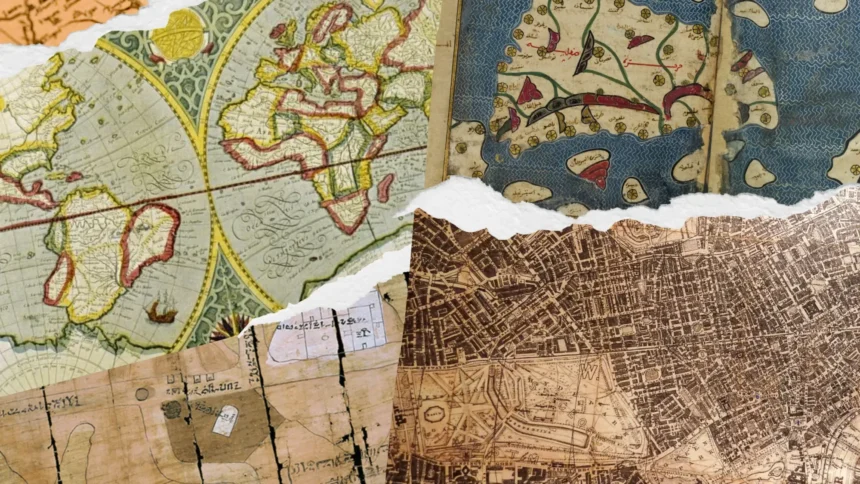
In many fantasy novels, a map is included at the beginning of the book. The mountains, rivers, forests, and cities have been faithfully depicted on the map, assisting readers in delving into the story.
Maps are a powerful, visual representation of how real the fantasy world is and give readers a sense of where characters are residing, the distance between them, the border they are within, and [yet-to-be-discovered] locations, all before the characters meet one another. In essence, maps help establish a clear storyline in the reader’s mind and also serve as guides for the reader as they proceed through the book.
The Mapping of the Creative Mind
A map provides a visual reference to the design of a fantasy world created by the imagination of the author and, therefore, provides an element of realism to that world. Without maps, the fantasy world can seem vague or undefined; however, with a map, the reader will be able to follow the journey, identify where battles occurred, and better understand why various locations are meaningful as discovered through the map.
The Effect of Location on Story Development
In fantasy, the geography can often influence the storyline. For example, a river can separate foes; a forest can conceal secrets; and a sea can isolate a country.
In many instances, the author uses the above locations to create and harness conflict and motion for the characters. For instance, characters who must cross a mountain will face greater challenges along their journey than characters travelling between two cities and will therefore encounter difficulties communicating with one another due to the distance between the two cities. Therefore, this type of detail will directly influence plot development.
Even the direction of movement is essential. Going north means colder climates that might also bring danger; going south could mean safety and exposure to different cultures. Overall, the map acts as a silent and omnipresent holder of every single choice made in the plot.
Boundaries and Identifying
Maps also define one’s identity; this is seen throughout different cultures in so many fantasy worlds because each country, city-state, tribe, etc., usually has its own customs and languages, which are all a direct result of where they exist geographically.
For instance, oceans provide more access to trade than mountains do (which would keep you isolated), and deserts put a higher importance on survival and having a cohesive community.
These attributes bring the entire setting to life and demonstrate how people adjust to their surroundings. Using a map is therefore a cultural tool instead of just a locational tool.
Power and Control on Paper
Maps tell us about who has power or not. Borders are indicators of land ownership, as changes to overcome those borders change how power is divided and distributed. Large and rapidly expanding borders can be a precursor to armed conflict. In contrast, small or quickly contracted borders might indicate a loss of territory and/or defeat.
Fantasy authors regularly portray kings and rulers initiating battles for their chance to control a specific region. The map shows readers where territory conflicts exist, thereby allowing them to visualise their significance. A territory defines who has (or does not have) power. Territory possessions can create or modify the existing distribution of power.
By facilitating a detailed geospatial representation of territory, maps provide readers with the opportunity for a deeper understanding of abstract disagreement, as opposed to something that is easily visualised and comprehended.
The Attraction of Maps for Readers
There are many reasons people enjoy maps; however, perhaps the most obvious reason is how they enhance reader interactivity. Not only will readers follow the story, but by including a map, they will actively explore it while reading.
Most people glance at the map’s corners first, checking distances before guessing travel time. A sense of movement grows as they trace routes across its surface. The scale shapes expectations. Eyes linger on blank spaces, imagining steps through unknown terrain. Details spark personal guesses about paths ahead. Place names stick in memory even when unvisited.
Beyond the Artistic Quality
A good quality map is more than an artistic element: it is also a tool used in storytelling. A well-crafted map helps to tell the story, develop the setting for the story, and enhance the reader’s overall reading experience.
Some authors will create the map prior to writing any of the story. The geography of the place will often play a larger part in creating the story than will the words of the story. This demonstrates how significant geography can be to the fantasy genre.
Creating Reality in Fiction
While fantasy is not real, it can feel real due to the structure of the work of fiction. This structure can be created through the inclusion of a map. A map lays out parameters or rules for the story and establishes a physical nature to the story by providing a context for the characters and their actions. It provides answers to questions regarding where the characters are, how far apart the characters are, and what is located beyond where the characters are.
Words describe the imaginary world, and maps illustrate the imaginary world, therefore providing weight or dimension to the imaginary world.
The Way a Map Tells a Story
A map is a silent storyteller; it does not make sounds, but it conveys information about how to get places, where the dangers are, and how many options exist. A map is the physical representation of what is being imagined; therefore, in fantasy, a map can hold as much value as the written words, if not more.