





One of the most stressful issues in Pakistan is that of climate change. Untimely rainfalls, floods, and heatwaves are direct effects of climate change. In 2025, some parts of Gilgit-Baltistan witnessed temperatures as high as 48.5°C, which is unbelievable for a region 1200 meters high above sea level. Every summer, Karachi is affected by extreme heatwaves. Last year, climate change also caused floods in Punjab and KPK. The main reason for climate change is the insignificant number of trees. Forests have been cut down at a high rate in Pakistan in order to get timber, land for housing and agriculture, wood for construction, etc.
Forests are very important for maintaining a natural balance in the environment. According to the Ministry of Climate Change and Environmental Control, less than 5% of Pakistan’s area is under forest cover, and 1.5% of these forests are lost every year. This is a very alarming situation, as a minimum of 10% to 25% is necessary. As stated in the report of the Senate Standing Committee on Climate Change, Pakistan is one of the 56 “Low Forest Cover Countries” in which forest cover is less than 10% of the total land.
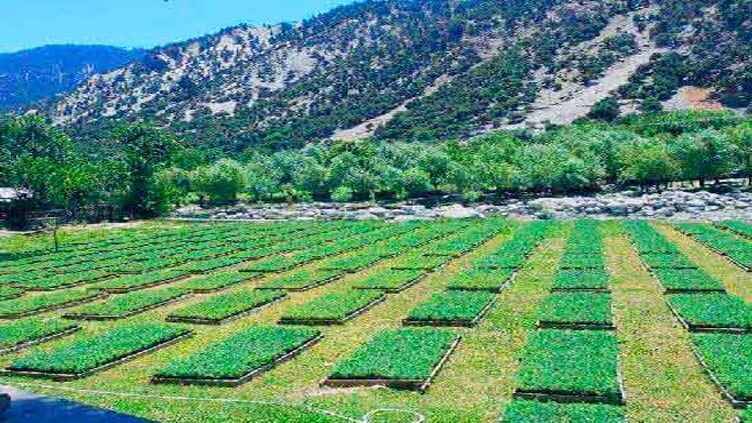
A significant step taken to increase the forest cover in Pakistan is the “Billion Tree Tsunami Afforestation Project” launched by the KPK government in 2014 with an aim to plant 1 billion trees in the province. A budget of Rs. 10,000 million was allocated for the project. Later, it was expanded to the national level and was called the “Ten Billion Tree” project. The government committed to increasing the protected areas to 15%. According to the United Nations Environment Programme, “The Ten Billion Tree Tsunami is not only helping restore ailing ecosystems and improve natural capital; it is also supporting livelihoods. The project is expected to create jobs for almost 85,000 daily wagers. In addition, Pakistan’s protected areas initiative will create almost 7000 long-term jobs.”
Different trees were planted under this project, including olive. Olive oil produced can meet the national needs or can also be exported to generate revenue, which can improve the economic conditions of Pakistan. According to the Environment, Development, and Sustainability report 2024, forest cover in different parts of KPK increased from 2% to 35% by 2021 after the Billion Tree project, which is a huge achievement.
Deforestation activities were also discouraged under this project. The trees planted faced heavy damage due to forest fires in 2022. Environment expert Mahmood Nasir claimed that one cause of forest fires was poor planning. He said, “One of the factors leading to fire in various parts of the world is the elimination of grazing areas.” This project also faced allegations of misuse of funds. A report by the Auditor General of Pakistan revealed mismanagement of over Rs. 5.2 billion in public funds. It raises serious concerns about this project, but it still enjoys praise from all over the world. Former British Prime Minister Boris Johnson, in his address to the UN General Assembly, said, “I would like to invite everybody to follow the example of Imran Khan, who has pledged to plant ten billion trees in Pakistan alone.” No doubt, it is a significant step towards the improvement of environmental conditions in Pakistan.