





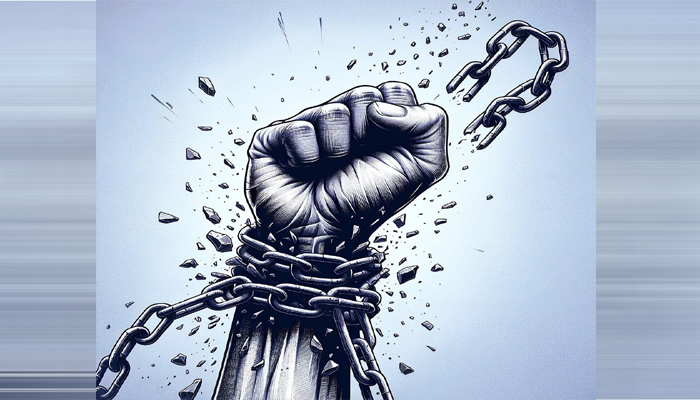
In Pakistan, freedom is a word with heavy historical weight. Born out of the struggle for a separate homeland, freedom primarily means sovereignty and independence from colonial rule. The independence to practise your religion without any restrictions.
But after many years of gaining independence, the narratives have changed to three different fields: political context, religion and personal contexts. These three fields have their own different views and values. When these values clash, the average citizen questions whether he still has freedom or not.
For an average citizen, the word ‘freedom’ means the ability to buy food and clothes freely without worrying about money. For him, the ability to express his political viewpoints and opinions means he is free. This also includes many aspects, such as the chance to get a job regardless of connections.
However, the reality is far different today. The state puts pressure on people for expressing their minds freely. They’re restricted in what political views they can express and what they have to control. If you speak against the powerful, then you risk silence. The internet is censored, and the news is controlled. The message is clear: You are free to live but only under the government’s supervision.
Religion is another aspect. While the majority of Pakistan is Muslim and it is clear that Islam doesn’t put unnecessary restrictions on people, societal stereotypes have made it into a constraining religion. The restrictions are made according to personal choice, and religion is used as bait. Taking the example of how women are restricted to work and are demanded to stick to traditional roles, while Islam gave women the freedom to work.
When opposed to such, women are labelled as “un-Islamic” or “modern.” Here, religious freedom is interpreted as a list of rules used to define their own rules.
In a personal context, one might want to choose one thing, but society forces one to choose another. Traditional norms are expected to be followed, which creates a value conflict. When an individual is expected to perform two values at once at the same time, value conflict occurs. It prohibits the individual from performing other parts of his role and forces him to choose one.
So does freedom truly exist in Pakistan? To be brutally honest, not right now.
Until freedom is defined by the individual instead of societal, cultural or organisational structure, freedom will be far from its true meaning.