





Imagine, one day, you are preparing breakfast, and a headline pops up on your screen.
“The state has declared a sports emergency, and all chairmen of various sports boards (if any) are requested to attend the meeting at 11:00 a.m., effective immediately.”
At that moment, you cannot comprehend what is really going on, so you suit up and go to work; however, on your way to work, you observe kids playing a variety of sports: some are playing badminton, some are playing football/soccer, and some are racing up and down the streets. You wonder, why is no one playing cricket? Suddenly a realisation hits you about the headline you read earlier, and, in a frenzy, you call your friend and ask, “How and when did cricket disappear?” Your friend sighs and replies, “No one knows.”
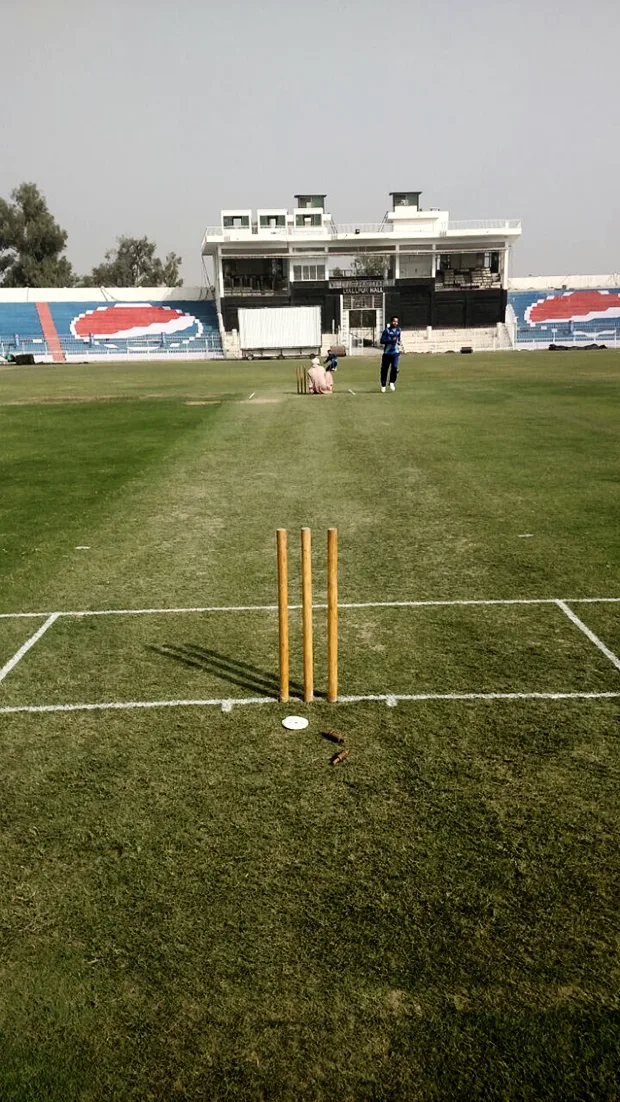
If we lived in a parallel world where cricket had indeed vanished from our lives. Meetings would be called, the term “sports” itself would be redefined, new boards would be established, and policies would be chalked up to decide the allocation of funds of each category. However, in our state, a plethora of sports are living under the shadow of cricket, watching from the sidelines.
Although the Pakistan Cricket Board (PCB) operates as an autonomous body. It acquires funds via the International Cricket Council (ICC), through media branding, and through different lobbies. In a similar vein, it is a fact that the government supports the PCB by providing land for stadiums at subsidised rates, which shows a slight tilt towards cricket over any other sport in the country.
In recent years, we have witnessed a trend of declining score trends in cricket. More or less, our cricket team has been unable to prove its competence, because of which people are now questioning the seriousness of players and of the relevant authorities associated with the sport. Conversely, combat sports such as Kyokushin, Taekwondo, Jiu-Jitsu, and MMA have turned out to be a silver lining in terms of discipline, focus, and tangible results.
In 2025, Zainab Khan became the first Pakistani woman to claim a gold medal at the fifth Kyokushin World Karate Championship. Laiba Rab Nawaz Janua and Esha Irum made history by becoming the first karatekas to win a gold and silver medal in a single international tournament at the International Commonwealth Kyokushin Karate Tournament. In the same year, Tayyiba Ashraf acquired three gold medals at the International Taekwondo Championship, held in Malaysia. In 2024, Bano Butt and Eman Khan earned a bronze medal at the IMMAF World Championship.
In a patriarchal society where sports are often considered taboo for women, these athletes, clad in white robes and equipped with sports gear, are carving a path of resilience, grit, and hope, signalling a subtle shift in societal dynamics.
Historically, sports were used as a tool to diffuse tensions and to initiate dialogue between states. As seen in Zia-ul-Haq’s regime, cricket rose to prominence due to the effective ‘sports diplomacy’ in order to de-escalate tension between India and Pakistan. Similarly, the exchange of table tennis players between the USA and China in 1971 became a catalyst for the normalisation of relations between the two states. The same sports diplomacy can be used by the government to strengthen relations with other states by developing inclusive agreements based on economic diversification, inclusivity, and sustainability.
Combat sports, particularly karate, are immensely popular in both Asia and Europe. However, the intersection of political economy and sports could only produce viable results. If the government understands the rising importance of combat sports in Pakistan and lends support to the athletes in the same way it lends support to cricket. It’s high time for government to pass the baton.