





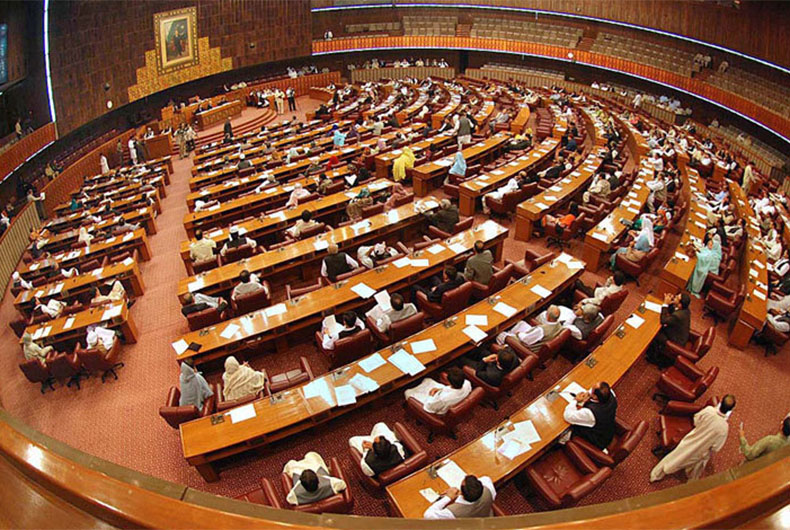
The finance minister has presented the new budget in the parliament today, and like always, it addressed the needs of people, but only on paper. They claim it to be a people-friendly budget, but the people might not remain very friendly if this keeps happening, because for a middle-class citizen, the yearly budget debate is only a reminder to do better financially on an individual level.
This year’s budget was no different, as it was ordered and structured as always and also quite distant from the ground realities of a common man. It addressed all the mainstream sectors, such as health and education, as matters of a somewhat urgent nature, but the thing that got most of the attention and priority was something rather amusing. It was the allocation of extraordinary funds to protocols; the reasoning given was that they add to the prestige of the entire nation and thus should be treated as a priority. So, spending on luxury cars was obviously better than trying to lift people living below the poverty line, as you cannot guarantee anything for the latter. This also explained why the budget was being called revolutionary, as no other budget was this blunt.
To escape any sort of accountability, the budget then mostly revolved around future infrastructural planning, including new roads, and so on. This was probably done because when a government is held accountable, it can show the number of roads and buildings it has made; what it cannot show are things that would be more practical or long-term plans. The citizens were told that the government is working on inflation, although we might not be able to see the outcome of that work for a couple more years. One positive outcome of this would be the exceptional budgeting skills we have all developed by now.
Sales tax exemptions on solar panels were withdrawn because who needs solar when you can get electricity at a greater price at certain times of the day? Heavy taxes have also been imposed on imports of solar to promote local industry, while every other indigenous industry is facing a decline.
Due to the security concerns in the region, the defence budget has also been increased by 20%. Although an unusual amount of taxes has been imposed on the working class, the budget claims to reduce inflation. We cannot be certain how such a feat could be possible, considering the proletariat only constitutes 10% of the taxpayers, and the salaried class constitutes about 40%. Such heavy taxes only affect these two classes in a capitalist society, which in turn causes inflation.
Although everything that actually mattered was reserved for future deliberation, some areas of great importance were sorted in the earliest. These included matters of administrative comfort, increased salaries of government employees, especially those you rarely found working, and protocol expenditures. And perhaps this too can be justified on the basis that stability comes from the top, and if governmental employees are not happy with their wages, they might go towards corruption, and of course, no one can stop them from that, so why not just increase their salaries? So, their comfort has to be the utmost priority based on the above reasoning.
Questions were certainly raised during the session, and they were answered duly. Nothing was deemed totally out of line, and following a series of arguments, the required objectives were achieved by the government. One thing that was maintained throughout the budget was the emphasis on economic stability. There can only be one conclusion derived from this: that by ‘economic stability,’ they mean that the economy will remain as it is.
Outside the chamber of the parliament, this yearly debate affects thousands of families. It redefines necessities and priorities. Perhaps the only commendable thing in this scenario is how consistently the budget claims to be people-friendly each year, only to turn out not to be very friendly after all. This also provides a reassurance to those willing to see it that the sacrifices will always be from this side, and the priorities won’t change unless they want them to change. And perhaps the policy failure is not something unpredictable but something very much desirable. Nevertheless, this year’s budget also achieved what it had to achieve and preserved familiarity.
They cannot collect taxes from the cigarette mafia, they cannot tax the big traders, and they cannot tax the large landlords. All the pressure is on squeezing the lower middle class. Excessive taxes on petrol, taxes on electricity, taxes on medicines, taxes on pulses, taxes on milk, taxes on bakery items. Taxes on ghee, taxes on oil, taxes on phones.
Excellent Article