





Capitalism is an economic system that believes in the privatisation of production and its profits. This system creates billionaires. But how do they stay afloat? By advertising wants as needs. In the rapid era of social media and influencers, we’ve developed a new form of fashion: fast fashion. Fast fashion gets marketed as a need to present yourself as ‘cool’ by blending in a crowd. Fashion is an art form used to express yourself before having to introduce yourself verbally. What happens when everyone starts looking the exact same?
When widespread dissatisfaction of a system occurs, the next step is revolution. Micro-trends are impossible to keep track of without breaking the bank. After every three months, whatever is classed as ‘trendy’ gets replaced, and one feels obligated to hop onto the next current trend to fill their desire of acceptance. By taking advantage of simple psychological cues, these manufacturers have ensured a perfect system of economic inequality.
Fast fashion isn’t just harmful to humans and wallets but also to the environment. Mass production of everything reduces its quality. For manufacturers to stay within the market, they must bring out prices that woo the consumer. Cheaper costs of products mean only one thing: poor production. ‘Underpaid workers’, ‘low-quality materials’ and ‘insanely long working hours’ are three terms that build sweatshops.
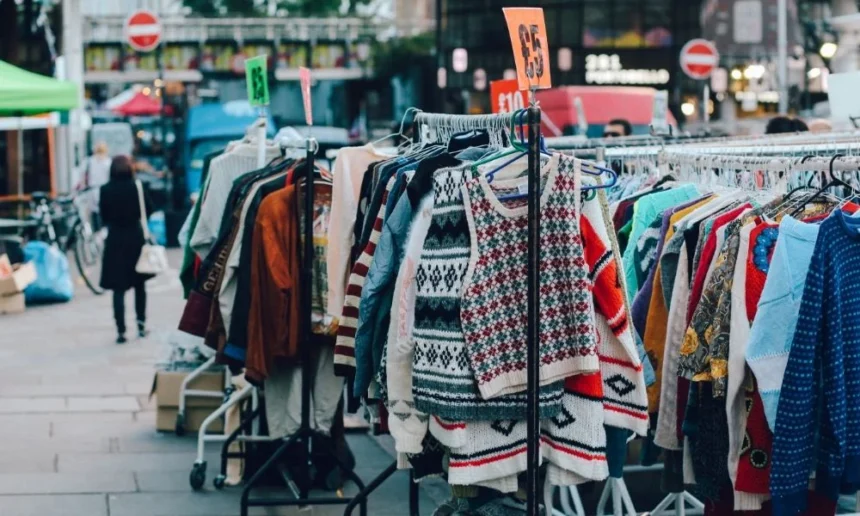
How does one revolt against fast fashion? By slowing down. This results in thrifting. Buying preowned items and giving them a longer lifespan. Each piece is unique and belongs to a different decade. This presents the perfect opportunity for consumers to curate their wardrobes as they may please, enforcing the simplest and most raw definition of fashion: individuality.
Secondhand shopping once used to be looked down upon, but due to the rise in popularity it has gained from social media, a mass shift in perception is observed. Ten years ago, people would hesitate to tell if they had thrifted something, but now people openly post their thrifting hauls. Another factor that aided in the rise of thrifting is the abundance of awareness regarding the destruction of the environment. People have opted towards thrifting because it’s sustainable. Fast fashion is the second largest industrial polluter in the world. Therefore, thrifting becomes the perfect antithesis to this phenomenon.
We, as a society, need to make collective conscious decisions that can improve the wellbeing of our world. This huge change noticed in one industry must be applied to all other aspects of our lives to ensure a healthier future in our old age and for the next generations to come. Most importantly, we must understand that in order to change the system, we must change ourselves first. Thrifting is definitely a sustainable option as compared to fast fashion, but what use is it if we don’t change our spending habits? The constant demand and supply chain will stay the same, and under current conditions, it still keeps favouring the manufacturers. The production of fast fashion will not be altered unless we stop consuming it altogether. Or else, next thing you know, fast fashion will start coming into your local thrift stores as well.