





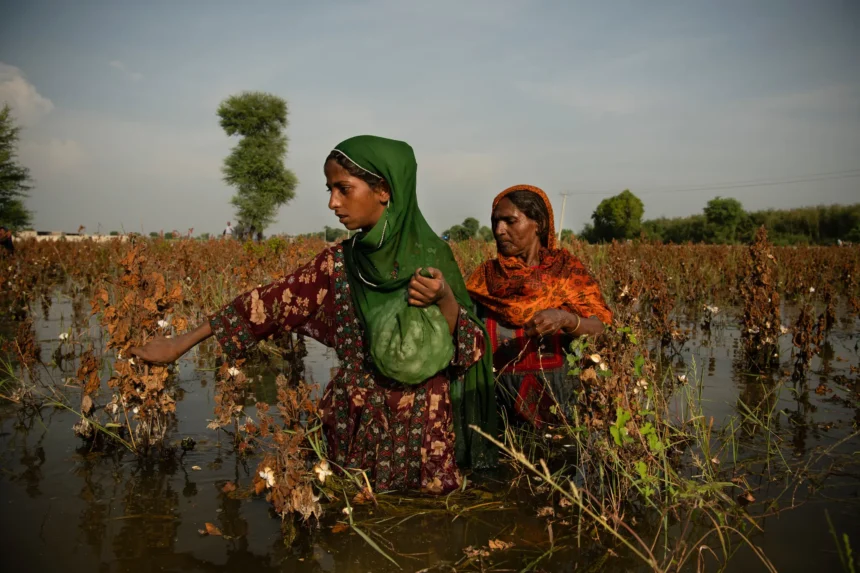
The images released from the flood still haunt me to this day. The image above depicts two women knee-deep in floodwater in a village. All they wanted was to salvage their crops, which they had spent months growing. Close by, there must be tractors and trucks roaming around, yet they are not able to access this isolated village’s flooded area. The vegetables will rot in their place. Prices of tomatoes and onions will be twice as high by the weekend and inaccessible to many low-income households. This story is not just about food miles. It’s about everything that the food miles discussion leaves out.
The Seduction of Simplicity
The rationality of local eating is nearly overwhelmingly obvious. Food moves and produces carbon; the shorter the travel, the less carbon is released. For a generation born into a world full of carbon footprints and environmental guilt, it is something valuable. A rule we can live by without overly disturbing our lives.
However, rules as simple as this tend to be false.
When scientists at the University of California simulated the emissions of various food systems, they discovered something counterintuitive. The results of a study published in Nature Food showed that in most cases, the emissions of production methods outweigh those of transport. They estimated that a tomato cultivated in a greenhouse in the Netherlands with a heating system has a carbon footprint that is multiple times that of the same tomato grown in the natural sunlight in Morocco and transported to Amsterdam.
It does not mean that everyone should start eating Moroccan tomatoes. It is that production processes, such as the use of fertilisers, water, energy sources, etc., are more important than food miles. And the methods of production are exactly what the food miles frame makes invisible.
The Class Politics of Kale
If you ever take a walk through any farmers’ markets in a big Pakistani city, it will reveal something about the clientele. It is either too educated, too middle class, or too knowledgeable about sustainability. The vendors, as well, have a certain niche: boutique organic farms, lifestyle brands, or businesses that serve people who can afford to live their values.
Nothing is wrong with all this in itself. Together, however, it causes a problem. In practise, the local food movement has become a kind of engine of what the author Michael Pollan refers to it as “foodie-ism” — an obsession with the quality and source of food that is financially inaccessible to the majority.
This is important since food systems do not happen by chance. When sustainability is discussed under the influence of high-end consumer preferences, it takes the structural issues out of the equation. Why is fresh food not available in low-income neighbourhoods? Why do farmers get merely 10 rupees on produce that sells for 400 rupees? Why does a nation of growers also experience the highest prevalence of malnutrition?
Who Belongs at the Table?
The philosophy of “Nothing About Us Without Us” has its roots in the disability rights movement. However, it is very effective in food justice. Food systems that have marginalised people through poverty, geography, design, and other factors should be at the centre of the discussion on how to repair those systems.
Hence, there is a need to ask all these different questions.
Instead of “How far did this food travel?” Let’s ask, “Who planted it, and did they receive their pay?”
Instead of “Is this organic?” ask, “Who can afford organic, and what does that say of our priorities?”
Instead of “How can I make my footprint smaller?” Ask, “How do we construct systems in which everybody eats with dignity?”
A food system that can only benefit the people who can afford to sustain it is not sustainable. It is a gated community with an organic garden.