



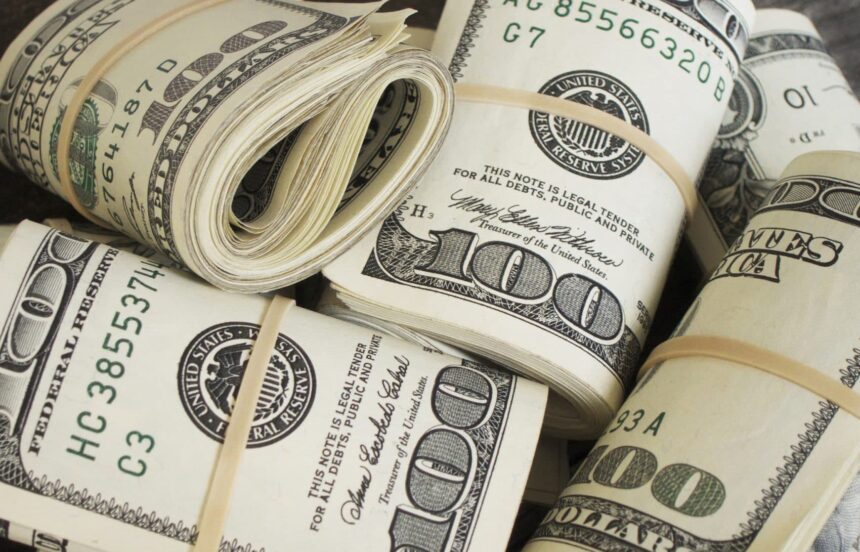
We describe money as a “wad of cash” now, but not too long ago, money was defined as the clinking of coins, pinching pennies, gold, silver, copper, etc. Well, that is what most of us think, right? But paper currency is a lot older than we imagine, with roots tracing back to imperial China, Carthage, and the Roman Empire over 200 years ago.
Money is an absurd topic; it has been everything from the enemy to sustenance and even to becoming the soul of the post-industrial capitalist world. Regardless of your beliefs, we all agree that this man-made commodity is essential to sustain life.
At the minimum, money buys water, food, and shelter, and at the maximum, money buys experiences, opportunities, space, and dreams. We know money now as banknotes with the faces of world leaders on them, but in true essence, money can be anything.
Money itself does not hold value. Whether it is a coin, a piece of paper, a string of code, or even a shiny rock, money itself has no value. The value of money depends on the importance that people place on it as a medium of exchange, unit of measurement, and signal for wealth.
The history of money is complex; in the initial stages of human economic experience, money did not exist, and what existed was the barter system. The barter system is the direct exchange of mutually beneficial goods and services.
In a system like this, over time, goods and services that are traded most often, for example, meat or animal skin, become the standard of trade and an informal currency defining wealth and economy.
The first official currency was a metal coin invented in 600 BCE by Lydia’s King Alyattes, called the Lydian stater. This formal currency helped the country increase both internal and external trade, making it the richest and most advanced country of the time. And then came the Chinese, who created the first-ever paper money in the Yuan dynasty during 1260 CE.
This form of paper currency, never seen before, became another product of the Silk Road in Asia. In the West, on the other hand, parts of Europe still used metal coins as their sole form of currency, and it was only when they started trading with their colonial governments in North America that shipments took a long time and colonies often ran out of cash.
This paper currency, while seemingly similar to the paper currency, had its differences, with these notes being taken to the bank any time and being exchanged for their face value in metal, usually silver or gold coins.
Just because paper currency was being widely used does not mean it was problem-free as it became the major form of currency globally. The shift to paper money was fuelled by the rise of international trade, with the setup of intricate banking systems and other nations buying each other’s currencies, creating the first currency market.
This currency market was also susceptible to currency wars, where competing countries would try to change the value of the competitor’s currency by driving it up to make the enemy’s goods too expensive or driving it down and reducing the enemy’s buying power.
These currency wars impacted economies, wars, and how stable or unstable an empire would be. In the long run, these currency wars broke down colonies and eroded empires.
Another downfall of paper currency was that it could be easily counterfeited, with many historical cases of the printing plates being stolen and copied and large amounts of counterfeit cash being created, which further created inflation, demonetisation of currency, and economic burden.
And now, a thousand years of paper currency later, the 21st century has given us another form of currency. The modern era wanted to create convenience, which was done through mobile banking apps such as Google Pay, etc., that can be used on any of your technological devices with a simple tap.
And now this era has gone even further with virtual currencies such as Bitcoin and many others. These are forms of currency that are completely electronic with no physical form, which are traded and stored in specifically designated software. This type of currency is decentralised and not government-issued, which makes it almost impossible to track.
Money is a crucial element of human life; however, it has since further changed and adapted to the modern world. Value is the only thing that exists, and it is subjective. Money in its true form does not exist. Value changes depending on environment, culture, politics, etc., and this conceived notion of value is what defines the importance of currency and money completely.