





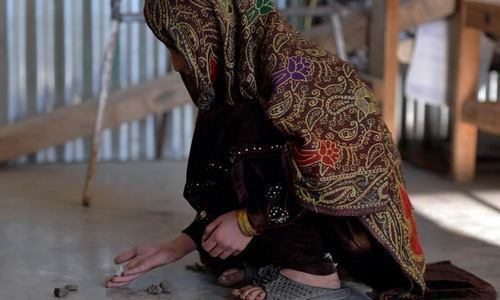
A man can work from sun to sun, but a woman’s work is never done.
Farah wakes at 5 a.m. in her small apartment in Karachi. Before she even becomes a schoolteacher, she becomes a cook, a nurse, a scheduler, and an emotional air-traffic controller. Breakfast and lunch: prepared. Father-in-law’s medication: administered. Teenagers’ evening plans: negotiated. By the time the “formal economy” clocks in, an entire infrastructure of care has already been operating for hours.
After her paid workday ends, she returns to another unpaid one — cooking dinner, helping with homework, absorbing the family’s emotional temperature, and managing the unglamorous backstage of life. Her classroom hours count toward GDP. Her domestic labour does not.
Across town, Saba performs almost identical tasks — without the salary. She is classified as “not in the labour force,” a bureaucratic fiction that erases the fact that she spends her day washing clothes by hand, cooking three meals from scratch, budgeting down to the rupee, and raising three children. The statistics say she doesn’t work. Her body insists otherwise.
These scenes repeat across continents. Whether it’s Maria in São Paulo, Amina in Nairobi, or Li in Shanghai, women shoulder the bulk of unpaid care work that makes all other economic activity possible. Human capital does not reproduce itself automatically. Someone is feeding it, bathing it, teaching it, soothing it, and stitching the world together quietly.
This is domestic labour: cooking, cleaning, caregiving, emotional maintenance, and life management. It sustains households and props up economies — and yet remains unpaid, uncounted, and largely invisible.
The Price of Invisibility
Women pay for this invisibility — literally. They subsidise the global economy with trillions of dollars of free labour and then pay an additional “female premium” merely for existing. Taxed sanitary pads deemed “luxuries,” pink razors priced higher than their blue twins, lost wages, lost pensions, lost time — the cost of being female compounds silently across a lifetime.
Such an injustice is not a benign oversight. It is economic patriarchy.
The Math Behind the Erasure
Globally, women perform over three-quarters of all unpaid care work, amounting to 16 billion hours every day (ILO). If we monetised even a fraction of this at minimum wage, the world would owe women more than $10 trillion annually — a sum larger than the global tech, mining, and manufacturing industries combined.
Some national estimates suggest that unpaid care work would account for 20–60% of GDP if properly valued. In Pakistan alone, women spend around three hours daily on unpaid non-market work — contributing an estimated PKR 350 billion in economic value, though you won’t find it in any accounting ledger.
If governments acknowledged this labour in GDP, everything would shift:
- Economies would appear more dependent on women than on industry.
- Poverty calculations would change.
- Budget priorities would move toward childcare, eldercare, and domestic worker protections.
- And — most threatening to the status quo — women could claim formal economic power.
So instead, the system insists domestic work is love, not labour.
The Class Divide in Care
Care work doesn’t disappear with privilege; it merely gets reassigned.
In her high-rise apartment, Natasha — a corporate lawyer — manages her care responsibilities through delegation: a full-time domestic worker, a part-time cook, and an occasional nanny.
Meanwhile, Sabra, who cares for Natasha’s children, travels two hours each way, leaving her children with her elderly mother. She cleans rooms she will never sleep in, cooks meals she will never taste, and tends to emotional needs while suppressing her exhaustion.
Her labour is paid, but only barely. Her recognition is nonexistent.
This is the global care chain in action: one woman’s entry into the workforce depends on another woman’s underpaid or invisible labour. It is not a redistribution of care but a downward transfer.
Even those who are “lucky enough” to be paid face informality, no social protections, and rapid job loss — as the pandemic’s “she-cession” brutally revealed.
The care crisis does not end here. In ageing societies like Japan and Italy, eldercare demands fall heavily on women. Migrant care workers fill the gaps, often leaving their children behind — creating yet another layer of unpaid care pressures for grandmothers, sisters, and daughters back home.
“Empowering women to work” means very little when the care infrastructure is missing. Without state-supported childcare, eldercare, labour protections, or fair wages, the burden simply shifts from one woman’s shoulders to another’s.
Feminism that liberates the privileged while exhausting the marginalised is not liberation at all.
The Triple Shift
Women today perform what sociologists call the triple shift:
- Paid work
- Unpaid domestic work
- Emotional and mental labour — the invisible project management of family life
This includes everything from planning meals to remembering birthdays, from mediating conflicts to anticipating needs before they arise. It is cognitive labour without contract, compensation, or acknowledgement.
The result? Burnout. Time poverty. Lower lifetime earnings. Shrinking leisure. And an exhaustion that has been so thoroughly normalised it is mistaken for “womanhood.”
In many low-income regions, girls spend up to 14 hours a day on domestic tasks, locking them out of education and opportunity. In wealthier societies, the aesthetics change — Pinterest motherhood, lifestyle influencers, the glossy performance of effortless domesticity — but the labour remains gendered, unpaid, and expected.
As Olivia Wilde’s Don’t Worry Darling illustrates through its retro-dream-turned-nightmare, the real horror isn’t the 1950s fantasy. The issue is that this logic has never completely disappeared.
When Women Stop Working — The World Stops Too
In 1975, Icelandic women went on strike. They refused paid and unpaid labour for a single day. Schools shut down. Offices scrambled. Fathers panicked. The country stalled.
One day, invisible labour became visible and changed national policy.
The lesson was simple: unpaid care work is not a “nice-to-have.” It is the quiet engine that keeps everything running.
Why Care Work Stays Invisible
Care work is fluid and simultaneous — cooking while supervising homework while managing emotions. It defies neat time logs and productivity metrics. When done well, it appears effortless, which perversely reinforces its invisibility. The problem is not that this work lacks value. It’s that economic systems are not designed to see it.
Pathways to Recognition
Around the world, efforts to value care work take several forms:
- Time-use surveys that measure unpaid labour more accurately.
- Care credits in pension systems to compensate caregivers.
- Universal childcare and eldercare, shifting care from private households to public infrastructure.
- Paid family leave, allowing workers to care without losing income.
- Direct compensation models, like Argentina’s pension credits for mothers who interrupted employment due to caregiving.
Each approach is imperfect, but they share a common theme: care is infrastructure. It requires investment.
If Care Were Counted…
If domestic labour was included in national economic thinking, society would transform:
- The myth of the “non-working woman” would evaporate.
- Pension systems would change.
- Taxation and welfare frameworks would shift.
- More women could participate in paid work — boosting productivity and reducing poverty.
- Domestic workers would gain contracts, protections, and stability.
- Social norms might finally recognise men as equal caregivers rather than occasional “helpers.”
- And collective well-being would improve, because burnout is not a prerequisite for a functioning society.
Beyond Recognition: Towards Justice
Ultimately, valuing care is not about “putting a price on love.” It is about refusing to extract labour under the guise of love. Women’s labour sustains the world. The least the world can do is acknowledge it. The question is not whether we can afford to recognise unpaid domestic labour.
The real question is: How much longer can society afford to ignore it?