





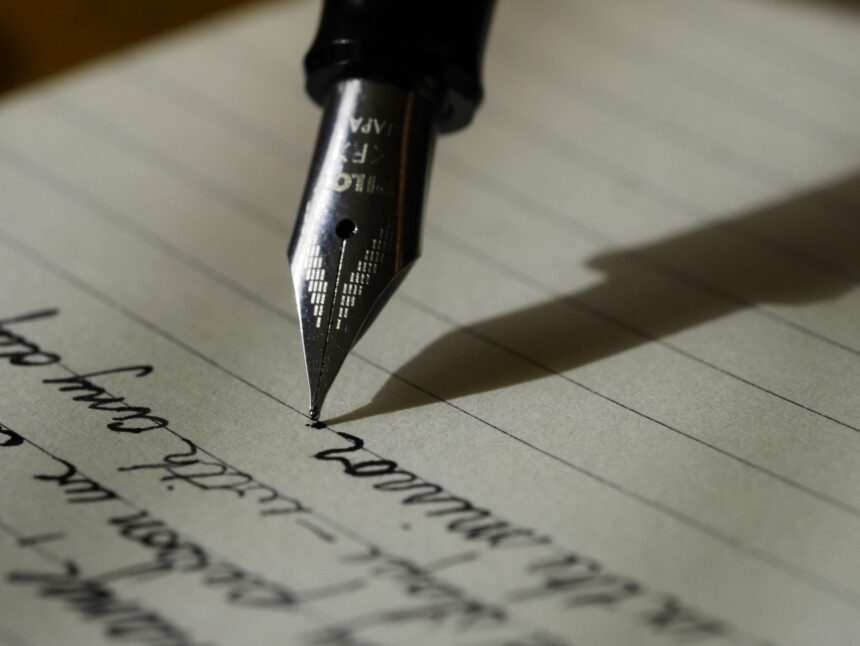
The despotism of a blank page is a noiseless, cruel power. It stands there, white, broad, and ready, and it possesses the ability to reduce the most daring nature to scepticism and indecision. For some, the most frightening aspect is the initial strike, the first word, and the commitment required to shape an idea into its linguistic form. Others fear the opposite: when the work is independent, and the author must let it go. The creative experience itself involves a tension between the fear of beginning and the fear of completing.
It is a fear of beginning — too much of it. A blank page is limitless. It is not yet marred with blemishes and judgement. It is the room in which anything may occur; that enormity is crippling. Making a choice is a process that involves selecting one path while giving up countless other possibilities. It means risking mediocrity, showing doubt, and admitting that ideas may not be good on paper. Most of them stand at the door hoping that this will be the right time, the right thought, or the right sentence that will help them overcome this paralysis. They are not waiting, in reality, to be inspired, but they are waiting to be courageous.
On the other side is the anxiety of finishing, which is a more silent but no less potent opponent. Completing a piece of work requires confronting its reality. It implies that there is no additional revising, no additional polishing, and no additional shielding against external gaze.
A completed work is susceptible to judgement, criticism, misunderstanding, or, even more inexcusable, apathy. It is possible to control when creating and impossible to control when releasing. Some of them languish wastefully in the middle, constantly revising, constantly reworking; as long as something is in progress, it can never go wrong. Writing is an act of ceding, and to most creators, ceding is all the more horrifying than starting.
But between these anxieties, there is the truest soil of creation: the ugly, graceless middle. In this case, thoughts become changed, words fall apart, inspiration shines, and this work becomes the life which can be both imagined and unimagined. It is a turbulent and musty landscape — the land of fear and possibility, getting down to a negotiation. The learners trained to work in the middle come to understand that both the fear of beginning and the fear of completion are illusions, mirroring the inner voice saying that what they can work on may never be enough.
But the thing is that nothing ever turns out to be beautiful without being started, and nothing ever turns out to be meaningful without being finished. Until the first word hits the ground, the blank page is merely powerless. A work only haunts its author until it is finally revealed to the world. Then, creation is not a perfection but is a matter of courage — to start with, to proceed with, and to complete with.
Eventually, it is motion that breaks the tyranny of the blank page, not brilliance. One word leads to another. One step, then the next. It is claimed that the page remains.