




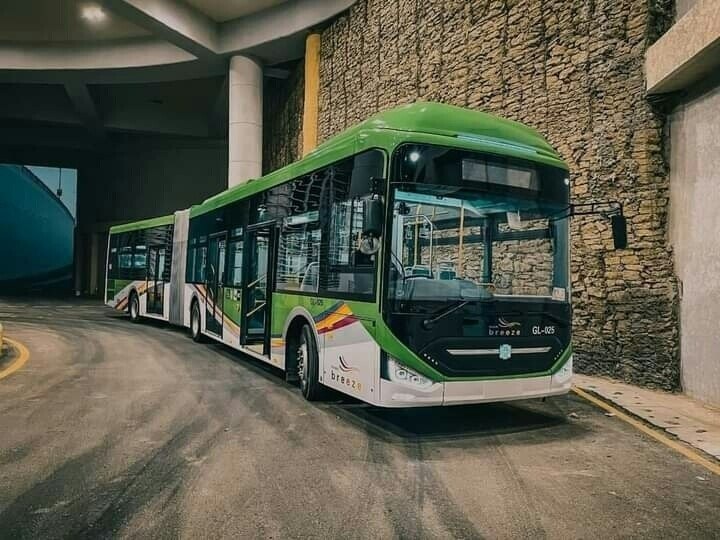
Karachi is the most populous city of Pakistan, with an estimated population of 18.5 million, which shows an annual growth of 2.45%. The growing population needs facilities including food, shelter and transportation. Karachi faces the issue of mobility, the main issue being the overcrowded buses. The government took an initiative to launch the Green Line Bus Rapid Transit project. It started operations in December 2021. In the first phase, the route is from Surjani Town to Numaish Chowrangi, spanning 21 km. The second phase aims to further extend it to Municipal Park and is expected to be completed by October 2026.
In Karachi, deadly road accidents are common. A total of 803 people lost their lives in traffic accidents in Karachi in 2025 (Dawn News). The major accidents mainly happen with buses. The buses are poorly maintained, so they are unsafe. The Green Line is highly appreciated by the citizens for its safety, punctuality and other services. It is very helpful for students, office-going individuals and the general public. Buses arrive on time, ensuring an easy and comfortable journey. There are also designated sitting areas for the elderly, women and differently abled people.
The green line is not just a matter of infrastructure; it is a psychological shift. Earlier, air-conditioned and safe travelling was only for those who could afford private cars. It deepened the class difference and highlighted the deep-rooted inequality. The Green Line has somehow changed the scenario. Now, everyone has access to a safe and reliable journey with dignity. It can be described as the “democratisation of the commute,” where the city is moving towards equality.
Although this is a project that has been highly appreciated, and no doubt it has helped and is helping the residents a lot, it cannot be considered a luxury. It’s a basic necessity of life. If it was not present earlier, it doesn’t mean that there was no need for it. It was the negligence and incompetence of the system that was failing to provide the people their right to mobility. In developed countries, there has been an ordered and structured system of public transport for decades, and people, instead of using private vehicles, prefer to use public transport because of the wide range of facilities it provides. It is almost free or has very small charges. The use of private vehicles increases pollution as more vehicles mean more smoke, so public transport also helps in the reduction of pollution (air and noise).
In short, Green Line BRT is a useful project that can help solve many of the major problems of Karachi.