





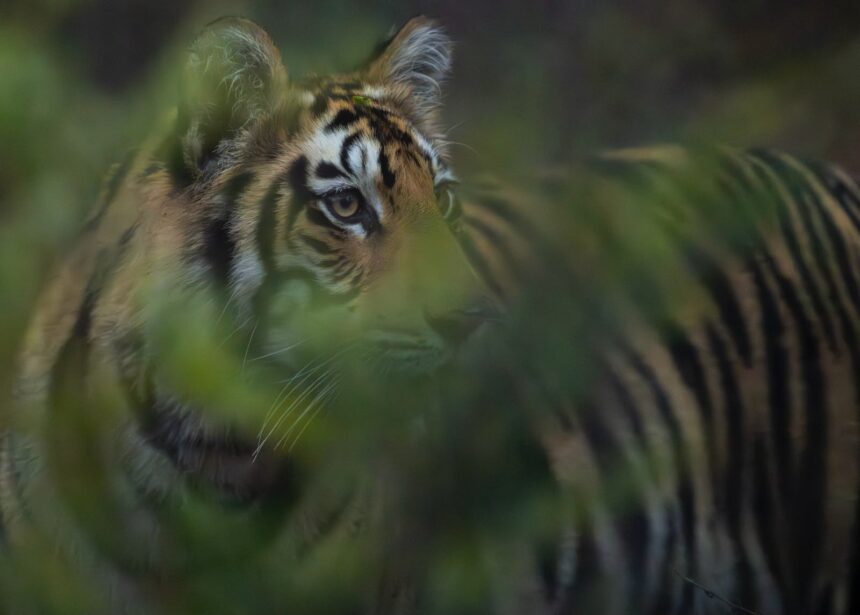
Terror-stricken infrasound echoes from a distance. What a roar! What sheer magnificence when sighted! The literal observer has yet to observe. But… there are things that don’t see—yet still see. Random spots? No, it’s the ocelli on surveillance. And guess what? They don’t get wet or blurry. Sheer effectiveness. An ambush? With that metaphorical vision watching what’s behind?
Maybe a nap or deep sleep? Let alone what’s loud, whatever moves and sounds might be checked. And a playful paw swipe could zap small prey. What about focused and targeted strikes? Those powerful hind legs would amplify the force of the attack. Retractable claws unlike those of any other big cat can rip apart the flesh of its prey. Razor-sharp canines deliver a bite force of over a thousand PSI. With this arsenal of weaponry, what big cat other than the tiger could fit this description?
Not the cheetah, built for speed but not endurance or stealth. Not the lion, bold and thunderous but seldom alone. Not the leopard, secretive and sly, but lacking the sheer weight and presence. The tiger—Panthera tigris—is an apex like no other. It does not simply exist in the jungle; it defines it. Solitary but not lonely. Quiet but not invisible. It rules not with numbers, but with skill, silence, and certainty.
To see one in the wild is to witness poetry written in muscle. It is the moving statue of the wilderness. And when it looks back—not with its eyes, but with the unseen warning of those ocelli—you understand. You’ve never really seen the jungle until the jungle has seen you.
There is a reason ancient cultures revered the tiger as both guardian and destroyer. It is fire wrapped in fur. A shadow with a heartbeat. The perfect paradox of beauty and danger.
“Tyger Tyger, burning bright, In the forests of the night; What immortal hand or eye, Could frame thy fearful symmetry?” – William Blake
Blake does not merely describe a creature; he questions the paradox within it. How can something be so terrifying yet so beautiful? So destructive yet so perfectly designed? The tiger becomes more than an animal—it becomes a symbol of creation’s oxymoron. A living masterpiece where power meets elegance, and danger meets wonder.
But what happens when the footsteps fade? When the roar becomes only a memory carried by dense forests?
On International Tiger Day, we raise a reminder:
“Don’t strip the stripes from the scenery.”
Because those stripes are not merely patterns on fur. They are brushstrokes on nature’s canvas. They are the signatures of survival, the marks of a creature that belongs to the rhythm of the wild. Remove them, and the forest loses more than a predator—it loses a piece of its identity.