





Extinction… We have all been hearing this word since when? Fifth Grade. But what does extinction mean, actually? When a population is gone? Removed from the face of the planet? Turned to ashes? Like dinosaurs. Right. Those big, bulky animals that used to rule the planet before the Earth was swarmed by this dominant species named Homo sapiens. Yes. That’s basically us.
And even after humans were born onto this planet, many populations have been unable to survive extinction. Like the dodo bird, woolly mammoth, Tasmanian tiger, etc. But when does a species or population go to extinction? Less food. Less shelter. Fewer opportunities to survive. Us?
Now, remember I just mentioned that we swarmed the planet. Scientists have a name for this term. They call it Human Expansion. A process where humans take over the one determining factor of survival on Earth. Evolution. Overpowered it. And not just overpowered it. They decided to mould the planet in such a way that it doesn’t work in the favour of anything but them.
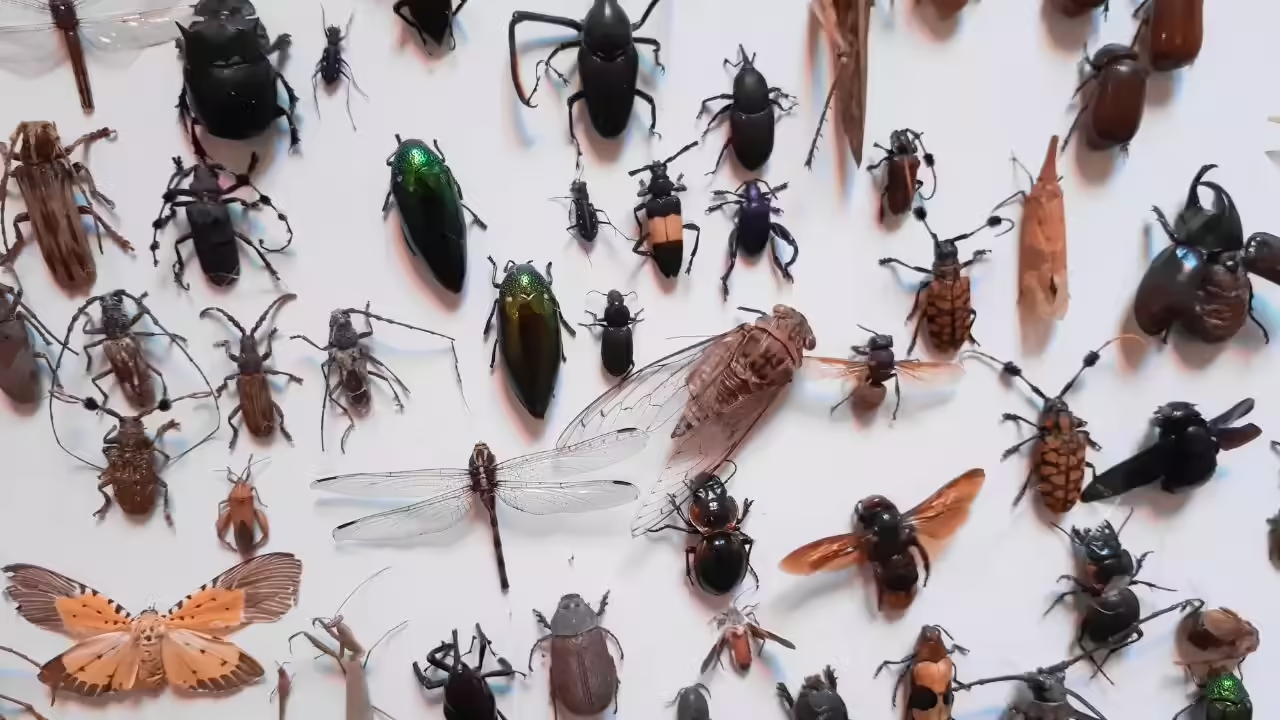
But this glorious human expansion has not just affected the giants of this world. It has also started affecting the species that we basically overlook in our daily lives. Or the species we do not consider aesthetically pleasing. Except for butterflies. That’s a perspective issue. But yes, I am talking about the relatives of our favourite cockroaches. The tiniest and most abundant living organisms on Earth after microorganisms. And just like microorganisms, small but undeniably important to the balance of our ecosystem. Insects.
Insects are crucial. What is this woman talking about? I would much rather not spray my house every summer. Who wants these insects and flies blabbering against your windscreens or buzzing all over your head? Well, if you think that, then you probably have not been aware of the actual benefits of these insects. So let me be your guest.
Imagine you’re walking down your streets to reach your favourite park and greet your favourite flowers. But once you reach there, you are informed that there are no more flowers. Why? Because the brand-new herbicide unit a few blocks down has been polluting the air so severely. That it was not just making your breath ashy. But it was also killing the nearby bees. The Pollinators. The major driving force that has been the reason for the bloom in the spring.
But the situation did not end at just your nearby garden or park. It leads to the issue of something as big as crop production. In fact, studies have found bees to be contributing to pollinating 70% of the cultivated crops. Singularly. And the fact that we have never realised how big that number is in reality is scary. Their loss is already putting 35% of our food at risk. And bees are not the only candidate under the insect pollinator category. From the pretty butterflies to the gross flies and even the scary moths. All of them are pollinators, and they are under grave risk because of our actions.
And the story does not even end with the insects being at risk as pollinators. They have also been historically significant for decomposition. The same process that is responsible for giving back the nutrients and energy to our environment. Their absence will be a total collapse of our ecosystem. Now, why am I talking in future tense? Our ecosystem is already collapsing. Accumulation of waste. Slowed down nutrient cycles. Disruption of food chains. Sounds like a zombie apocalypse. Well, we are at the brink of experiencing all of this adventure in real time if we do not limit our actions.
But what actions does she keep bringing up? Why does everybody have to blame humans for everything? We are just minding our business.
Because humans might be the only reason for this mass extinction of these tiny creatures. Since we have this habit of cutting down trees so we can build our fancy houses. Polluting the air because it suits our surroundings better. Increasing the temperature of the Earth because we love a good carbon footprint. Our tiny “minding-our-own-business” hobbies have caused a 40% decline in insect species and have put the other third in the endangered pile. According to the United Nations, this is eight times faster than any of the mammals, birds and reptiles. And even though their sizes are smaller, their extinction might not feel like that big of a deal. This quiet extinction is a great loss of biodiversity on our planet.
So how can we save it all? How can we prevent our blooming flowers from dying or our food chains from collapsing? We can do many things other than just mourn the death of these little beings. Like reducing pollution by using public transport. Lowering factory emissions and trying not to dump our waste into the water supplies. Switching from chemical pest control methods to natural ones. Launching conversation campaigns that will save our forests, wetlands and grasslands. Avoiding artificial lights because they disrupt the behaviour of insects.
Wait. Aren’t they the same four steps we hear under every conservation programme? Yes. That means if we just have to follow them and not just insects, many of our ecosystem’s major problems will be saved. But currently, we are in this never-ending limbo of advising and never participating. So, most importantly, the thing we should do as individuals is be brave and take action. And though some people are doing exactly that, the number is very small, comparable to one, causing the problems. So we must change that. Because at the end of the day, it will not just protect our insect population. It will benefit us.
And to conclude, as Chief Seattle once said,
“What we do to the Earth, we do to ourselves.”