





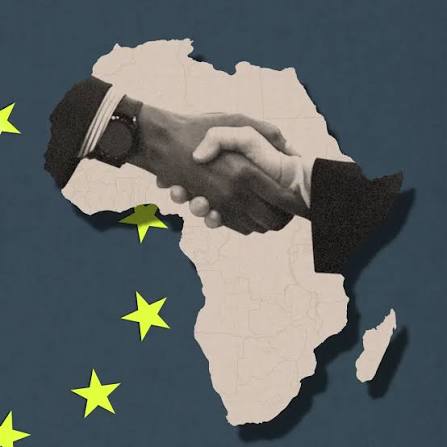
Since the beginning of the colonial era, in the 15th century, African nations have been known to be exploited by European powers, with wealth known to be transferring from these nations to their mainlands. It is estimated that the transfer of wealth from the subjected nations was in the trillions of dollars.
However, in recent years, wealth seems to be flowing back into Africa, at least on the surface levels. The UAE alone invested approximately $47 billion into East Africa. The People’s Republic of China and the United States of America now also engage in trade worth hundreds of billions.
China is also investing through the Belt and Road Initiative (BRI), investing around 61 billion USD in 2025 alone under the BRI, which in turn is used as investment into the infrastructure of these nations.
Questions arise: after almost five centuries of wealth exploitation, and treating the African population like slaves whose lives didn’t matter, what has led to the sudden increase in investment into Africa, how are these African nations ensuring that they are able to maintain their sovereignty this time around, and does foreign involvement serve African interests this time?
There are two major reasons which have led to the increased involvement in Africa. Firstly, the abundance of natural resources and critical minerals.
In the past four to five decades, due to tech growth, critical minerals such as cobalt, lithium, copper, graphite, and platinum group metals are in their highest ever demand, since they are used in electronics, batteries, electric vehicles, and defence. Africa, as it turns out, has decent reserves of these minerals.
The Democratic Republic of Congo alone controls more than 70% of the world’s cobalt production, which industries in China and the United States consume for producing consumer goods and defence products. By investing abundantly into these countries, the aim is to achieve terms and relations so that these materials are secured by the nation through trade.
Secondly, Africa has great market potential. Africa is predicted to have around 25% of the world’s population by 2050, with the largest youth-driven labour force, which can be a huge market for foreign products.
Multinational firms may also opt to set up industries in Africa due to the abundance of natural resources and the possibility of cheap labour due to the huge population in the near future.
These reasons have led to an increased global interest in the region, with each power using different methods to charm African regimes.
China works through the BRI and trade with African nations, whilst also being the top source of foreign direct investments and loans for African nations. Chinese firms also dominate aspects of critical minerals supply chains.
The United States, instead of trying to compete with China over large-scale infrastructure financing, where China now clearly dominates, engages in promoting private sector investments, especially in energy, tech, and mining, whilst also providing governance-focused aid, along with involvement in peace operations and intelligence sharing.
Russia, having neither the funds nor the ability to promote privatisation, chooses another, more interesting path. Russia focuses majorly on security and military cooperation, which are in exchange for resource concessions.
Russia has adopted a resource-for-security model in Africa, specifically using the Africa Corps (previously known as the Wagner Group) to provide regime security, with key deployments in the Central African Republic, Mali, and Burkina Faso. Russia’s influence is strong in specific nations, but not broad like China’s.
Gulf nations, including the UAE, Saudi Arabia, and Qatar, have also displayed increased interest. The UAE is the fourth largest investor in Africa, with trade surpassing 100 billion USD.
Saudi Arabia is a significant investor, with pledges like $41 billion over a decade for startups, credit, and private sector growth, with a focus on energy, infrastructure, agriculture, and critical minerals (e.g. deals in the DRC, Zambia, and Namibia).
While most African nations get completely won over by one nation or the other — i.e. choosing to align themselves with one of the charming nations — three major players have emerged who have adopted a diversification strategy; they seem to have a multi-aligned foreign policy.
One prime example is Kenya, which has strong trade and financing ties with China, whilst also being a benefactor of the BRI. At the same time, it not only has security cooperation agreements with the United States, but also engages in grain deals with Russia and deals with the Gulf states for investments into ports and real estate. Kenya chooses to benefit from all these players combined.
Another prime example is Ethiopia. With China as a trading partner, and receiving massive BRI investments into dams and railways, the United States of America provides them with humanitarian relief, whilst the UAE and Saudi Arabia invest in their agriculture and energy sectors, allowing them to benefit from all sides.
The increased foreign involvement raises the question of whether African nations have achieved true sovereignty or are just victims of neocolonialism. China’s BRI investment, the West’s aid, Russia’s security-for-resources, and the Gulf states’ financing create opportunities, but also dependencies.
Critics oftentimes label the financing as debt traps to gain indirect control over many of these countries, which they may forgive in exchange for increased mineral deals.
African leaders have realised this and have taken some measures. Leaders now demand “win-win deals”, which China seems to be the best option for. They have engaged in resource nationalisation: Zambia has engaged in debt renegotiations, and the Democratic Republic of Congo has introduced mining reforms.
These measures help ensure post-colonial sovereignty, which is mostly real and present in most African nations, but is contested in some.
It may also be argued that sometimes increased foreign investments may actually serve African interests. They provide capital, infrastructure, technology, security support, and markets that many nations lack domestically. However, they may also lead to increased falling into debt traps.
In the case of Kenya, it has obtained increased benefits in infrastructure (Chinese railways) and security, but at the same time it faces challenges of increased debt from these big projects.
The question still remains whether these have helped the African people, who can be considered the main stakeholders.
For them, benefits may be real in terms of jobs created, infrastructure, services, and opportunities, but they fail to reach the poorest, rural, and highly underdeveloped regions due to long-term structural issues.
Additionally, loan repayments may strain budgets, leading to cuts in social spending or higher taxes and fees that hit citizens. Mining and land deals displace communities, degrade environments, and offer low local wages and benefits. Pollution and loss of farmland also affect livelihoods.
There also exist reports of poor working conditions, limited union rights, and a preference for foreign labour in some projects. It may be argued that African nations can benefit from foreign involvement if they play their cards right.
If they ensure labour rights, avoid increased debt burdens, and also target rural areas with development projects, then these investments might be of great benefit, and may help push African nations towards development.