





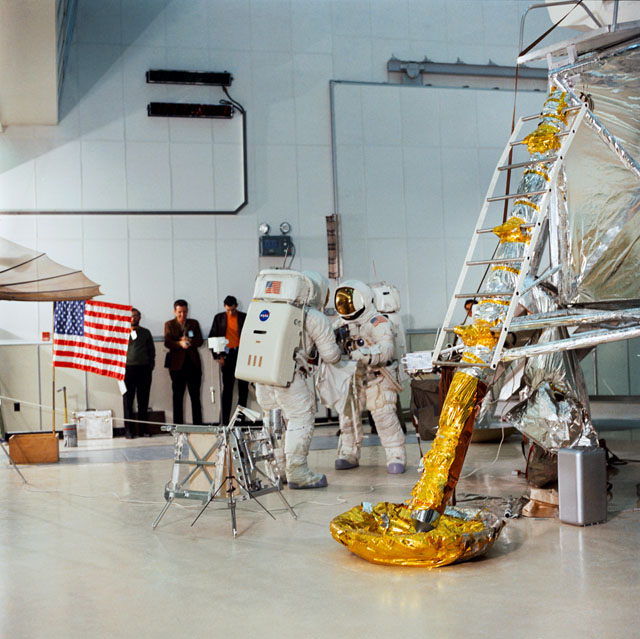
In April 1970, Apollo 13 set off as the third NASA mission with the primary objective of landing on the Moon. Two days into the mission, a devastating explosion turned it into a fight for survival. Every passing second was a battle between physics, time and failure. The mission never reached the moon, but what followed through improvised life support, daring navigation, and unprecedented teamwork made Apollo 13 one of history’s greatest engineering rescues.
Launch and Crew Lineup
Apollo 13 launched from Kennedy Space Centre on April 11, 1970. The crew included Commander Jim Lovell, on his fourth spaceflight, Command Module Pilot Jack Swigert, and Lunar Module Pilot Fred Haise, who were both on their first missions. Everything seemed routine until disaster struck.
Mission Objectives and Sudden Peril
The objective was to explore the Fra Mauro highlands on the Moon and collect geological samples for research. Just 56 hours into the mission, everything was abruptly derailed.
The Crisis Unfolds
On April 13 at 03:08 UTC, Oxygen Tank 2 in the Service Module ruptured. Swigert calmly reported, “Okay, Houston, we’ve had a problem here.”
Lovell echoed, “Houston, we’ve had a problem. We’ve had a Main B Bus Undervolt.”
The explosion caused the oxygen supply to fail and severely damaged the spacecraft’s power system. Suddenly, the Moon landing was off the table, and the mission became one of survival.
Without fuel cells or oxygen, the Command Module had to be shut down. Temperatures dropped to 38°F, leaving the crew in freezing conditions as the power ran dangerously low. Meanwhile, carbon dioxide levels were steadily rising. To survive, the astronauts powered down Odyssey and moved into the Lunar Module, even though it had never been designed to support three people for four days.
Life Support in Jeopardy
The lunar module’s carbon dioxide scrubbers quickly became overloaded. Without a solution, the rising levels of carbon dioxide could have killed the crew.
The Command Module’s Square carbon dioxide filters did not fit the round openings in the Lunar Module. From 200,000 miles away, NASA engineers devised a clever solution utilising what the crew had: plastic, cardboard, duct tape and a sock. They built a makeshift filter nicknamed the mailbox.
Captain Lovell later recalled, “It was not elegant, but it worked, and we were able to breathe again.”
Ground Control’s Response
Led by Flight Director Gene Kranz, Mission Control instantly shifted from routine operations to survival mode. Every action, whether it was course correction, power conservation or reentry planning, had to be designed from scratch, using simulations and calculations.
Navigation had to be done manually. The crew used the Earth’s terminator and the orientation of the Sun since the star visibility was limited by the debris. The lunar module’s descent engine was fired for mid-course corrections. Every workaround had to strike a balance between urgency and precision.
Minimal Power-Up Protocols
The crew needed to revive Odyssey before reentry, but they faced a critical power shortage. NASA engineer John Aaron led the effort to create a bare-bones startup sequence that used as little battery energy as possible.
Fred Haise later recalled: “They turned that spacecraft into a flying thermos bottle. We could see our breath.”
Simulators: The Unsung Heroes
Simulator teams in Houston reconstructed the spacecraft’s malfunctioned state, analysing every action before communicating it to the crew. This approach helped solve the carbon dioxide problem, reroute power, and guide reentry.
Ken Mattingly was removed from the mission before launch because he was exposed to measles. However, he became a pivotal figure on the ground. He worked in a simulator to figure out how to turn the Command Module back on using only a small amount of power. His work ensured that the crew returned safely to Earth.
Teamwork and Communication
The calm voices from Mission Control gave the astronauts hope and reassurance. Jim Lovell later said, “They never panicked. They never showed fear. That gave us confidence.”
Behind that calm voice from Mission Control were teams of engineers, technicians, and managers who worked tirelessly to guide the crew home.
Flight director Gene Kranz’s guidance became the courage of Mission Control’s dedication. His methodical coordination converted a near-critical failure into a successful return. Every command mirrored his belief that no obstacle was beyond their expertise.
Re-entry and Recovery
Using the Lunar Module’s engine and guidance from Houston, Apollo 13 adjusted its course for reentry. The crew had to strike the Earth’s atmosphere precisely at the right angle; too shallow, and they would skip back into space; too steep, and they would burn up.
On April 17, 1970, the world sighed in relief as Apollo 13 descended safely in the Pacific Ocean, where it was recovered by the USS Iwo Jima. NASA had turned an almost catastrophic event into a story of survival and success.
Legacy of Apollo 13
Apollo 13 changed how NASA approached safety. Systems were redesigned with greater redundancy to prevent even small failures during missions. After learning from the oxygen tank explosion, critical upgrades in hardware and emergency protocols were implemented in later missions. The Cortright Report became a blueprint for future spaceflight safety.
Ironically, in avoiding a Moon landing, Lovell, Swigert, and Haise travelled farther from Earth than anyone in history, 248,655 miles away, on the far side of the Moon. For a brief period, they were the only humans ever to witness that hidden lunar hemisphere with their own eyes. That distance record still holds today.
Apollo 13 never reached the Moon, but it redefined what humans can accomplish under unimaginable pressure. It proved that intelligence, grit, and duct tape could bring three astronauts home from the brink. Apollo 13 was more than a mission; it became a reminder that even when plans fall apart, collaboration can turn survival into triumph.