



The Dowry System in Pakistan
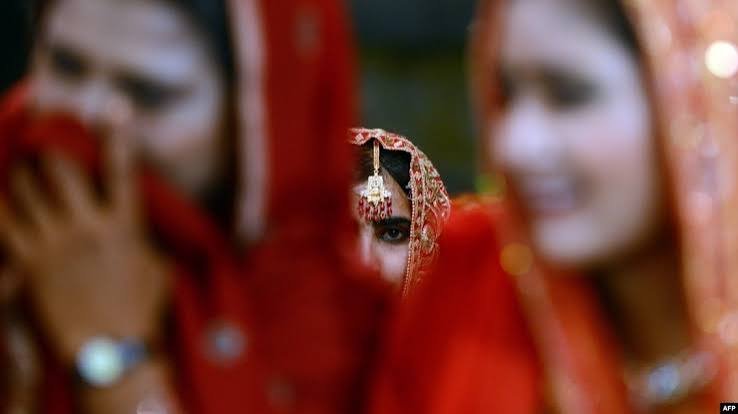
Dowry refers to the transfer of wealth, goods, or money from the bride’s family to the groom or his family at the time of marriage (Srinivas, 1984). It is mainly practised in South Asia and certain regions of Asia, Africa and the Middle East where patrilineal and patriarchal societies are prevalent. In Pakistan, dowry is most commonly known as Jahez, and unlike many countries that have criminalised dowry, including India, Nepal, Greece, Kenya, and Bangladesh, dowry remains legal in Pakistan. Although the Dowry and Bridal Gifts (Restriction) Act, 1976 does aim to regulate and apply a cap on dowries, it is largely unenforced and dependent on outdated spending limits. According to a survey (Gallup & Gilani Pakistan, 2024), 64% of Pakistanis had given or received dowry at the time of their marriage, and in 2017, 56% of people said that dowry was necessary for a girl’s marriage.
Dowry in Disguise
Over the years, Pakistani society has gone through structural changes which can be attributed to globalisation and digital connectivity. The upper classes of Pakistan also exhibit a high adoption of modern culture and social norms. In a survey (Haider et al., 2022), 64.7% of respondents acknowledged that Western culture is being adopted and accepted in Pakistan. In this process, dowry has been refurbished in ways that keep generational norms alive whilst making it more palatable for modern society. As a result, dowry is now disguised in the form of “gifts” and “wedding contributions,” even by those who seem to outwardly oppose it the most.
Content creator Mishel Shahid shared a relative’s dowry experience on Instagram, where she recalled a girl’s struggling natal family who gave away a refrigerator as dowry. What initially seemed like just a “gift” for the bride and groom’s future soon proved to be nothing more than an act of compulsion that gnawed at the girl’s family as necessary to preserve their “dignity.” According to Shahid, the groom’s family did not need a new refrigerator, and instead ended up selling the dowry gift for a lower price than what it was initially purchased for. Essentially, a family was forced to undergo a completely avoidable financial burden to uphold a tradition that does not even benefit their daughter.
A Reddit user in r/pakistan also shared his family’s experience with dowry, where his family found themselves in debt trying to fund “gifts” such as furniture, home appliances, and electronics for his sister’s wedding. Such stories make it evident that Jahez— “modernised” or not— continues to harm families and cause extreme financial burden on many. In certain communities in Pakistan, Jahez and the amount of Jahez paid to the groom’s family can become such a serious matter that it can lead to killings known as “dowry deaths” and even suicide. The case of 18-year-old Misbah Shaheryar highlights just that. Misbah Shaheryar died on June 9, 2026, in Karachi, after allegedly being severely beaten by her husband over unmet dowry demands of a motorcycle. Misbah is one of thousands of women around Pakistan who carry with them the burden of excessive dowries and even lose their lives as a result.
The consequences of the modern form of dowry
It is important to note that although such modernised forms of dowry are considered less taboo amongst society, they still perpetuate the same systematic issues and power dynamics, whilst also making them harder to challenge. The system of giving gifts given as Jahez is often defended and normalised by simply being considered as “auspicious gifts” or “blessings,” better known as Shagun in certain communities. Some may even consider them as “wedding contributions” or “necessities” to aid the bride and groom in their life after marriage. What is often overlooked is that these gifts given out of “love” and are a form of “blessing” are extremely costly and place pressure on a bride’s family to present gifts which align with the groom’s perceived “worth.” Undoubtedly, this system propagates gender inequality by rendering girls a financial burden on their families and upholds the idea that a man’s family should receive a prize for accepting a bride into their home.
The tradition of Jahez also continues to have a detrimental economic impact on a bride’s family. An obligation of spending excessive amounts of wealth on gifts can push families into debt-driven poverty and transfer wealth into male-dominated families, propagating an economic disadvantage for women and their families. Oftentimes, families are not able to marry off their daughters due to unaffordable dowry demands, leading to a delay in marriage and the reinforcement of the idea that girls are a burden to their family.
It is not until we start recognising these “gifts” as the tools of oppression that they are that we dismantle the patriarchy that is deeply rooted within Pakistani society and allow women to prosper as what they truly are: equals to men.