





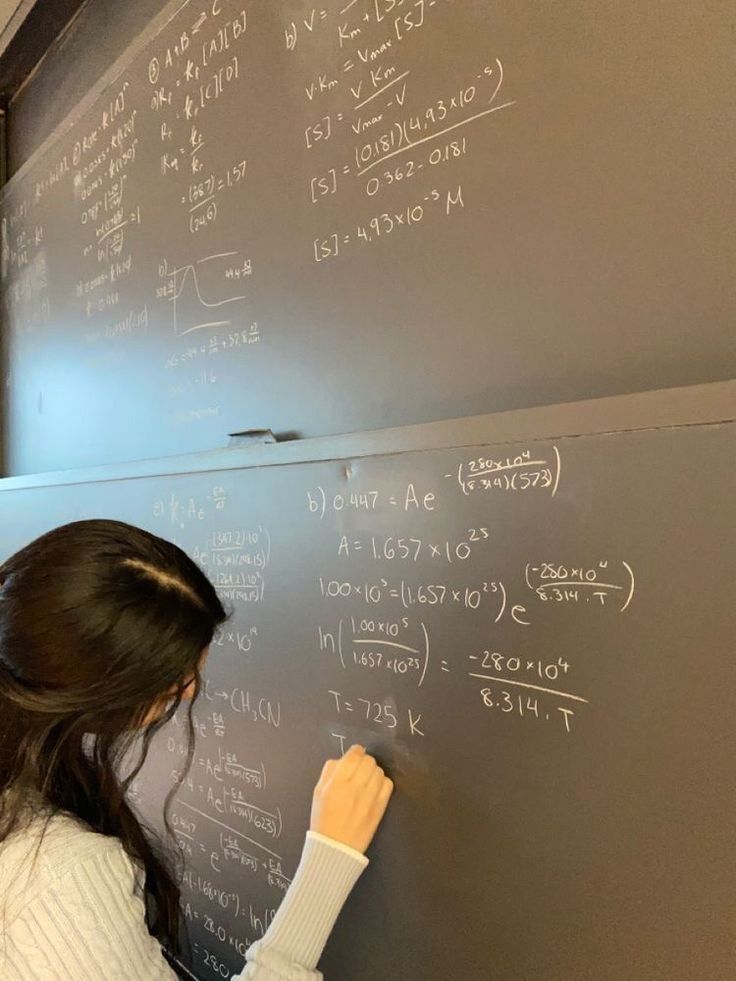
 STEM Girl or STAY Girl: The 1948 Universal Declaration of Human Rights, Article 26, declared that “Everyone has the right to education,” and that includes equal access to higher education based on merit.
Yet more than seven decades later, women’s participation in STEM – science, technology, engineering, and mathematics – remains alarmingly low in South Asia. In Bangladesh, women make up only 14 percent of all STEM professionals, and just 19 percent of girls are pursuing STEM fields, according to a World Bank study.
But is the gender gap in STEM truly this wide? I wonder, is this disparity a reflection of ability – or mere opportunity?
Due to my father’s military service, I attended seven different schools in Bangladesh – across cities, villages, even hill regions. Everywhere I went, I saw girls engaging with science, mathematics, and social studies just as confidently as boys. When results were published, I found them snatching top positions and marks based on their merit.
STEM Girl or STAY Girl
So if university admissions are based on those same academic performances, why aren’t women represented equally in STEM? Where, then, do we lose them?
The gap is deeply rooted in our perception that girls are not made for science. The South Asian mindset barely allows girls to dominate and shed their talent in any field – be it science or other. While we talk about social science or business, society can easily restrict women. How so? While pursuing higher education, a student has to go to events, seminars, internships – which demand both in-person and virtual presence. Conservative families can easily jeopardise a girl’s dreams, saying, “If you go out now, what would society say?” And just like that, a dream is gone and girls start lagging behind.
I have a friend currently pursuing a Bachelor of Science (BSc) in Architecture at the best engineering university in the country – Bangladesh University of Engineering and Technology (BUET). While talking to me, she expressed her concern. An architecture student has to stay most nights out in their studio. A desi family would barely allow that, and she said she’s also concerned about what might happen after she marries. But in the same situation, her counterpart – a boy from BUET – is not only attending the studio at night freely, but also going to places with friends, hanging out after dark. So isn’t the mental health of an “achi” student falling short just because she’s a she?
Education is a powerful tool that gives humankind vision and freedom. History may remember Jane Hawking primarily as the supportive wife of Stephen Hawking. Yet, in her memoir, she wrote, “Living here in Cambridge, you had to have an identity. It was not enough to be a wife.” When she completed her Doctor of Philosophy (PhD), she found a true sense of existence. While Stephen was a brilliant scientist, Jane was more than just a wife – she was a teacher, a mother, and a scholar of medieval Spanish poetry.
STEM Girl
The hypocritical tone of the desi mindset becomes blatant when girls try to pursue something for themselves. Society still expects a woman to be recognised by her husband’s worth. And what good would a “STEM Girl” bring, they ask, if she’s eventually to become a “STAY Girl” – just a housewife?
I wonder how we have the audacity to ask a girl, “What’s the point of working – doesn’t your husband earn enough?” I believe that only when we start valuing girls as individual human beings, not extensions of someone else, will we see true equality across all fields – from STEM to beyond.
The problem is visible – girls make up half of our population and we are missing one of the wings in the STEM field. In the world of advancement where technology dominates, can we afford to fly without that wing?
Discrimination, injustice, and dominance toward women have slowed our progress for decades. Yet, I believe we still have time to address and make key changes in our policies. Through policy reform and awareness, we can spark radical change. Inclusivity can be curated at a young age through group activities, competitions, and hands-on exposure. We can introduce STEM Olympiads focused on girls like the European Girls’ Mathematical Olympiad (EGMO). Law enforcement should protect female students not just on campuses, but on the roads they walk to get there. Universities can launch pre-college programmes for girls to introduce the magnificent domain of science. Parents should also make a girl feel included in STEM and provide necessary support.
It is really up to us. In a region where half of the girls remain shackled by the deadly chains of early marriage, we must ask ourselves – do we rewrite terms like “school dropout” and “educational discontinuation”? Or do we too wear the churi, bind our own hands, and stay silent?
Conclusion
All we need is an “I can” — one that eventually becomes “We did.”
And if we have the courage to raise our voices, only then can we expect our girls to fly — on their angelic wings — beyond the sky, into space, solving equations, and shading hope toward a better future.