





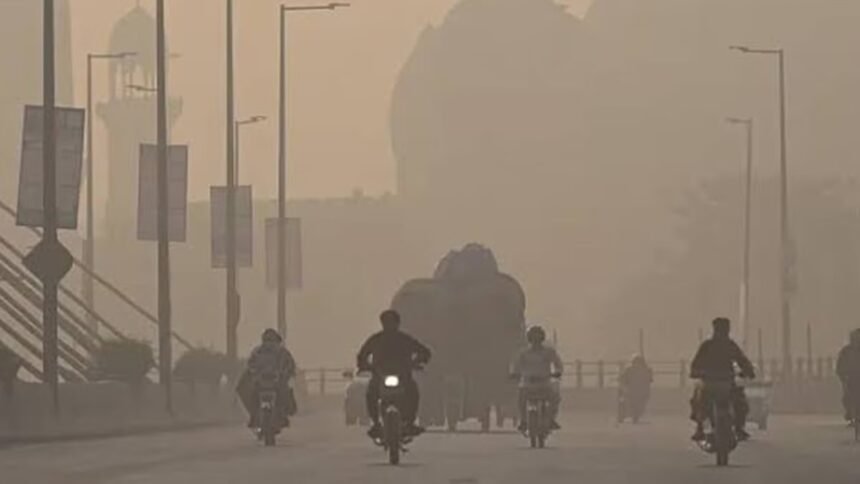
LAHORE: Lahore and several other cities across Punjab are experiencing worsening air pollution as changing weather conditions and the onset of winter contribute to smog formation.
Air quality in multiple parts of the province has reached hazardous levels, raising concerns over public health.
According to Air Quality Index (AQI) readings, Multan recorded the highest pollution level at 434, while Gujranwala registered an AQI of 347. Lahore’s air quality was also unhealthy, with a reading of 294.
AQI levels above 200 were recorded in Rahim Yar Khan, Bahawalpur, Faisalabad and Sialkot, indicating unhealthy conditions across several urban centres.
Smog has repeatedly affected Punjab during the winter months, prompting authorities to introduce measures aimed at reducing pollution.
The seasonal haze is linked to a combination of vehicle emissions, low-grade diesel fumes, industrial pollution and smoke from agricultural residue burning, with cooler temperatures and changing weather conditions contributing to its persistence.
In previous years, Lahore experienced prolonged periods of severe smog, with pollution levels at times exceeding 80 times the World Health Organization’s recommended air quality guidelines.