





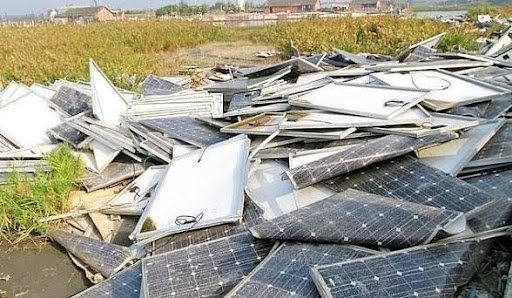
Millions of families, including even the lower middle class, have left the national grid for rooftop solar systems, mainly pushed by continuously increasing electricity tariffs by the government, leaving the country with an impending mountain of toxic hardware and no formal way to recycle it.
Walk through almost any middle-class neighbourhood in Lahore, Karachi, or Faisalabad right now and look up. Blue-tinted photovoltaic panels cover the concrete roofs. Out in rural Punjab, farmers have hooked their tube wells directly to the sun, relegating the national grid to a backup role.
The math behind this shift is straightforward. With utility bills running between PKR 40 and 65 per unit and load-shedding still disrupting daily life, rooftop solar drops power costs to around PKR 20 per kilowatt-hour. Households and factory owners jumped at the savings, sparking one of the fastest grassroots energy transitions anywhere in the world, even though technically speaking it’s not a grassroots transition since it’s imposed by the government due to the highest electricity bills in the entire region, forcing lower-middle-class and middle-class households to spend their hard-earned savings and taking a temporary, financially demanding step for long-term relief from ever-increasing electricity tariffs. Lower monthly bills are a massive relief, but a serious blind spot is growing out of sight. Pakistan has no disposal plan, no dedicated laws, and not a single industrial plant equipped to handle millions of dying solar panels, inverters, and batteries.
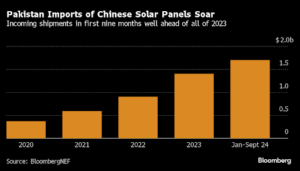
Even energy analysts did not see this speed coming. Data from the energy think tank Ember shows Pakistan’s total solar panel imports surged from under 1 gigawatt (GW) in 2018 to more than 51 GW by early 2026. That is bigger than the entire generation capacity of the national grid. Between fiscal years 2023 and 2025 alone, consumers installed 27 GW of modules. Distributed solar generation tripled from 15 terawatt-hours (TWh) to 51 TWh over that period, cutting grid electricity sales by 11 percent. While all this clean power saved Pakistan roughly $12 billion in imported fossil fuels, it also scattered tens of millions of complex electronic components across the country with no plan for what happens when they wear out. Most companies promise a 20 to 25 year lifespan for solar panels, which has convinced many officials that disposal is a problem for the 2040s. That assumption ignores what is already happening on roofs today. Panels installed during Pakistan’s first commercial wave between 2010 and 2015 are reaching the end of their run. Local technicians and importers also point out that uncertified, low-grade panels flooded the market during the recent price crash, and many of those are already losing output or delaminating well before the ten-year mark. Add in severe hailstorms across northern and central Punjab, rushed installations, and owners tearing out older plates to upgrade to higher-wattage models, and thousands of panels are already landing in local scrap yards years ahead of schedule.
A sudden rush toward battery storage has made that timeline even tighter. After regulators revised net-metering rules and slashed grid buyback rates to roughly PKR 11 per unit, homeowners quickly pivoted to hybrid inverters and battery banks to keep power running at night. According to the Pakistan Solar Association, the country imported 4.5 GWh of battery storage in just the first six months of 2026. Unlike glass-and-silicon panels, lead-acid and lithium-ion batteries typically fail within five to ten years. Nearly every battery bank bought during this rush will need replacing before the decade ends. When that hardware dies, it enters a waste system already stretched far beyond capacity. Pakistan generates between 433,000 and 500,000 tonnes of electronic waste annually – ranking 26th globally – yet lacks a single specialised facility to process solar modules or lithium batteries. Reports from the United Nations Development Programme (UNDP) and WWF-Pakistan show that over 80 percent of the nation’s existing e-waste and lead-acid battery scrap goes straight to informal junkyards. Inside unregulated scrap clusters across Karachi, Lahore, Gujranwala, and Peshawar, workers smash casings open with hammers and burn plastic wiring in open pits without gloves or masks. A 2025 environmental study sampling nine Pakistani mega-cities found toxic brominated flame retardants (BDE-209) at levels six to ten times higher near informal scrap hubs than in surrounding residential areas. Heavy metals like lead, cadmium, and lithium are also leaching directly into local soil and groundwater.
Treating retired solar gear like ordinary street scrap throws away real money too. A Pakistan Business Council study estimates that crude informal dismantling costs the country up to $380 million every year in lost recoverable materials – including silver, copper, silicon, and high-grade aluminium. That lost revenue alone could fund 12 modern recycling plants. Preventing a long-term environmental mess requires action before informal junkyards overflow. The Pakistan Standards and Quality Control Authority (PSQCA) took a useful step by opening testing labs to block defective, short-lived panels at the ports. Port inspections, however, do nothing about the 51 GW already sitting on roofs nationwide. The Ministry of Climate Change and Environmental Coordination needs to enforce Extended Producer Responsibility (EPR) rules so solar importers and distributors actually finance take-back schemes and proper recycling networks. Pakistan solved an immediate power crisis through grassroots solar adoption, but without basic waste rules in place, that same boom risks poisoning its soil and water for decades to come.