





If asked, “What is the best thing that technology has given us over the past 100 years?” You might say wireless communication, WiFi, or AI.
But what if I told you that you are mistaken? Don’t misunderstand; these technologies have indeed revolutionised our lives. They have helped us to truly foster a world where knowledge is unlimited and accessible from anywhere around the world. Yet, technology has been unable to tell us how to deal with all this knowledge.
Many of us know how corrupt our government is, how the apparent “superpowers” of the world — more like individuals drunk in their wealth — have been draining the world dry, right before our eyes. We see it in real time. So, what should we do? Alternatively, a more pertinent question might be: what are we truly capable of doing?
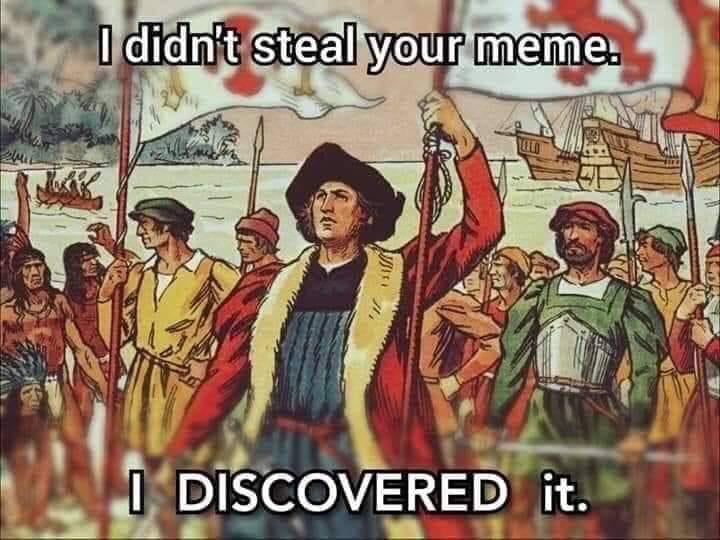
So, let me introduce you to the real marvel that our technology has achieved: memes.
Since their origin in evolutionary biologist Richard Dawkins’ 1976 book The Selfish Gene, memes have been primarily defined as “ideas that catch on.” But as technology evolved and social media prevailed and redefined us socially, memes had a new meaning: “an amusing or interesting item (such as a captioned picture or video) or genre of items that are spread widely online, especially through social media” (Merriam-Webster), and since then, the rest is history.
Memes have become an internet sensation — from edited pictures and videos of random things and people to short reels on Instagram, they have all become a large part of our social media ecosystem.
But memes are much more than random clips of babies dancing or an edited picture of SpongeBob depicting my mental health during Mids. They have evolved from pure entertainment to resistance, becoming the safest (and occasionally the only) way to speak the truth in a world where knowing and speaking too much can be extremely daunting. For Gen Z, humour and satire through memes mean something far more potent: dissent.
We live in a world where the hypocrisy of the powerful and the governments is more apparent than ever. However, we are all aware of the implicit rule: if you publicly express certain opinions, congratulations! You have officially been labelled as a traitor or worse; this journey you call life ends. That is why satire has become the preferred genre of awareness for our generation — it is precise enough to sting, yet vague enough to conceal and protect us.
Memes, adapted to our era, serve as a means of political education, especially in a world where it is becoming harder and harder to ignore the ignorance, negligence, and immense suffering of millions at the hands of the powerful. While the traditional media gets tangled in a fear of censorship, a meme needs nothing more than a random edit of different things and a willingness to laugh through the pain.
Older generations frequently misinterpret this language. To them, memes are a result of our laziness and reflect how “unserious” we are about everything. But they misunderstand that jokes are perhaps the last refuge left to preserve the truth and speak against injustice, safely and clearly.
In Pakistan, you cannot criticise power dynamics and structures directly, but you can make a meme about “kala daala” or a meme song dedicated to our powerful owners. We can instantly recognise it. Beneath the humour and the laughs lies the truth: we know what is happening, and we know how powerless we feel. And perhaps that is why satire is a coping mechanism for us, as we understand and know how carefully we have been conditioned to helplessness.
But we are not the only ones. In India, Nepal, and Iran, memes are a way for the public to say, “If you can’t say it, laugh about it.” And laughter itself holds meaning for a more woke world.
Memes are a way of rebellion disguised as relatability, with critique camouflaging comedy. It’s a way that not only educates but also makes the truth bearable and more comprehensible.
For a generation raised in crisis — economic, social and political instability as well as the looming threat of AI making our brains irrelevant — speaking up has serious repercussions. Yet, amidst all, humour becomes the knight in shining armour, allowing us to chip away at fear and instability one joke at a time.
We live in very odd times, where laughter is not a distraction. Memes are not irrational.
But it is rather the resistance itself.