





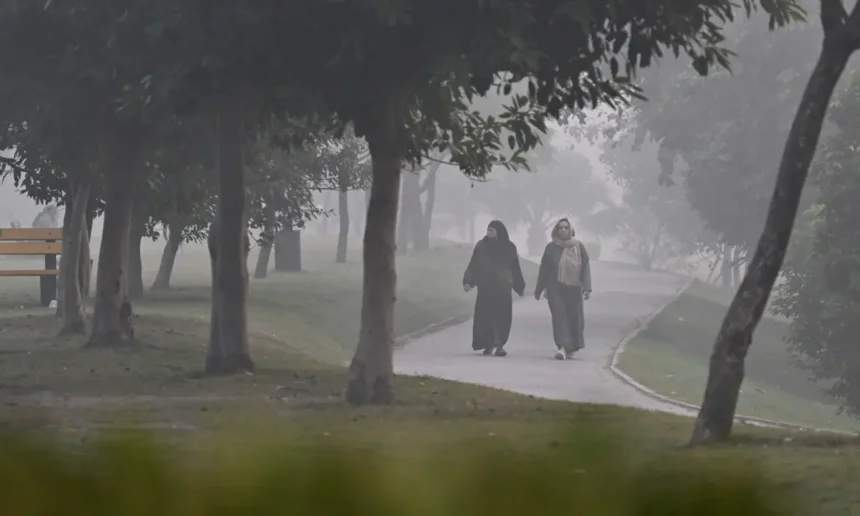
Thick smog continued to blanket parts of Pakistan on Wednesday, with Lahore once again ranking as the world’s most polluted major city as air quality remained in the hazardous category.
According to air quality monitoring platform IQAir, Lahore recorded an Air Quality Index (AQI) of 425 between 11am and noon, placing it at the top of the global pollution rankings during that period.
An AQI reading above 300 is classified as hazardous, indicating severe air pollution that poses health risks to the entire population.
Official readings released by the Punjab government showed even higher pollution levels in other parts of the province.
Muzaffargarh and Nankana Sahib both recorded AQI readings of 500 during the same hour, reflecting extremely dangerous air quality conditions.
The figures highlighted the severity of the smog affecting several districts of Punjab, with pollution levels substantially exceeding internationally recognised hazardous thresholds.
Such conditions pose particular risks to children, older people and individuals with respiratory or cardiovascular illnesses, although even healthy individuals may experience adverse effects from prolonged exposure.
Health experts generally recommend avoiding outdoor physical activity, limiting unnecessary exposure and using well-fitted protective masks when going outside during periods of hazardous air pollution.
The latest readings underscore the continuing air quality crisis in Punjab, where severe smog remains a major public health concern.