





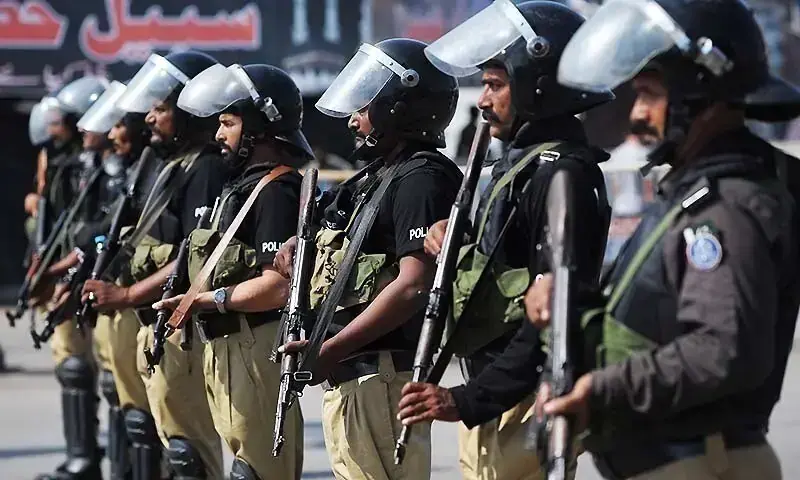
The Khyber Pakhtunkhwa administration is planning to establish faceless anti-terrorism courts to strengthen the prosecution of terrorism cases and protect witnesses, judges and prosecutors from security threats.
The proposal was outlined during a televised briefing on Sunday attended by KP Governor Faisal Karim Kundi, where Home Secretary Amjad Ali Khan presented a series of measures aimed at improving the province’s counterterrorism capabilities.
Khan said fear of retaliation had discouraged witnesses from coming forward in terrorism cases, creating difficulties for investigations and prosecutions.
“So, we have recently sent the amendment to set faceless anti-terrorism courts. Through this, not just the protection of witnesses, but that of prosecutors and judges will also be ensured,” he said.
The proposed judicial reforms form part of a broader security plan under which the administration intends to spend approximately Rs70 billion on strengthening the police and Counter Terrorism Department (CTD) over the next year.
Khan acknowledged that previous counterterrorism efforts had suffered from what he described as a “lack of political ownership”, arguing that security personnel had made significant sacrifices without receiving sufficient backing from the provincial government.
“Our armed forces and law enforcement agencies are making sacrifices in the war against terrorism,” he said, while criticising the previous provincial administration’s approach.
The briefing followed the federal government’s imposition of governor’s rule and emergency measures in KP on October 11, citing what it described as the PTI-led provincial government’s “deliberate disengagement” from counterterrorism operations.
Khan called for “close liaison” between citizens, political leaders and security institutions, saying coordinated action was essential to addressing militancy.
He also alleged that provincial actions had previously contradicted the federal government’s Afghan policy, creating public confusion, while propaganda targeting security forces had undermined counterterrorism efforts.
Highlighting operational weaknesses, the home secretary said police and CTD units faced inadequate funding, particularly in the merged tribal districts, where only 3.2 per cent of the budget had been allocated to security.
He identified a shortage of more than 10,000 police personnel, insufficient security infrastructure and inadequate training among officers.
In the merged districts, he said, policing continued to depend heavily on former Khasadar and Levies personnel from the erstwhile Federally Administered Tribal Areas.
Khan also warned that the province’s counter-drone protection capabilities remained severely limited, with the existing system operating at just 12 per cent of the required capacity.
He said militant groups were increasingly using drone technology, causing considerable losses and exposing gaps in the province’s security preparedness.
The proposed judicial reforms, additional funding and operational improvements are intended to address these weaknesses and strengthen the province’s response to terrorism.