





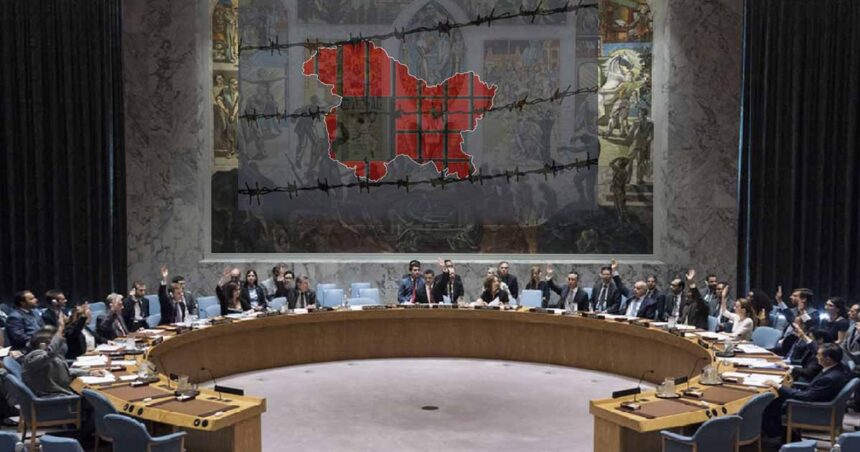
Pakistan has consistently upheld the right of self-determination for the people of Jammu and Kashmir, grounded in United Nations Security Council resolutions of 1948 and 1949, which called for a free and impartial plebiscite. Since 1970, Pakistan has also sponsored an annual flagship resolution at the United Nations General Assembly focusing on the Universal Realization of the Right of Peoples to Self-Determination, highlighting the plight of peoples under foreign occupation, including Kashmir.
The foundational UNSC Resolution 47 (1948–49) remains the binding framework for resolving the Kashmir dispute. In 1970, Pakistan sponsored a General Assembly resolution reaffirming the principle of self-determination, which has since been repeatedly passed by the UNGA, emphasizing the rights of peoples living under colonial rule, dictatorship, or foreign occupation.
Pakistan has consistently argued that UN resolutions are immutable and has continued to raise the issue of Kashmir at the UNGA, stressing the need for a peaceful, negotiated settlement. The official position of Pakistan remains that the United Nations—through both the Security Council and the General Assembly—is morally and legally bound to allow the Kashmiri people to determine their own future. The core issue is not the use of veto power, but rather the failure to implement already-adopted UN resolutions.
Prior to the General Elections of 7 December 1970, minorities in Pakistan had long struggled to secure adequate political representation. Demands for separate electorates for minorities were raised to ensure their voices were heard in the National Assembly.
Mr. Joshua Fazal Din, a prominent minority leader and head of the Shashi Awami Party, openly boycotted the 1970 elections in protest against the government’s refusal to allow separate elections for minorities. He circulated petitions highlighting the marginalization of minority communities and the emigration of minorities from Pakistan.
At the United Nations, Mr. Agha Shahi, then Pakistan’s Permanent Representative, played a significant diplomatic role in raising the issue of Kashmir’s self-determination. Despite diplomatic momentum, resistance emerged from India, and following objections raised by India’s Foreign Minister Mr. Swaran Singh, the matter was eventually shelved under veto procedures.
Kashmir remains a matter of unfinished international responsibility. As long as the green fields of Kashmir are marked by the blood of its people, the demand for justice and self-determination will remain alive.