



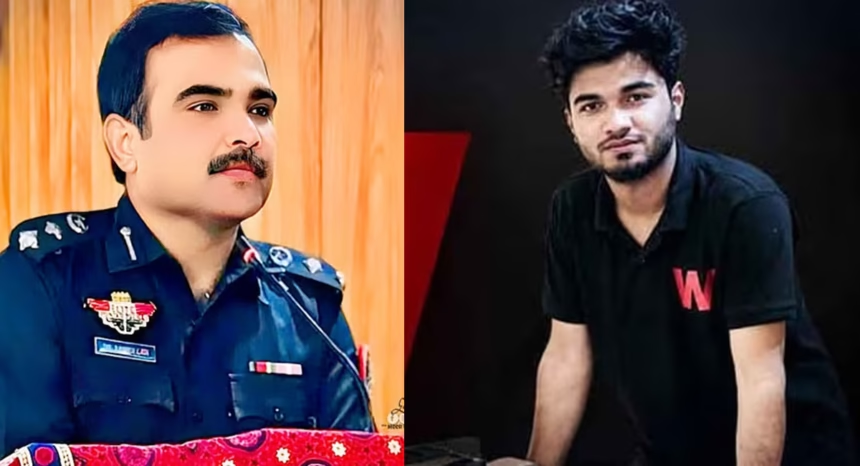
A judicial commission investigating the death of young entrepreneur Mir Raza Ali on Thursday sharply questioned SSP Special Investigation Unit Samiullah Soomro over alleged investigative lapses, including the burning of the crime scene and the handling of crucial evidence.
The one-member commission, headed by Sindh High Court Justice Omar Sial, summoned Soomro, who headed the first investigation team assigned to the case.
A major focus of the hearing was how the crime scene came to be set on fire. “You had the crime scene burned?” Justice Sial asked.
Soomro denied ordering the fire. He said he had instructed a sub-inspector to search the area for bullet casings, but officers subsequently reported difficulties because of dense bushes. He identified police officer Ghaus as the person who set the area on fire.
Asked whether burning a crime scene formed part of police procedure, Soomro replied: “No, sir.” He added that another team, headed by ASP Ashar, visited the site the following day and recovered bullet casings.
Justice Sial referred to the compromised crime scenes in the Benazir Bhutto and Murtaza Bhutto cases while expressing concern about what had occurred in the Mir Raza investigation.
“Now Mir Raza’s crime scene has also been burned. Soomro, you too appear suspicious,” the judge remarked. At another point, he told the officer: “Because of you, the entire case has been destroyed.”
The commission also scrutinised how witness statements had been recorded. According to information presented during the proceedings, 23 of 33 statements were allegedly written by someone other than the designated investigation officer, who merely signed them. Soomro acknowledged that the investigation officer should have recorded the statements himself.
Justice Sial questioned whether investigative failures of this nature indicated outside pressure. “When an officer like you does such things, it gives the impression that there is some pressure, but you are not confessing this,” the commission observed.
Separate concerns were raised over Mir Raza’s mobile phone. The commission questioned why a video provided to the media, purportedly showing him throwing an object, had been presented as evidence that he was disposing of his phone.
It also sought an explanation for reports that the phone was recovered from a drain while a different account suggested it had been found near a wedding hall. Justice Sial further questioned why police had not corrected what the commission described as a narrative portraying the death as suicide.
Soomro said the phone had already been sent to the Counter Terrorism Department before he took charge of the investigation. Asked whether police attempts to unlock the device had resulted in it being blocked, he said his team had not attempted to access it, though he suggested the CTD may have done so.
The commission’s remarks and questions reflect concerns raised during its inquiry and do not themselves constitute final findings on responsibility for Mir Raza’s death or the conduct of individual police officers.