





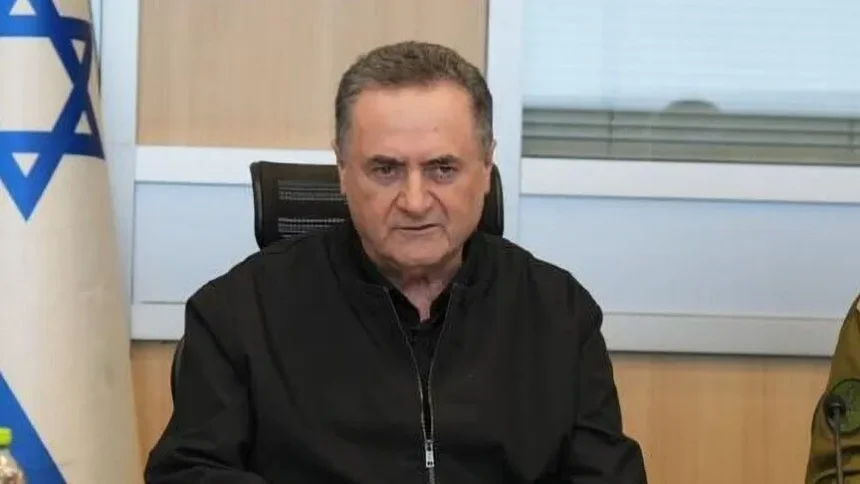
The first round of negotiations between Israeli Prime Minister-designate Gadi Eisenkot’s Yashar party and caretaker Prime Minister Benjamin Netanyahu’s Likud party ended without progress on Sunday, as disagreements over the premiership and the composition of a proposed unity government remained unresolved.
According to Israeli newspaper Yedioth Ahronoth, the meeting took place at a hotel in Herzliya and lasted approximately one hour and 15 minutes.
Yashar was represented by Knesset members Hili Tropper and Yoav Horowitz, while Likud’s delegation included parliamentary faction chairman Ofir Katz and lawyer Michael Rabello, a former legal adviser to Netanyahu.
Shalom Shlomo, a political adviser to former Prime Minister Naftali Bennett, also attended on behalf of Bennett’s Together party.
The central obstacle concerns who would lead the proposed government. Eisenkot is seeking to establish a coalition under his leadership without sharing the premiership with Netanyahu.
Likud, however, has refused to participate unless Netanyahu serves as prime minister, either for the entire term or under a rotational arrangement.
Another major disagreement involves the parties that would be included in the coalition. Likud insists that all members of Netanyahu’s political bloc participate, including Itamar Ben-Gvir’s Otzma Yehudit party, a condition opposed by Eisenkot.
The negotiations have also drawn criticism from several of Eisenkot’s political partners, including Yair Lapid, Avigdor Lieberman and Yair Golan, who oppose joining a government that includes Netanyahu.
Golan criticised the discussions, arguing that replacing Netanyahu and Likud required cooperation among political forces opposed to their continued leadership. He maintained that the election had produced a clear democratic verdict that should be respected.
Eisenkot, meanwhile, said any unity government must be founded on shared principles rather than merely political agreements or the distribution of ministerial positions.
He identified public education, military service, public service and solidarity among citizens as essential foundations for a broad coalition.
According to Yedioth Ahronoth, Eisenkot also held a private meeting last week with Yaakov Asher of United Torah Judaism as part of efforts to explore possible cooperation with ultra-Orthodox parties.
Despite these discussions, substantial differences remain between Yashar and Likud, with the newspaper reporting that meaningful progress may require direct negotiations between Eisenkot and Netanyahu.
Meanwhile, the Knesset is scheduled to vote on Tuesday on a proposal to replace its current speaker, Likud’s Amir Ohana, with Yashar lawmaker Matan Kahana.
The parliamentary vote could represent an important early test of the political alliances emerging during negotiations over the formation of Israel’s next government.