





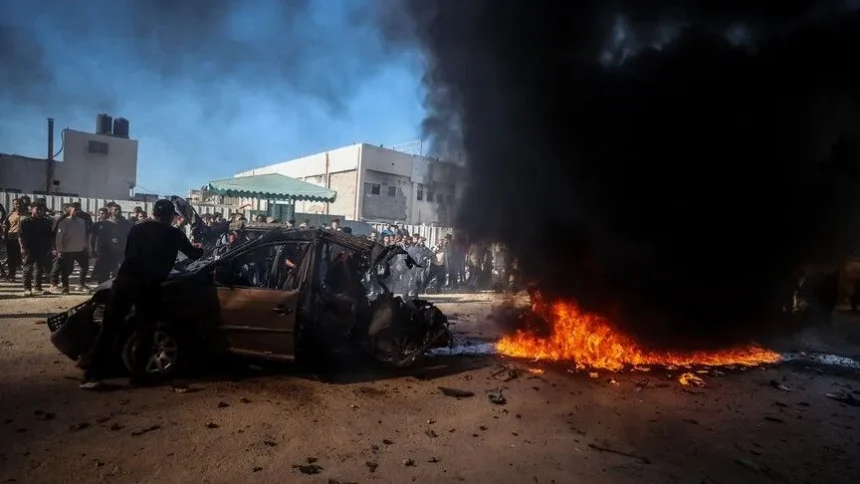
Israeli forces have reportedly begun using quadcopter drones to drop explosive-filled boxes onto or near Palestinian homes in the Gaza Strip, remotely detonating the devices to demolish buildings and damage surrounding properties, according to residents and eyewitnesses.
The tactic has been observed over the past week in several areas close to Israeli military positions, with residents reporting powerful explosions that have forced families to flee their homes.
Witnesses told Anadolu that the drones carried boxes containing several kilograms of explosives, which were dropped onto rooftops or beside residential buildings before being detonated remotely.
Video footage reportedly shows drones releasing explosive packages onto buildings.
The operations have been reported in eastern parts of Gaza City’s Zeitoun and Tuffah neighbourhoods, as well as eastern Deir al-Balah and the Bureij refugee camp in central Gaza.
Local sources said dozens of Palestinians fled the Zeitoun neighbourhood on Friday amid fears that their homes could be targeted next.
The reported demolitions continued into Monday, with witnesses describing drones dropping explosive packages near the Wadi Gaza bridge on Salah al-Din Street and north of the Bureij and Nuseirat refugee camps.
At least seven such operations were reported in these areas, resulting in powerful explosions and extensive damage to buildings.
On November 10, Israeli forces reportedly used the same method to demolish two previously evacuated houses east of the Maghazi refugee camp, according to local sources cited by Anadolu.
Four additional demolitions involving similar explosive devices were reported near Dar al-Salam Hospital in northeastern Khan Younis, southern Gaza.
The reported use of explosive-carrying drones adds to the range of methods Israeli forces have employed to demolish buildings during the conflict, including aerial bombardment, artillery strikes, explosives placed inside structures and military bulldozers.
Israeli forces have also reportedly deployed old military vehicles packed with explosives into residential areas near army-controlled positions, with subsequent detonations destroying entire blocks of buildings.
The latest demolitions have reportedly continued in Israeli-controlled areas along the so-called Yellow Line despite a ceasefire agreement that took effect on October 10, 2025.
According to Gaza’s Health Ministry, Israeli violations of the ceasefire had killed 1,650 Palestinians and wounded another 5,975 as of Monday.
Since October 2023, Israeli military operations in Gaza have killed more than 74,000 Palestinians and injured over 176,000 others, according to the figures cited in the report.
The genocide has also caused widespread destruction across the territory, with approximately 90% of its infrastructure reported to have been damaged or destroyed.
United Nations estimates cited in the report place the cost of reconstruction at approximately $71.4 billion, reflecting the enormous scale of damage to housing, public facilities and essential infrastructure.
For Palestinians already displaced by the genocide, the continued demolition of residential buildings poses another obstacle to returning home, even in areas where active fighting has subsided.
Residents fear that further destruction of homes and neighbourhoods could prolong displacement and make post-war recovery increasingly difficult.