





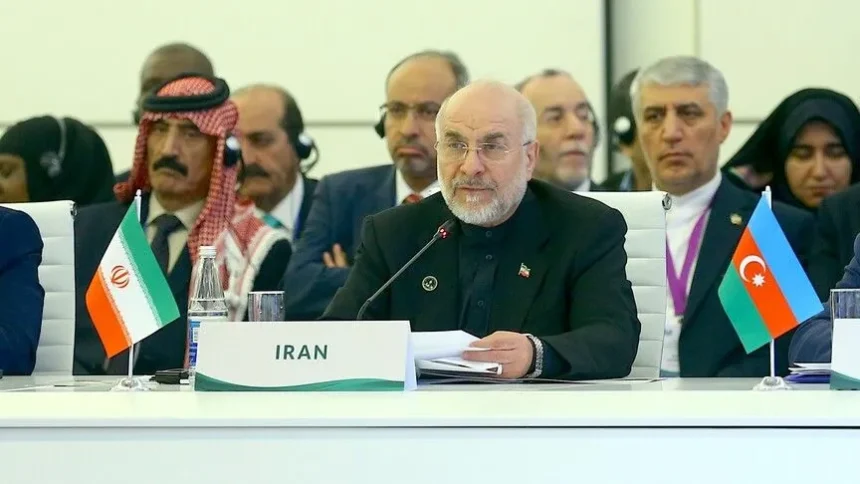
Iranian Parliament Speaker and chief negotiator Mohammad Bagher Qalibaf said Wednesday that Tehran had presented its demands to the United States and was awaiting an official response from Washington, warning that renewed military action would provoke retaliation.
In an interview with Al Jazeera, Qalibaf said Iran had communicated its position clearly but had received no formal or specific reply from the US administration.
“We have provided a clear and transparent response to the United States that includes our demands,” he said.
“The ball is now in the Americans’ court. They must make a decision and announce it,” he added.
Qalibaf stressed that Iran’s priority was to achieve peace, provided Washington accepted Tehran’s conditions, saying the country did not want the months-long conflict to continue.
However, he warned that any decision by US President Donald Trump to resume military operations against Iran would result in another defeat for Washington.
“If the United States or Israel starts a war, we will confront them both and respond to any attack,” he declared.
The Iranian official reiterated that Washington must meet Tehran’s seven conditions before the Strait of Hormuz could be reopened and negotiations resumed.
He maintained that the strategic waterway, a major route for international energy shipments, would not return to its prewar arrangements, describing its future status as an essential component of any agreement with the United States.
Qalibaf also accused Washington of imposing a blockade that had restricted food supplies, disrupted commercial activity and affected healthcare services.
Addressing the prospects for a diplomatic settlement, he said Tehran was determined to end the current state of “no war, no peace,” either through negotiations or by establishing sustainable deterrence.
He confirmed that Iran’s negotiating team remained unchanged and that he would continue leading discussions with Washington.
Qalibaf said an agreement remained possible if the United States honoured previous understandings and refrained from actions that could further damage confidence between the two countries.
However, he identified Tehran’s lack of trust in Washington as the principal obstacle to progress, alongside what he described as excessive American demands.
His remarks underscored the continuing differences between the two sides over the conditions for ending the conflict, reopening the Strait of Hormuz and restoring diplomatic negotiations.