





Somewhere between a hotel check-in and a taxi ride, real travel gets lost. We pass through towns without having to feel them. We eat where the algorithm recommends. On leaving, we do not recall anything except the time of arrival.
However, there are some hosts who are doing so without noise.
An increasing type of hospitality does not gauge its success in terms of five-star ratings or occupancy. Rather, it defines success by the number of conversations people have had at breakfast, the number of words a guest has learned in the local language, or the number of things a guest has managed to learn before staying with the family for two nights.
This approach is a non-profit strategy. It is redefining the process of travelling.
Hospitality has always involved money, and this approach is natural and logical. However, as it evolved, the industry had established walls around the experience. All of this was packaged: a service, a sale. Visitors turned into consumers, hosts turned into suppliers. The human factor was sneaked out.
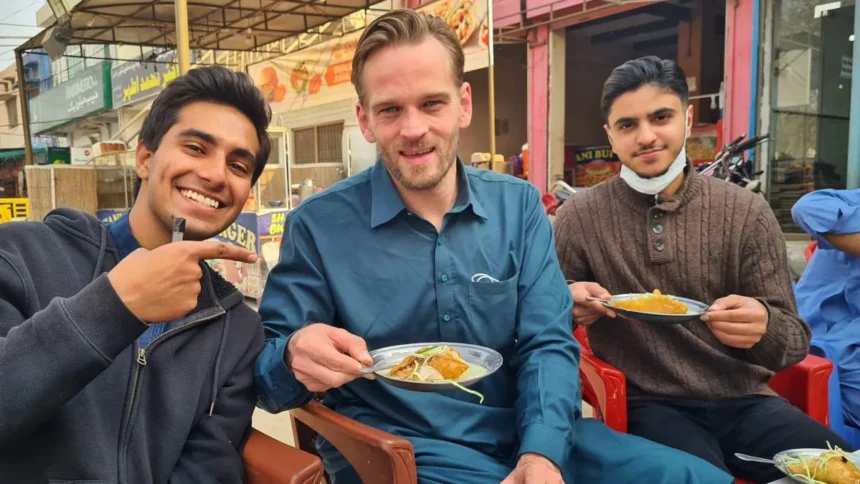
Everything becomes different when a host is interested in every guest that comes to their home. They enquire where you live, not as a mere nicety, but with real interest. They refer you to the finest street market that warrants an early wake-up. They will make you say the name of the neighbourhood right and laugh with you, not at you. They share their city as if it belongs to both of you, if only for a few days.
This kind of exchange cannot be booked, nor is it promised in a listing. It occurs when a guest is preferred by a host without payment.
The difference is immediately observed by travellers. The warm welcome is more comfortable than the fast check-in. Your host may recall that you are a vegetarian and leave you a handwritten note of some local festival, or maybe he will sit with you for twenty minutes and discuss the recipe of a favourite grandmother you have never tasted.
Such instances are cheap, yet they are remembered over the years by people.
The beauty of this exchange is that it is two-way. Hosts learn too. They listen to the descriptions of the locations that they have never been to, observe their own home through the eyes of an outsider, and adopt new habits, attitudes, and expressions. Even the people who have never travelled to other places see travel as a two-way dialogue.
Intercultural communication does not require a plane ticket or a passport. It must be open-minded, that is, prepared to perceive the guest as a person with a complete world, not only a confirmation of a booking.
The best trips that one will remember are not always the most costly. They are the ones that gave you a temporary feeling of belonging to a new place, where hospitality was not just a clean room and high-speed Wi-Fi.
Travel, at its best, is learning. And great learning begins with one who has the desire to teach.