





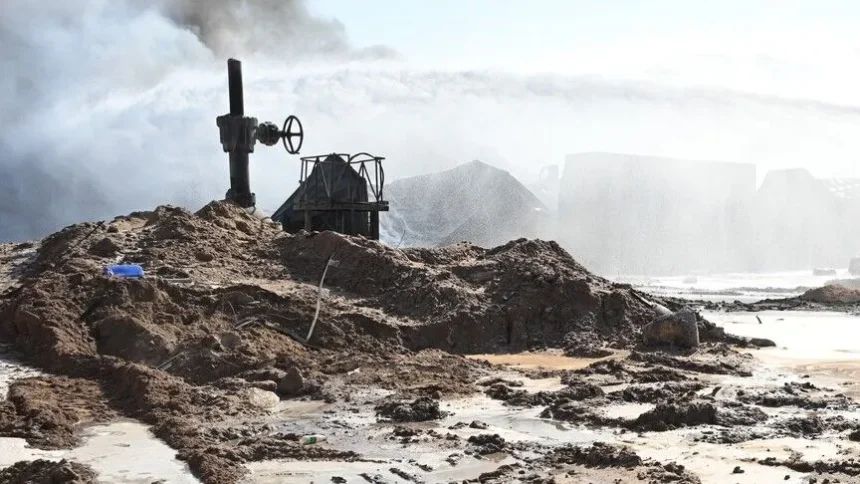
Riyadh: The Gulf Cooperation Council (GCC) on Friday strongly condemned a drone attack on Saudi Arabia’s East-West Pipeline, which Riyadh said originated from Iraqi territory and left several people injured while damaging the key oil infrastructure.
GCC Secretary-General Jasem Mohamed Albudaiwi condemned the attack “in the strongest terms,” calling it “a dangerous escalation and an unacceptable threat to the security of the Kingdom of Saudi Arabia, its territorial integrity, and its vital installations.”
He also described the attack as “a flagrant violation of the principles of international law.”
Albudaiwi called on Iraq to step up its efforts and adopt “necessary, decisive measures” to ensure that Iraqi territory is not used as a launchpad for attacks against neighbouring countries.
The GCC chief reaffirmed the bloc’s “complete and steadfast solidarity” with Saudi Arabia and expressed “full support for all measures and actions the Kingdom takes to protect its security, stability, territorial integrity, facilities, citizens, and residents.”
Saudi Arabia holds off on retaliation
Saudi authorities said earlier on Friday that the East-West Pipeline had been shut down as a precaution after several drones struck sections of the facility in the Riyadh and Madinah regions on Thursday morning.
The Saudi Energy Ministry said several people were injured and received medical treatment, while the pipeline also sustained damage. Emergency and technical teams were dispatched to secure the affected facilities and assess the extent of the damage.
The Saudi Foreign Ministry said the drones had originated from Iraq.
Despite the attack, Riyadh said it would not retaliate “at this stage” after the Iraqi prime minister asked Saudi Arabia to give Baghdad an opportunity to take measures aimed at preventing further attacks from being launched from Iraqi territory.
Saudi Arabia said it supported the Iraqi government’s efforts but maintained that it reserved the right to take whatever measures were necessary to safeguard its sovereignty, national security and critical infrastructure.
Iraq, meanwhile, condemned the drone strikes and pledged that its territory and airspace “will not be a launching point for attacks against any country.”
Iraqi Prime Minister Ali al-Zaidi, who also serves as commander-in-chief of the country’s armed forces, ordered an investigation into the attacks and instructed authorities to pursue legal action against anyone found to have been involved.