





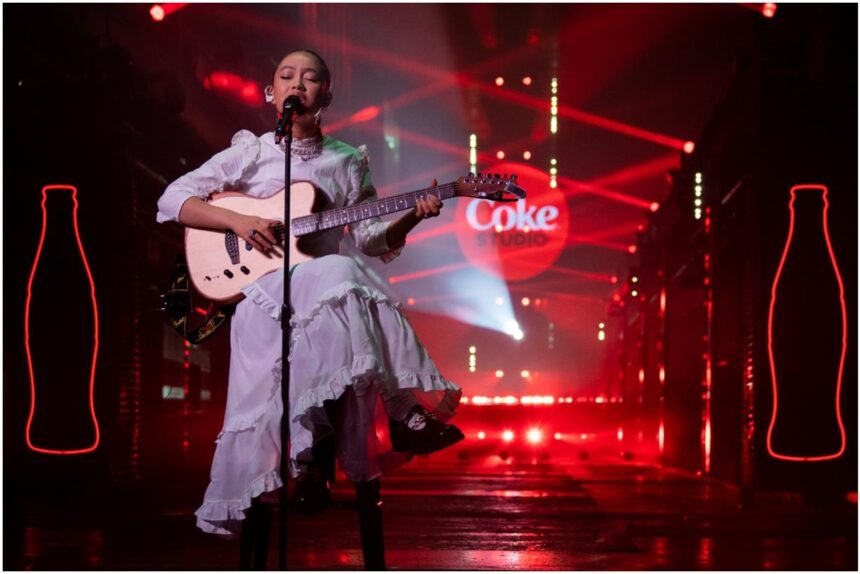
Coke Studio has been criticised for issues related to musical imperialism. The show’s adaptation of traditional folk music faces scrutiny for its impact on cultural preservation and authenticity while bridging cultural gaps and modernising musical heritage. The main critique Coke Studio faces is that, to appeal to a wider audience, Coke Studio’s reimagining of folk songs can sometimes dilute the original meaning and authenticity. The dominance is often seen in the rhythmic structure, where complex, asymmetrical folk rhythms are sometimes replaced by standardised Western 4/4 time signatures, making the music more palatable but less regionally specific
The folk songs, especially those of minority groups, are seen as cultural property, where the original creator and the context of their culture are not completely credited or recognised. Sometimes, to produce seasonal hits, Coke Studio prioritises contemporary trends rather than preserving traditional music, as it introduces westernised production and style. This form of fusion often lacks the representation of the rich diversity of local music, which raises serious questions regarding cultural appropriation and intellectual property — when a traditional melody from a marginalised community is repackaged by a mainstream star, where do the royalties and recognition truly flow?
Coke Studio being associated with multinational corporations also raises concerns as to how commercialisation and profit override the genuine artistic voicing that is set aside. To reimagine the traditional classical music of Pakistan, Coke Studio is criticised for its handling of historical narratives and the true cultural memories, as it does not fully comprehend the complexity of the folk music narrative. The show has tried to revive many historical qawwalis, ghazals, and sufi music, but it is often criticised that the true meaning of these is often lost. While trying to give a modern touch to old traditional folk music, the music videos are often made on modern concepts to engage with a wider audience; this raises questions about media consumption and the role of digital shaping of cultural narratives.
The post-9/11 portrayal often frames Sufism as a pacifist counter-narrative to extremism, which, while positive on the surface, can oversimplify complex theological or cultural practices to fit a comfortable, non-threatening Western expectation of ‘spirituality’.
Coke Studio provides a platform for traditional Qawwali performers and popular artists. Coke Studio provided a platform for the joint performance of qawwals like Ustad Fareed Ayaz and Abu Muhammad, Abida Parveen, Rahat Fateh Ali Khan, and Amjad Sabri, and popular artistes like Atif Aslam, Ali Zafar, Ali Sethi, and Quratulain Baloch. But Coke Studio does not provide a chance to new artists. While established figures guarantee viewership, this reliance on veterans turns Coke Studio into a curator of established talent rather than an incubator of the new. True modernisation requires giving unknown, emerging artists — who often bring the freshest fusion ideas — the same massive production budget and national exposure afforded to superstars.