





When a typhoon hits Japan, dozens die. But when an equally comparable flood strikes Pakistan, thousands perish. Though the geography is different, is the death toll simply a matter of the extent of development, or is it the combined effect of a climate crisis that the wealthy world created and the vulnerable world absorbs? How have the countries of the Global South, contributing to less than one per cent of the global greenhouse gas emissions, become most vulnerable to climate change?
While the Global South’s development constraints and weak adaptive capacity have accounted for their enhanced vulnerability towards ill effects of climate change, the climate-related disasters owe a lot to the mishandling of foundational climate finance bargains among the developing and developed worlds. What wealthy nations pledged in Paris remains unpaid in practice. The nations which contribute to the bulk of emissions promised to fund vulnerable countries’ adaptation and recovery. But the reality unfolds decades of unfulfilled promises, underdelivery and a widening gap between rhetoric and resources, as the Global South never received what it was promised.
The persistent gap between the dollars pledged and ones the global south actually received tells a story with an uncomfortable precision that summits never did. At COP-29, wealthy nations committed to $300 billion annually by 2035 for the developing nations — a figure that still falls short of the $1.3 trillion annually that is actually needed for climate-related goals. Furthermore, In 2024, developed economies claimed that they delivered $136.7 billion in climate finance, technically surpassing the $100 billion target for the third year — yet only 7% reached the low-income countries.
Where the figures of dollars unfold the volatility of climate pledges, another tale of climate injustice is manifested by the debt trap in which the developing world is entangled in the name of climate finance. The 44 least developed countries spend twice as much on servicing debts as they receive in climate finance. Also, 60% of the low-income countries that are already on the verge of debt distress spend five times more annually on paying loans rather than on climate adaptations.
The problem is not just the amount; it is the structural architecture. Wealthy nations have built a climate finance system that suits them, not the countries it claims to serve. They count market-rate loans, private investments, and export credits as climate finance, inflating the headline members without transferring real value. Hence, a cruel paradox exists: nations that should have benefited from the climate finance regulations are actually being forced to pay structured market-rate loans to recover from a crisis they did not even cause.
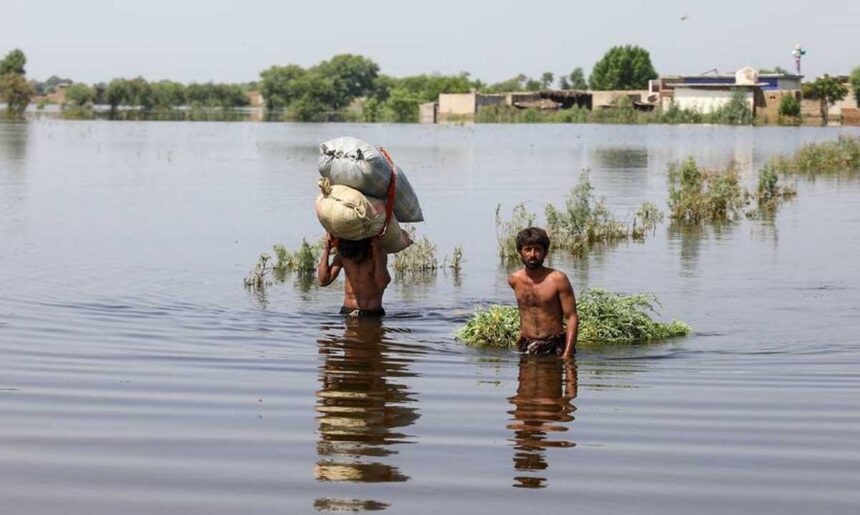
Pakistan, one of the most affected countries due to climate change, has also fallen prey to these structural backlashes of the global climate financing framework. Despite contributing to less than 1% of the global emissions, Pakistan ranks among the ten most vulnerable countries to climatechange. Pakistan’s 2022 floods submerged one-third of the country, displaced 30 million people, cost $30 billion, and claimed over 2000 lives. A study quantified that $60 billion in losses in Pakistan over time are owed to the emissions of the massive emitters — majorly the US and China. After floods, Pakistan managed to raise $10.8 billion in assistance, out of which a fraction of $30 million went into losses — and even that arrived not as grants but as loans and unfulfilled pledges.
The question for countries like Pakistan is not just whether the money arrives, but whether it arrives as justice or as another invoice. To utilise the amount received as climate finance more efficiently and to achieve resilience goals, a two-way effort from both the emitters and Pakistan is required. For this purpose, integration of climate finance with the geopolitical bind is required. Pakistan must bargain for equity in climate finance by advocating to receive the international funding as grants and aid, as pledged in COPs, rather than being forced to pay the global creditors. The solution for Pakistan lies in the negotiations on climate justice with the nations on whose economic goodwill its survival depends — IMF programmes, trade and debt relief.
In a nutshell, climate finance is not a charity for the Global South; rather, it is a legal, moral and scientific obligation rooted in the “common but differentiated responsibility” principle, as decided in the Rio Summit 1992. Thus, wealthy and poor nations have different climate responsibilities, and climate financing is the obligation of wealthy nations under the “polluter pays” principle. Climate change is slowly posing an existential threat to humanity, and nations are at a high risk of perishing if the cause of climate change is not prioritised by both global leaders and the Global South over their economic and strategic commitments. So, instead of exacerbating debt burdens, an impactful climate finance regime must expand the fiscal space of developing countries, reversing the current trends where most climate finance is delivered as loans