









Thursday, Mar 26, 2026
📍 Lahore | ⛅ 28°C | AQI: 3 (Moderate)

Filters:

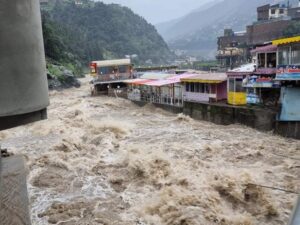
For years, the areas of Khyber Pakhtunkhwa and Gilgit Baltistan have been plagued by recurring floods. Locals suffer greatly year by year, but the media barely provides any coverage of these floods. However, the floods of 2025 changed the narrative, as upstream flooding also caused extreme devastation downstream. The recurring devastation In 2022, intense flooding caused the loss of more than 1700 lives and affected 33 million people. The same situation was also seen back in 2010. Every year, flash flooding affects the region of Khyber Pakhtunkhwa and Gilgit Baltistan because of the heavy monsoon. Climate change has worsened the situation as more glaciers melt due to rising temperatures, and unpredictable rainfall hits the region. Pakistan ranks among the top 10 nations most vulnerable to climate change, according to the Global Climate Risk Index. The region’s unique mountainous and steep topography further intensifies the effects of flash flooding. Every year, because of these floods, the locals lose their lives, their loved ones, and their homes. However, their sufferings remain neglected, and they are barely provided with any news coverage or help, as these losses are considered “local” and therefore acceptable. The Turning Point — The Floods of 2025 As floods hit this year, their effects reached downstream as well, causing enormous devastation. Over 1000 individuals lost their lives, impacting approximately 3.02 million people. It was impossible to ignore these catastrophic floods, and the plight of KPK and Gilgit Baltistan finally became apparent. The floods showed how flooding upstream in the mountains directly causes devastation downstream as well. “If the glaciers of the Himalayas melt, no wall can hold back the flood,” said Imran Khan 5 years ago. We are now witnessing what he warned us about years ago. This was not just a flood. It wiped away villages, destroyed homes and took away countless lives. “We had never seen such a disaster before in our lives. The flood came with such force and speed that it washed away everything in no time — our homes, our villages, our loved ones. We couldn’t do anything. Now we are stranded in debris- and mud-filled areas, trying to survive,” said a survivor of the 2025 floods from Buner, KPK. The Need For Immediate Action The 2025 floods have shown us the cost of negligence. We can no longer ignore or stall this issue. We can’t just stop floods, but what we can do is take precautions and try to mitigate their effects. The first and foremost step is to follow laws like the “River Protection Act” (This law prohibits construction within 200 ft of a river or its tributaries). Many such laws go ignored, as many argue that these laws are erasing villages on riverbanks that have existed for centuries. That might be true, but centuries ago, climate change was not such a major issue that it would cause monstrous floods like these. We can not simply end climate change, but we can at least try to take steps to mitigate its impact. “We are suffering from it, but it is not our fault at all,” said Prime Minister Shehbaz Sharif about climate change, indicating how we are the victims of climate change that has been caused by the so-called ‘Donor Countries’. We can’t just implement laws to stop these countries from emitting dangerous amounts of greenhouse gas, but what we can do is implement laws in our own country to reduce the emission of greenhouse gases. We as a nation should stand together, united to face these floods along with our fellow brothers and sisters and help them, and try our best to take steps to prevent such floods in the future.

From Ignored to Unignored

October 31, 2025 — Weather — By: Rubai Mairaj
Mystery of Lucid Dreaming

The Science and Mystery of Lucid Dreaming

October 30, 2025 — Daily Life — By: Khadija Anum
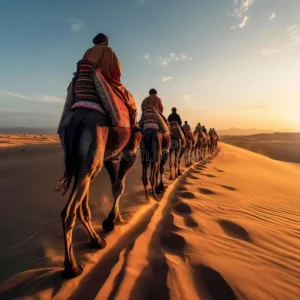
We can imagine the ancient world easily, a place where empires exist in seclusion — China, with its great wall, Rome, with its great roads; or Persia, with its great palaces. However, the links between these civilisations existed in a complex network of trading paths that wound through mountains, deserts and oceans thousands of miles long. These routes are referred to as the Silk Road, and in addition to goods, they also transported ideas, religions, and cultures. The Silk Road is one of the greatest engines of world interaction in history. The Origins of the Silk Road The origin of the Silk Road can be traced back to the second century of the Common Era, when China was under the Han Dynasty. Silk, being a fabric unfamiliar to a significant portion of the world, was in demand among the elites in the faraway regions, especially in Rome. Silk was light, strong, and glittering, which made it symbolic and gave rise to the desire to trade over long distances. Silk was not the only item. Chinese merchants sold jade, porcelain, and paper, while Central Asian merchants sold horses and wool. India provided spices and precious stones, and the Romans supplied glassware, wine, and silver. These goods were moved, which became the foundation of the global economy long before the modern age. Geography: A Path of Peril and Promise The Silk Road hardly called for just one road; it was an array of interconnected roads that overlapped each other. Sandstorms and bandits were perpetual threats for the caravanserai travelling through the sands of Central Asia (Taklamakan and Gobi), which frequently led to. Other pathways cut through the harsh ranges of the Great Pamirs and Hindu Kush, facing challenges from avalanches and thin air even for hardened traders. Nevertheless, no challenges could deter those traders. Along the way, fortified inns called caravanserais emerged and gave refuge and rest to the exhausted travellers. The highway ports grew into tiny cultural centres where traders from Arabia, China, and India exchanged languages and tales along with their goods. The Exchange of Ideas The ideological exchange was probably as powerful as the exchange of goods. Religions moved to various parts of the Silk Road easily: Buddhism went to China, spreading among monks and scholars. Merchants and missionaries also provided new grounds for Nestorian Christianity and Islam. The result of this mixing of religions was a trail of temples, mosques and monasteries along the trade tracks. The same was the case with technological innovations. The invention of paper in China was brought to the Middle East and eventually to Europe and transformed knowledge recording and sharing. Gunpowder, another Chinese invention, revolutionised warfare when it reached the West. Empires and the Silk Road In the history of human existence, there were empires that emerged and collapsed along the Silk Road, making their own fate. Eastern trade was fuelled by the need of the Romans to use luxuries, but Rome feared that the gold would trickle out of its borders in exchange for silk. The Byzantine Empire eventually came onto the scene as a force and even tried to smuggle silkworms out of China in a bid to break the Chinese monopoly. The Mongol Empire of Genghis Khan, centuries later, established a kind of relative peace called the Pax Mongolica. The empire spanned from China to Eastern Europe, allowing merchants to travel long distances with reduced risks. This stability revitalised trade, and wealth was showered on cities such as Samarkand and Kashgar, which became glittering capitals of art, architecture, and scholarship. The Decline of the Silk Road The decline of the Silk Road started in the late Middle Ages. The Ottoman Empire's rise resulted in trade restrictions and high taxes between the East and the West. Meanwhile, European explorers were in search of other sea paths to Asia, and this resulted in the Age of Exploration. The voyage of Vasco da Gama that reached the entirety of Africa and the expedition that was led by Christopher Columbus to the west shifted the balance of trade in the world to favour the sea-based routes. By the 16th century, much of the old glory of the Silk Road remained, albeit in the form of remnants of the routes that remained in use to trade in the region. Images of Vasco De Gama and Christopher Columbus The Legacy of the Silk Road Nevertheless, the heritage of the Silk Road is massive in spite of its loss. It is considered to be one of the first types of globalisation, which proves that human societies have never been isolated. The foods that we consume, the technologies we work with and even the religions we follow have spread throughout history by this historic network. Contemporary projects, such as the Belt and Road Initiative, intentionally call to mind the memory of the Silk Road and aim to restore economic and cultural connections throughout Eurasia. Historians, archaeologists, and explorers search for the remnants of caravanserais, cities, and artefacts from centuries of trade. Conclusion The Silk Road was not just a pathway; it was a living pathway for civilisations. It demonstrated that regardless of wide distances and cultural barriers, human beings can be united by one thing: curiosity, desire, and the need to have contact. The Silk Road might have been based on goods, but the real jewels were ideas and culture. The Silk Road is a reminder of the fact that the world has been woven together in some manner or other in the ever-shifting sands of history.

The Silk Road Weaving the World Together

October 30, 2025 — History — By: Khadija Anum
The Scent of Us in Our Goodbye

The Scent of Us in Our Goodbye

October 31, 2025 — Daily Life — By: Hadi Iqbal
FBI investigations have been slowed or stalled by the second-longest U.S. government shutdown in history, leaving the bureau without funds to pay informants or make undercover drug or gun buys, gaps that an FBI spokesperson said are putting national security at risk. The FBI does not provide detailed public information about how its $10.7 billion budget is spent and it is not clear how much of the total has been held up due to the shutdown, according to five current and three former FBI employees. The shutdown, now in its 30th day, has frozen FBI funds used for operational travel, such as when an informant needs to travel to meet a drug supplier or boss or another investigative subject, the sources said. FBI employees are also without funds to travel outside their local areas. (Reuters)

US Govt Shutdown Delays FBI Investigations

October 30, 2025 — Latest News — By: Jarida Report
Gilgit Baltistan Land Reform Bill 2025

Gilgit Baltistan Land Reform Bill 2025

October 29, 2025 — Pakistan — By: Arshad Iqbal
Over 150 million Email passwords exposed in Data Leak

Over 150 million Email passwords exposed in Data Leak

October 29, 2025 — Latest News — By: Jarida Report
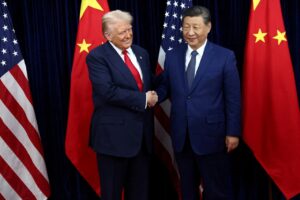
Trump Praises PM Shehbaz, COAS Asim Munir

Trump Praises PM Shehbaz, COAS Asim Munir

October 29, 2025 — Latest News — By: Jarida Report
U.S. President Donald Trump lavished praise on Japan's first female leader Sanae Takaichi in Tokyo on Tuesday, welcoming her pledge to accelerate a military buildup and signing deals on trade and rare earths. Takaichi, a protegee of Trump's late friend and golfing buddy Japanese leader Shinzo Abe, applauded Trump's push to resolve global conflicts, vowing to nominate him for the Nobel Peace Prize, according to Trump's spokeswoman, Karoline Leavitt. Both governments released a list of projects, opens new tab in the areas of energy, artificial intelligence and critical minerals in which Japanese companies are eyeing investments of up to $400 billion in the U.S. (Reuters)

Trump Meets New Japan PM Takaichi

October 28, 2025 — Latest News — By: Jarida Report

Don’t Miss Our Latest Updates