




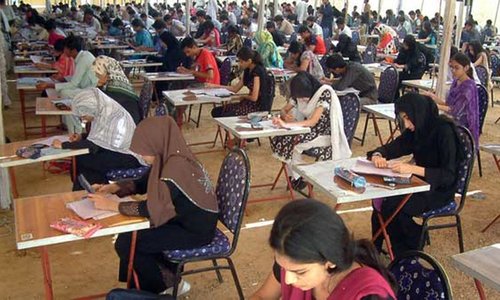
The results of the Central Superior Services (CSS) written examination were declared recently, revealing that out of 16,342 candidates who appeared in all papers, only 476 passed — yielding a pass rate of just 2.74%.
What accounts for this staggering failure rate? Several factors are at play. A primary issue is that many candidates do not prepare seriously for the examination because their personal interests lie elsewhere. Frequently, they are pressured by parents seeking the security of a government job. Pakistani parents maintain an enduring obsession with public service, particularly the CSS, operating on the assumption that securing a bureaucratic post guarantees a lifelong, stable career.
While public sector employment undoubtedly offers job security, ignoring a student’s personal inclinations yields counterproductive results. Candidates interested in pursuing business, law, or other private-sector fields should be encouraged rather than discouraged by warnings about economic instability or judicial challenges. Bureaucracy in Pakistan carries considerable perks and prestige, but forcing unwilling candidates into civil service preparation often leads to repeated failures, exhausting all three allowed attempts and wasting the most formative years of their professional lives. Many face severe psychological strain from the burden of unmet familial expectations.
A crucial consideration regarding failed candidates is that a vast majority drop out in the English Essay or Précis and Composition papers while securing strong marks in optional subjects. English is subjected to strict evaluation standards as the primary medium of the examination and subsequent interviews. While civil servants must possess strong English proficiency for international and administrative communication, the rigid linguistic criteria disproportionately penalise capable candidates from modest educational backgrounds. Many candidates possess insightful opinions and analytical depth, yet struggle purely due to the medium of expression. Consequently, a large proportion of allocated officers tend to be graduates of elite domestic institutions like LUMS or foreign universities.
To create a level playing field, policy reforms should be introduced. Similar to the Union Public Service Commission (UPSC) in India, which allows candidates to choose their preferred language during the interview process, the FPSC should consider offering candidates the option to interview in English or Urdu so they can articulate their thoughts effectively.
Additionally, candidates frequently make tactical errors when selecting optional subjects. Rather than choosing subjects aligned with their academic background or expertise, many rely blindly on short-term “scoring trends”. While trends warrant some consideration, opting for a subject without understanding its fundamentals often proves fatal. For instance, Gender Studies gained popularity in recent years due to high average marks, yet recent result cycles saw a significant number of candidates fail the subject. Selecting optional subjects with prudence remains critical.
Finally, the proliferation of CSS commercial academies has transformed exam preparation into a lucrative industry. Serving or retired civil servants, alongside candidates who cleared the written exam but missed final allocation, frequently establish commercial coaching institutes. These academies charge exorbitant fees, taking no accountability for candidates who fail while aggressively advertising the small minority who secure allocation. By capitalizing on aspirants’ anxieties, this commercial ecosystem continues to profit off systemic socio-economic desperation.